



Politics is transactional
No matter the geography, era, race, or culture, most voters, especially in democratic jurisdictions, are not fanatically or permanently attached to their political preferences. Voters respond positively to time-specific and practical answers to three crucial questions: What is in this for me? What have you done for me lately? What can you do for me soon?
The recent outcomes of the midterm elections in the United States and the national election in the Republic of Brazil are timely reminders that most voters are not pawns or automatons. Incidentally, for those who may be harbouring doubts, there is absolutely no doubt that the United States and Brazil are democracies — well-respected democracies too. International benchmarks support that position. Brazil is a federal presidential republic and a constitutional democracy. The United States is a constitutional federal representative democracy (or constitutional republic). Brazil and the United States are two of the largest democracies in the western hemisphere.
I anticipate that some will argue that voters have become more transactional globally. This isn’t true.
The truth is that politics has been transactional since time immemorial. Political engagements will continue in that vein until kingdom come. I am not here countenancing the exchange of votes for money and/or the exchange of political largesse on bases which are set out in law as corrupt, or which are otherwise seen to be patently corrupt by reasonable and well-thinking people. I am quick to make these clarifications because some people, for reasons that should be obvious to anyone with a modicum of sense, frequently describe and decry transactional politics as the political equivalent of the bubonic plague. Invariably, these inexpert commentators reach for their default position, which is that transactional politics is the nucleus of voter fraud and of favours dispensed on corrupt bases. I do not support bribery and/or the dispensing of political favours on corrupt bases. By transactional politics I mean the sum total of the feelings, demands, and expectations justifiably made by citizens in a State on those who come to them at intervals, committing to harness, grow, and manage resources efficiently so that the lives of ordinary people, especially, can be made materially better.
BIG UPSET
Voters are always seeking especially material betterment for themselves and their children. Some who are seeking political office seem unable to understand this reality. They believe that a majority are willing to sacrifice their physiological needs on the altar of ideology. That is not human nature.
Flávio Bolsonaro, a Brazilian lawyer and conservative politician who served as a senator for Rio de Janeiro, obviously did not get that memo. Flávio is a son of the 38th president of Brazil, Jair Bolsonaro; both are affiliated with the Liberal Party. Some political experts say this party is “a right-wing Bolsonarist political party”, while others describe it as a centre-right party. Whichever it is, Bolsonaro’s party was soundly beaten in the decider in the recently concluded national elections in Brazil.
The South American country has an electoral system similar to that of France, with two rounds of voting. Some French citizens say that the first round is for voting with one’s heart, while the second is for voting with one’s head. In Brazil a second round of voting is required if a candidate does not get an absolute majority — that is, more than 50 per cent of the valid votes. In the first round of voting on October 4, Flávio Bolsonaro finished first with just about 47 per cent of the vote. President Luiz Inácio Lula da Silva, of the left-wing Workers’ Party, received 45 per cent. Because neither candidate received the majority required to win outright, the two candidates advanced to a second round, or the decider.
Well-known Jamaican dancehall artiste Admiral Bailey has a song in which he says, “Yuh think mi did done, me just a come.” President Lula da Silva may well have listened to Bailey’s poignant lyrics and acted accordingly. “I’m, a Don,” by dancehall crooner Pinchers, seemed to have been the song of choice for Flávio Bolsonaro.
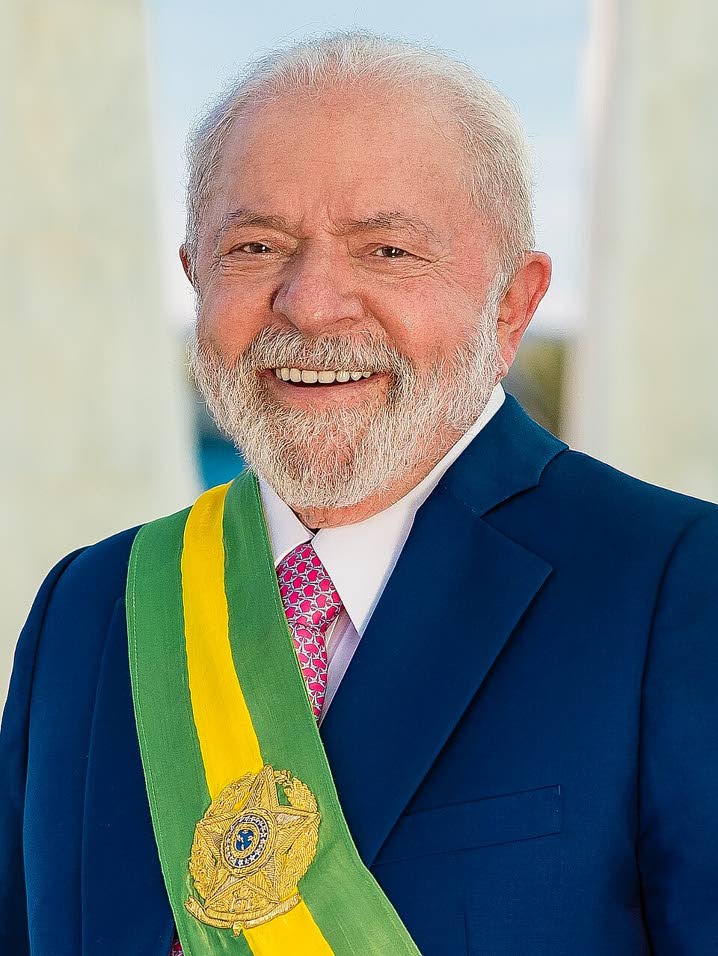
Brazil President Luiz Inácio Lula da Silva.
Why did Flávio Bolsonaro lose the decider? Many political commentators agree that Bolsonaro and his party committed a cardinal error. They largely became complacent, the “We win already” self-inflicted wound. We have seen this error play out in Jamaica on several occasions.
Recall that on October 5, 1980, during a massive political rally in Sam Sharpe Square, Montego Bay, Prime Minister Michael Manley famously declared, “150,000 strong cannot be wrong!” Renowned pollster Dr Carl Stone had repeatedly warned that Manley’s People’s National Party (PNP) was facing an overwhelming political defeat due to severe economic hardships, International Monetary Fund (IMF) fiscal strains, and intense and deadly political violence. Manley dismissed these polls, confidently intimating that the crowd proved the pollster wrong. Some credible research indicates that considerable numbers of PNP voters succumbed to the “We win already” affliction after the Sam Sharpe Square turnout. The PNP suffered a landslide defeat at the hands of Edward Seaga’s Jamaica Labour Party (JLP) on October 30, 1980.
Complacency is a powerful poison in politics. Some commentators say Flávio Bolsonaro and many in his party broke open the champagne corks too early. While they were knee-deep in foolish and very anticlimactic celebrations, Lula and his party pressed the refresh button. They recalibrated, got rejuvenated, and started to pound the local and international pavements to galvanise support from potential voters who had not voted in the first round. Lula’s party also overhauled its social media strategy. They focused on personalised messaging which centred on very specific, short, and accessible answers to these crucial questions: What is in this for me? What have you done for me lately? What can you do for me soon? This was a great fillip.
The head cook and bottle washer, as we say in Jamaica, was André Janones, a Brazilian congressman who led the “Exército do Lula” (“Lula’s Army”) WhatsApp channel, growing it from 60,000 to nearly 11 million subscribers to coordinate social media mobilisation. Janones undoubtedly deserves the lion’s share of credit for Lula’s party’s social media resurrection, and Ana Elisa Santos, a 21-year-old black woman and federal lawmaker, deserves the lioness’s share. Credible sources say it was she who first approached the campaign team after the tough first-round results and drew up a social media master plan to modernise Lula’s outreach by adopting informal and more future-oriented language tailored to younger audiences.
THE NITTY-GRITTY
Lula’s party approved several targeted labour measures designed to improve the lives and livelihoods of especially working-class Brazilians and enacted several measures aimed at easing the severe bite of the high and rising cost of living.
Here are some of the practical details that Lula’s party generously used to match the messaging overhaul”
Notably, 10 days before the run-off the Brazilian Congress approved a constitutional amendment supported by Lula to reduce the country’s workweek from six days to five, and reduce weekly working hours from 44 to 40 without a reduction in pay. These measures, experts say, will directly benefit some 35 million workers. Fifteen days before the run-off a 15 per cent increase in key welfare programmes came into effect. These increases had been announced the previous September. Several tax incentives and debt refinancing for low-income Brazilians were promised. Lula’s party introduced several measures to lower rising and already high fuel costs at the pump. Incentives for specific groups were promised.

Donald Trump’s Republican party reportedly lost control of the US House and Senate in the recent midterm elections.
Lula, who has just turned 81, has a very difficult road ahead. The Brazilian Congress is very right-wing dominated. Additionally, Flávio Bolsonaro, who had fled to the United States with his family, may try to operate a Government-in-exile similar to what obtained in Venezuela for some years while Nicolás Maduro occupied the presidential palace.
Lula cannot count on mass public support. In the run-off Lula’s party amassed 64.3 million votes (51.8 per cent of the total vote), while Bolsonaro finished with 59.8 million votes (48.2 per cent of the total vote). Lula’s Government will now have to find the funds to pay for and sustain all his incentives. This will be difficult because of the strict fiscal spending rules that Brazil has. Additionally, Brazil’s public debt is just above 82 per cent of gross domestic product (GDP). Inflation is above central bank target. Some experts say a leadership struggle in Lula’s party is likely. Lula’s win means that “anywhere him turn macka will jook him”. He has difficult circumstances and choices, not least of which is unsteady relations with Donald Trump and the United States.
US MIDTERMS
Political leaders and parties that mistake media noise for electoral inevitability risk discovering that opponents possess considerable reserves of public support. President Donald Trump and former presidential candidate Flávio Bolsonaro learned that lesson the hard way. Jamaica’s politicians would do well to pay attention.
Folks are not automatons. The Democrats won full control of the United States Congress, capturing majorities in both the House of Representatives and the Senate in the recent midterm elections. The Republicans received a shellacking, primarily because of massive voter discontent over inflation, the cost of living, and foreign conflicts. Trump repeatedly jetted in and out of especially ‘red’ states during the campaign. Republican focus was a facsimile of 2016 and 2024 — socialism, communism, jihadists, transgenderism, self-congratulations, political narcissism, and immigration.
At the same time, Democrats kept hammering home the rising and very high cost of petrol, groceries, rents, mortgages, utilities, health care, and insurance.
The Republicans campaigned as though they were oblivious of Maslow’s hierarchy of needs. The theory states that individuals must satisfy basic, lower-level needs, the absolute basics for biological survival, which include food, water, air, shelter, clothing, and sleep, before they can focus on the higher-level growth and psychological needs.
Some Republicans insinuated that the high cost of living was a hoax by the Democrats. Jibes about the posterior of some challengers, immigration, and mocking of some opponents with disabilities were interpreted by folks as a severely painful punch in the gut. Folks felt betrayed, including thousands who voted for Trump in 2016 and 2024.
Recall that Trump had promised to “drain the swamp”. Credible media say thousands who previously supported Trump are now seeing him as one of the biggest swamp monsters of all time. Thousands voted for Trump to fight corruption and raise the fortunes of the “forgotten class”. There is credible evidence that he has, instead, raised his own fortune, those of family members, cronies, and the elites. Credible news sources say Trump has earned billions, mostly from investments in cryptocurrencies, while in office. Folks see this as unethical.

A woman prepares to vote during the presidential run off election at a polling station in Brasilia, on October 25, 2026. Brazilians polled between President Luiz Inacio Lula da Silva and right-wing Senator Flavio Bolsonaro. (Photo: AFP)
Ironically, during the midterm campaigning Trump hardly spoke about his one real big success. He has made significant headway on the border control matter. His handlers may not have told him — or maybe they did — that in politics, when you resolve an especially big and long-standing issue, you do not get tangible and lasting credit unless you talk about the impact of the solution continually.
The writing was on the wall that the Republicans would lose the midterms. Small donations (amounts under US$10) to the Democrats outnumbered those to the Republicans by four to one. That was the surest indicator that voter enthusiasm was pointing to a blue wave. That wave turned out to be a tsunami.
What now? Is Trump a lame-duck president? Absolutely not! There are even bigger issues, though.
Will the Democrats squander this opportunity by focusing mostly on investigations of Trump instead of governance to ease the severe pains of inflation and high and rising cost of living?
Will Trump become more unpredictable?
Can the Republicans, the United States, and the world economy survive Trump for another two years?
Will Trump deliver a big “last lick” (mighty and final retaliatory blow) to the Democrats before leaving?
Will the Democrats elect a socialist Democrat or a Centrist to compete for the presidency in 2028?
Garfield Higgins is an educator and journalist. Send comments to the Jamaica Observer or higgins160@yahoo.com.
Garfield Higgins


