



Exploring Fern Gully craft
FERN Gully, St Ann, home to hundreds of fern species and trees, has over the years built on its international acclaim, with the range of craft items being offered for sale and the cheeky ‘Ready Freddie’ wood carving among the most talked about in Jamaica and overseas.
For the area’s craftsmen, all of their art — carved and sold along the lush green stretch — is a labour of love, one they hope Jamaicans and visitors will appreciate, and they shared with the Jamaica Observer how the items are made.
Metres from the famous Ready Freddie carving of a nude rasta man, artist Venant “Oneil” Campbell said while it is often seen as erotic, it has a deeper meaning as it references the cultural erasure and loss of identity experienced by the enslaved during the period of enslavement.
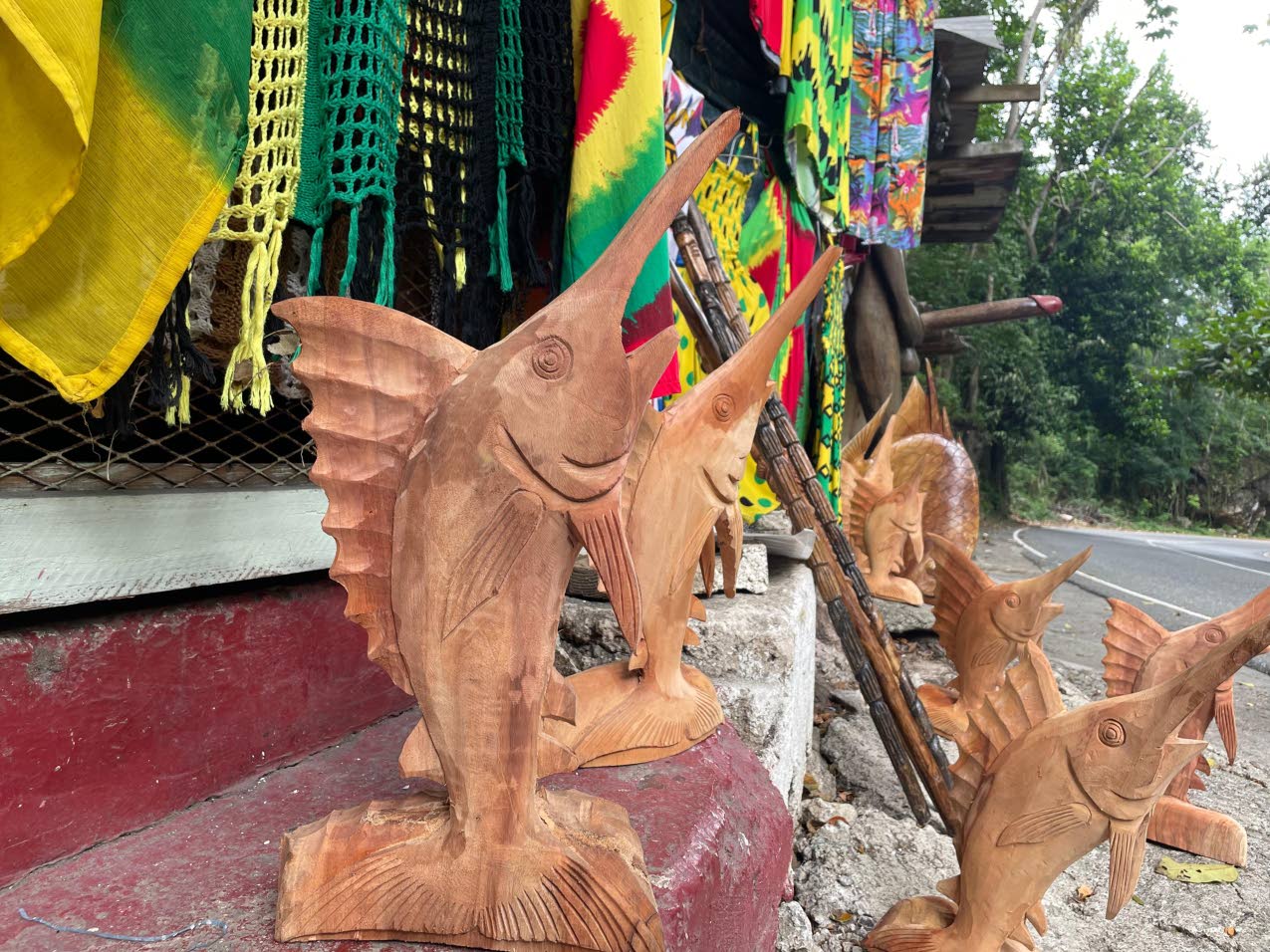
Carved marlin outside JVC Shoppers Paradise (Photo: Dana Malcolm)
“The statue symbolises that… they used to have one — the big strong slave — so Ready Freddie’s job was to impregnate the ladies to get the big strong slaves…and when they abolished slavery, he walked the rainforest naked,” Campbell said.
He argued that the enslaved man depicted in the statue roamed the rainforest aimlessly hoping to still do his “job” after slavery was abolished.
Campbell, who operates JVC Shoppers Paradise in Fern Gully, told the Observer that statue was carved by the late Renny Trail, who taught him the craft of carving.
“Fern Gully is famous for a lot of things but a lot of people don’t know that actually we do the art and make stuff here, so this is an opportunity for us to showcase what we do and what we make,” he explained.
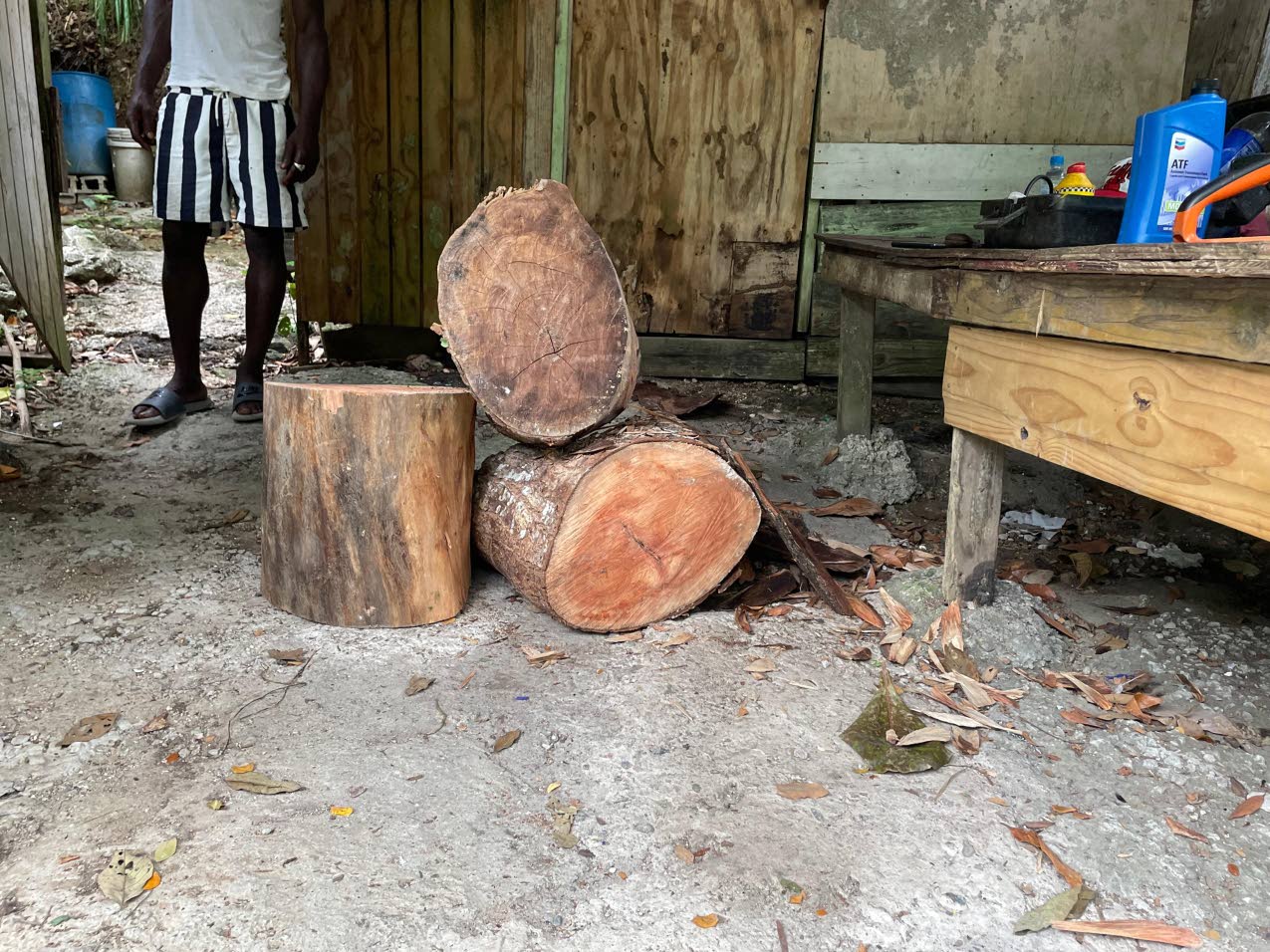
Blocks of wood to be used for carving in Fern Gully, St Ann. (Photo: Dana Malcolm)
A Kingston native, Campbell said he travelled to Ocho Rios in 1993 and quickly called it home.
“Came to Ocho Rios on a trip, came and fell in love with Ocho Rios, and never went back up. I just stayed down here, find girl down here, and no bother go back a town,” said Campbell with a smile.
He said he spent time with the men who operated in Fern Gully, and when they taught him to carve it felt like a natural progression in his ife. Even so, it took him more than three years to master the craft.
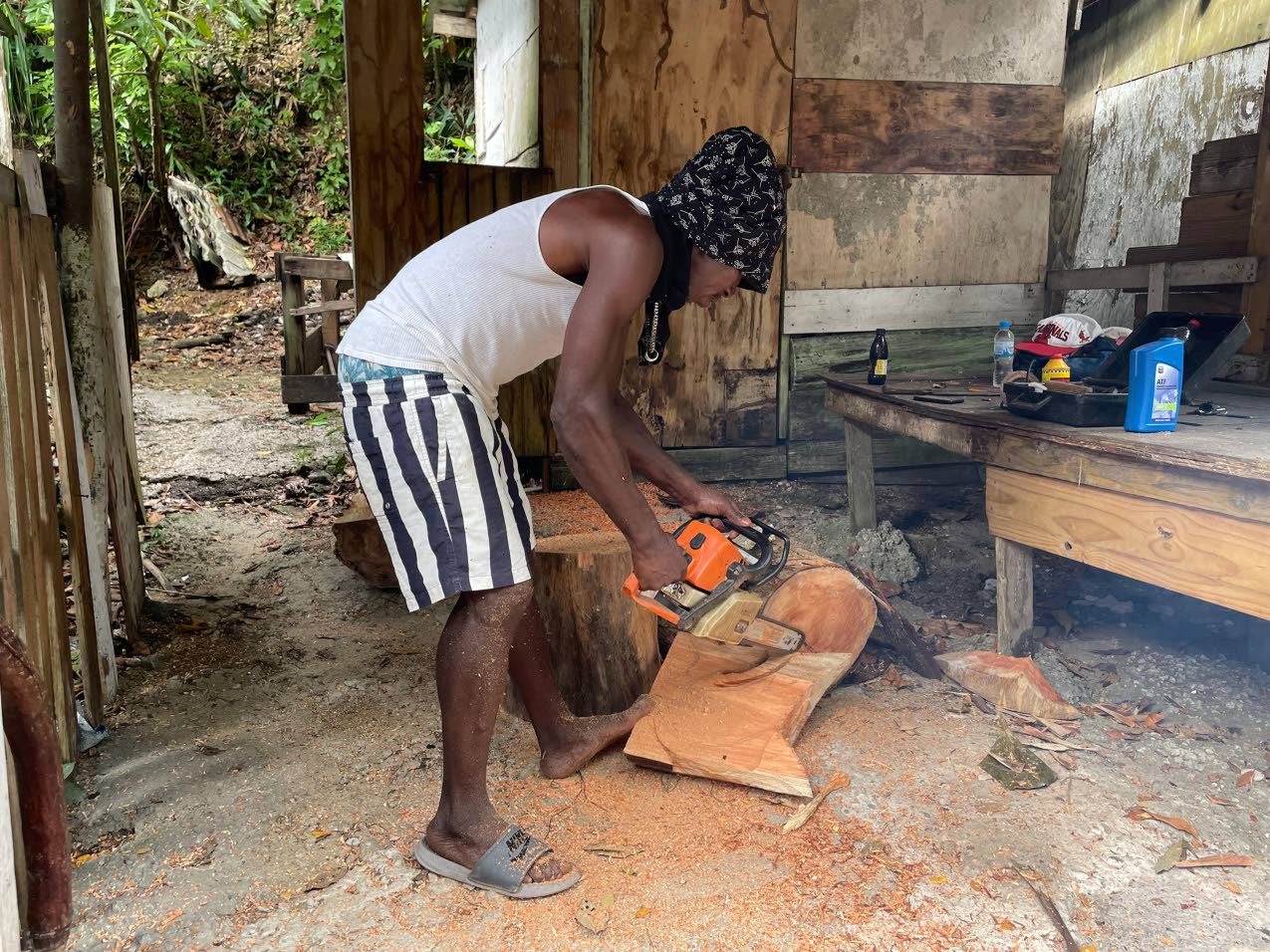
Audley Ricketts begins the carving process to create a marlin. (Photo: Dana Malcolm)
Carving is difficult work that requires both strength and artistic skill to handle the wood being used to create the pieces, and after an arm injury while working overseas Campbell can no longer carve as easily.
The process begins with sourcing wood, usually from the lignum vitae, cedar and blue mahoe trees — either cut from the hills of St Ann in areas like Mount Zion, Free Hill, and Bamboo or purchased from people outside the parish.
The wood is then cut into blocks with a machete, or a power saw, and then the design is drawn on the surface.
A power saw is used to roughly shape out the carving, and Campbell pointed out that this is intricate work as if you cut too deep or too close you can ruin the design — and once the wood is shaved there is no going back.
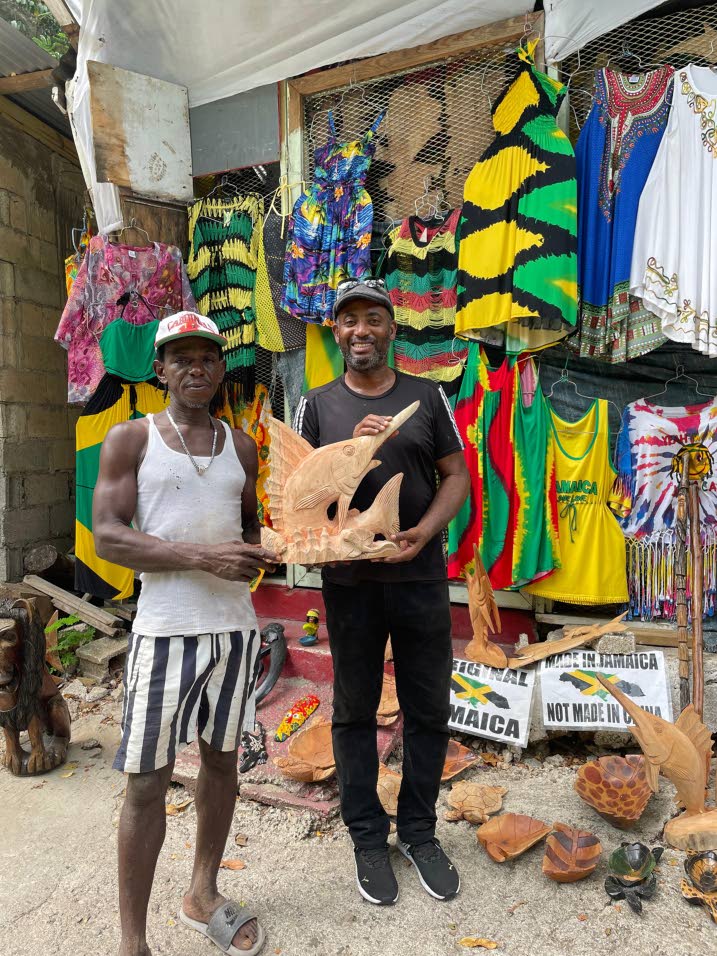
Audley Ricketts (left) and Vernant Campbell pose with a freshly carved marlin. (Photo: Dana Malcolm)
What follows is a long process of using various small chisels to pull designs out of the wood, creating everything from a reef to scales.
Following this, the pieces must be carefully sanded and then sealed with a long-lasting finish.
The carvings can take anywhere from hours to weeks, and the Observer team spent four hours in Fern Gully with Campbell and his fellow craftsman Audley Ricketts as Ricketts painstakingly transformed a wooden stump into a marlin mid-leap.
Campbell explained that the carvings are not cheap to make.
“It cost us man, because [of] transportation, you know, to go and get the wood. Sometimes we have to buy the wood from people… you pay like $7,000, $8,000 or $10,000 — it depends on the size of the tree. Then you have to transport it here, you know, so it takes a lot of work and a lot of time,” Campbell explained.
This, combined with the amount of time it takes to complete the carvings, is what the artist says justifies their price.
However, with the rise of ready-made products that look similar, Campbell said business in Fern Gully has taken a hit. He explained that purchasers regularly undervalue the time and effort that it takes to create the carvings.
“Time gone by it used to be [profitable], but not anymore…I spend a month on this, and someone isn’t going to pay for that time…after all I go through to bring it here, cut it, transport it here, carve it out, paint it, sand it, you know…it takes a lot of time and a lot of effort,” he explained.
“Nobody wants to see the real stuff, real work, real art; everyone wants to see the one where the machine goes bam, that is it,” Campbell lamented.
Despite this, he is grateful for the people who still recognise the time and effort it takes to create art which proudly bears the mark, “Made in Jamaica”.
How Dis Mek logo


