



JHTA adamant proposed tax hike will damage tourism sector
THE Jamaica Hotel and Tourist Association (JHTA) is renewing its warning that the Government’s proposed 50 per cent increase in General Consumption Tax (GCT) on tourism activities could damage the industry’s competitiveness, threaten thousands of jobs, and ultimately undermine the revenue it is intended to generate.
And, in a new development, the association recently met with the political Opposition, which signalled its shared concern that raising the tax from 10 per cent to 15 per cent in April 2027, as proposed, could do more harm than good to the Jamaican economy.
The JHTA has maintained that it is not opposed to taxation and recognises the serious fiscal challenges confronting the country. However, it argues that the Government’s projected $11.4-billion revenue gain is based on an unrealistic assumption that the tourism industry can absorb or pass on the additional cost. Neither, it insists, is a viable option.
According to the JHTA, a significant proportion of hotel room nights for 2027 has already been contracted with tour operators and wholesalers 18 months to two years in advance, at rates incorporating the existing GCT.
“Those agreements cannot simply be reopened, leaving hotels to absorb the additional tax through already strained operating margins,” JHTA President O’Brian Heron told the Jamaica Observer.
He argued that the proposed increase will put Jamaica at risk of becoming more expensive than competing destinations, potentially weakening demand. Additionally, Heron argued that a higher tax rate applied to a shrinking tourism market could deliver considerably less revenue than the Government anticipates.
“We have to be honest with the country: the numbers do not add up,” Heron said.
“Hotels will simply not be able to afford this increase. You cannot collect revenue from businesses that are forced to cut back, from rooms that go unsold, or from jobs that no longer exist,” added Heron.
The impact, he said, would be particularly severe for small, locally owned properties, which operate on thinner margins, have less bargaining power with international tour operators, and possess fewer financial reserves. Heron pointed out that many properties are still recovering from Hurricane Melissa which devastated Jamaica’s western third in October last year.
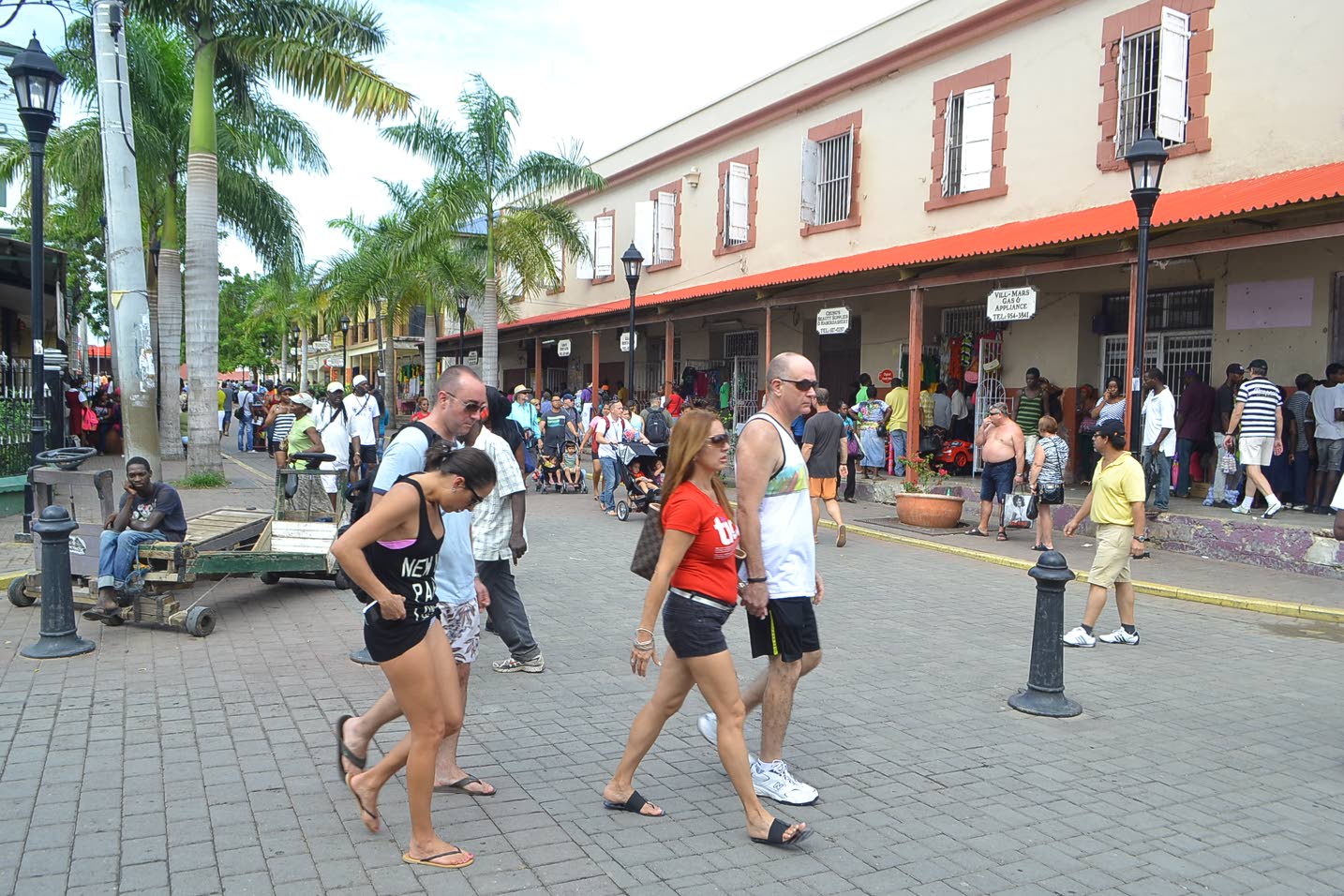
In this file photo,cruise visitors to the island are seen in Falmouth in March 2014. The Jamaica Hotel and Tourist Association is arguing that the proposed 50 per cent increase in General Consumption Tax on tourism activities will put Jamaica at risk of becoming more expensive than competing destinations, potentially weakening demand.
“The harsh reality is the smaller hotels will feel this first and feel it hardest,” Heron said, as he pointed out that these Jamaican-owned businesses employ people from their communities and support local farmers, fishers, and other suppliers.
He argued that the proposal also runs counter to the Government’s Tourism 3.0 agenda and pointed further to the International Monetary Fund’s (IMF) latest mission statement on Jamaica, which cautioned that delays in reconstruction and the restoration of tourism capacity would weaken the country’s recovery.
“Hotels, particularly smaller properties, are still financing repairs, with many awaiting insurance settlements. Diverting funds towards additional taxes could delay the reopening of properties, restoration of rooms, and return of workers,” Heron added.
“The IMF has said plainly that Jamaica’s recovery depends on getting tourism capacity back. You cannot ask hotels to rebuild faster and pay more at the same time. Affordability and recovery are the same issue,” Heron said.
The JHTA president also warned that squeezed margins could force operators to freeze recruitment, reduce working hours, defer maintenance and investment, scale back local purchases and, ultimately, lay off workers.
“Such consequences would also mean lower PAYE and NIS contributions and reduced household spending, further eroding the tax revenue the Government hopes to collect,” Heron told the Observer.
He pointed out that the JHTA has engaged the Government constructively, meeting with Prime Minister Dr Andrew Holness and Minister of Finance and the Public Service Fayval Williams, commissioned an independent impact assessment by PwC and nominated representatives to a Joint Technical Working Group with the ministry.
“I am concerned that the Ministry of Finance is not treating this with the seriousness it deserves. We have been patient and we have done our part. April 2027 is fast approaching, and a decision affecting thousands of jobs should not be made lightly by the minister of finance. We urge the ministry to convene the working group without further delay,” said Heron.
Meanwhile, the JHTA president said its meeting with the Opposition was part of a wider effort to ensure that the proposed measure is reconsidered on the basis of evidence and broad national consultation.


