



A stand-alone ministry of communication for the people
I am in full support of the view that the Government needs to have a separate ministry responsible for communication, information policy, public information, and telecommunications. A dedicated ministry would be able to coordinate government messaging, enhance public awareness campaigns, and curtail the propaganda and speculations which often arise when critical information is not available for public consumption.
The viability of any modern democratic society with a strong economic foundation requires systems that guarantee the orderly and regular dissemination of information to the public. This is the bedrock on which trust can be built and citizens enabled to play their part in building the society. Such a ministry is itself a strategic national asset.
Frankly, what we have had in the past is a hodge-podge communication policy which, even today, has not served the best interests of the Jamaican people. The
Jamaica Information Service (JIS) has helped to get information out to the public, but this method has, in my opinion, been deficient, evidenced by the urgent calls to make communication a critical part of the decision-making infrastructure for both policymakers and citizens.
Minister of Information Dr Dana Morris Dixon must be congratulated for trying to pull a truck over Spur Tree Hill in managing her heavy portfolio as minister of Education, Skills, Youth and Information. She does her best, but I believe that in her quieter moments she would want to be relieved of some of this burden. The prime minister would do well to relieve her of the information portfolio.
Most well-thinking people will agree that communication today is vastly different from what it has been in the past. And we have had a very sordid history in Jamaica of the politicisation of communication and the resistance shown to free speech in the cut and thrust of partisan politics. There was a time in Jamaica when broadcast and printed media were controlled by a few important actors who were considered, at different times, to be lackeys of one political party or the other.
The 1970s and 80s were particularly characterised by fierce opposition to the Government of the day. Thus, The Gleaner publication — the leading daily newspaper of the time — earned the wrath of the People’s National Party (PNP) as leading journalists such as Wilmot Perkins, John Hearne, David Dacosta, and others were severely pilloried and even threatened for writing articles critical of its Government and party.
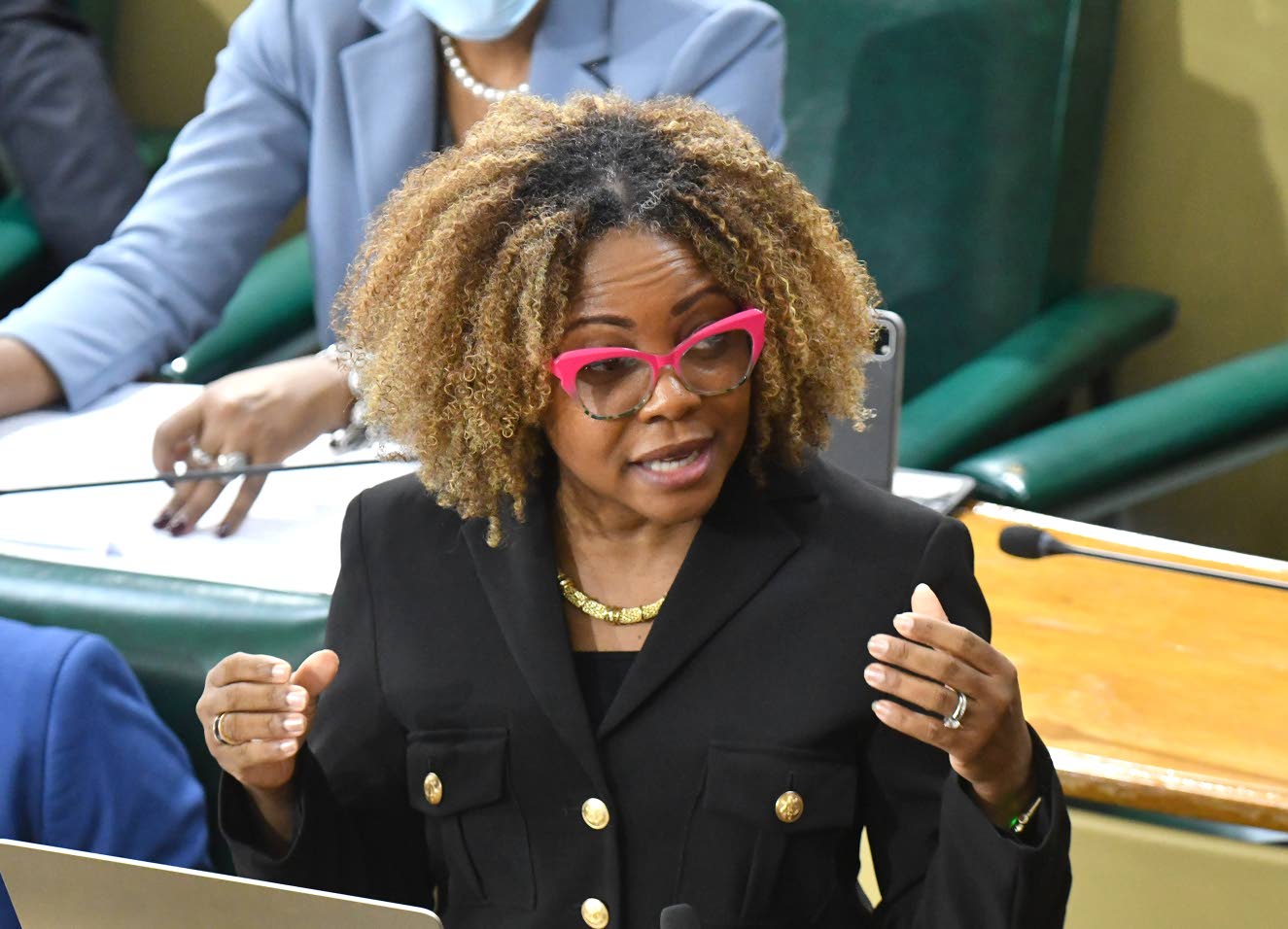
Dr Dana Morris Dixion (Photo: Naphtali Junior)
One cannot forget the infamous march led by then prime minister and PNP President Michael Manley and his supporters against The Gleaner on September 2, 1979. This was one of the most confrontational and certainly most controversial interactions between the Manley Government and the Jamaican press during the political turbulence of the late 1970s.
Edward Seaga, former prime minister and also leader of the Jamaica Labour Party (JLP), also had his run-ins with the press. He had notable clashes with the media and was at different times involved in a number of high-profile defamation lawsuits against journalists and broadcasters.
The point is that governments have not always been amenable to criticisms from a free press. As I said in my last piece — ‘A Parliament of intemperance and childishness’ — politicians often live in a bubble which they do not like to have pricked. They get uncomfortable and boisterous whenever this happens.
One is not saying that this often-adversarial relationship between the media and the politician will disappear with the advent of a stand-alone ministry of communication. It might even make the relationship more difficult if there is a perception that the Government of the day has not exorcised the demon of politicisation which has bedevilled the Jamaican communication landscape for far too long.
There is another urgent reality that calls for such a ministry. This is the advent of social media platforms and the palpable presence of citizen journalism. This phenomenon represents the greatest threat to traditional media. It is often characterised by the dissemination of falsehoods and is often not constrained by the ethical norms to which traditional media practitioners are subjected. People have news at their fingertips and are themselves able to make news and attract large followings.
In fact, there are social media influencers who are more popular than long-established media practitioners. For example, Joe Rogan of the Joe Rogan Experience podcast, commands a vastly larger audience than any mainline media host in the United States, and there are many others like him.
The competition is very strong in Jamaica as well. Traditional media houses have had to scramble to come up with new strategies for survival, whether by mergers, outright sale of property, or recalibrating their platforms to accommodate the new reality of social media.
This was inevitable, but I do not think the Government, perhaps until recently, was sufficiently grasped of the urgent need to manage its communication in a new way.
The Government has been stung by criticisms, much of which it deems to be false, but it is yet to comprehensively overhaul its communication strategy to counteract this. There have been knee-jerk reactions, but no real strategy, despite the competence of its spokespeople who frequently speak in its defence.
There needs to evolve a communication architecture that recognises that communication is not a mere administrative function but an important pillar of good governance. Essential to this must be a critical appreciation of whose interest such architecture is intended to serve. It cannot be the Government in power, or worse, the party.
It is going to be difficult to separate partisan interest from that of the people, but if such a ministry is created and this separation does not become clear, it would have been an exercise in futility.
It should be made clear that in today’s world, the nation that communicates effectively is one that governs effectively. Making communication a dedicated national priority would be a step in the right direction for the people.
Dr Raulston Nembhard is a priest, social commentator, and author of the books Finding Peace in the Midst of Life’s Storms; Your Self-esteem Guide to a Better Life, and Beyond Petulance: Republican Politics and the Future of America. He writes a Substack — The Healing Self — on substack.com. Send comments to the Jamaica Observer or stead6655@aol.com.
Raulston Nembhard


