



Six questions for Sheree Martin
Q: What aspects of your work environment satisfy you most, and what needs improvement?
A: Our people. Their capability, commitment and resilience are among NCB’s greatest strengths. I am particularly encouraged by the progress we have made in strengthening our CARE culture.
Where we must improve is in making it easier for employees to deliver. Some of our processes remain too complex, and we need better coordination across teams, clearer accountability and more effective use of technology.
I often remind our teams that we must be brilliant at the basics. Customers should experience one NCB, not the complexity of our internal structures. That requires continuous improvement, and we are actively working on it.
Q: What constrains you from improving the work environment?
A: Financial resources, technology and productivity are all considerations, but organisational complexity is equally important. We operate in a highly regulated industry and must balance investment in our people and infrastructure with financial discipline and strong governance.
However, productivity is not simply about asking employees to work harder. Sometimes the problem is an outdated system, an inefficient process or too many approval layers.
Our responsibility as leaders is to remove those obstacles. I believe execution excellence means getting the fundamentals right, simplifying how we work and ensuring that our resources are directed towards activities that deliver meaningful value.
Q: What measurable impact is technology, particularly AI, having on productivity? Do you anticipate AI-related layoffs?
A: AI has tremendous potential to improve productivity, reduce repetitive work and allow employees to focus on higher-value activities. We have made AI training mandatory because we want our people equipped to participate in that transformation.
We are assessing its impact through measures such as processing times, accuracy, turnaround times and reduced manual intervention. We are not yet in a position to report verified AI-specific productivity gains.
Technology will undoubtedly change some roles, but our priority is to build capability through training, upskilling and better ways of working, rather than treating headcount reduction as the measure of success.
We must also communicate openly with employees about changes and their implications. People are more likely to embrace transformation when they understand its purpose and feel prepared for it.
Q: Can you share an example of NCB going above and beyond to support employees?
A: Our response to Hurricane Melissa is a recent example. Many of our employees were affected personally, even as they worked to support customers and restore services. We established a $15-million employee relief fund, provided grants and loans, and distributed 274 care packages benefiting 362 employees. We also extended support to our pensioners.
For me, this is what CARE looks like in practice. We cannot ask people to show up for our customers during difficult times without also showing up for them. Our responsibility to employees extends beyond the workplace, particularly when they need us most.
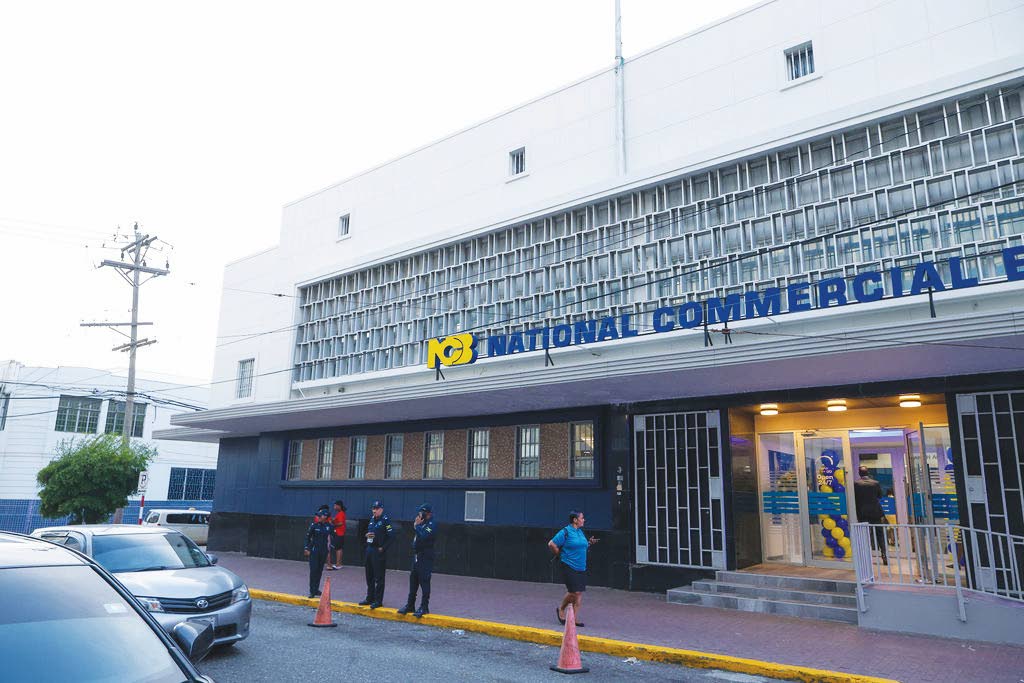
The exterior of NCBJ’s newly renovated Duke Street Financial Centre at 37 Duke Street in downtown Kingston. (Photo courtesy NCB)
Q: What would being recognised as Employer of Choice mean to NCB, and how would you maintain that standard?
A: It would be meaningful recognition of the people and culture we are building. NCB has previously received Employer of Choice recognition, but I believe that is something we must continue to earn. Our focus is on strengthening leadership, creating opportunities for career advancement, investing in technology and skills development, and ensuring employees have the support to perform at their best.
I want us to build an organisation where high performance is sustainable, accountability and care co-exist, and employees are proud of the work they do.
The award would be an honour. The real achievement would be our employees consistently experiencing NCB as a great place to work.
Q: What message would you like to leave with your fellow nominees?
A: Congratulations to my fellow nominees. We all understand the demands of building successful businesses, but I believe our responsibility goes beyond the bottom line. We often say our people are our greatest asset. The real test is whether our decisions demonstrate that belief.
I also reject the notion that caring for employees and demanding excellence are competing priorities. We can, and must, do both. When we create workplaces where people are respected, equipped to succeed and held to high standards, our businesses perform better, our customers benefit and Jamaica is stronger for it.


