



Christmas tree cheer
Major supplier offers good news as production returns to near normal after last year’s disruption by Hurricane Melissa
ONE of the major suppliers of Christmas trees in Jamaica is projecting that there will be no shortage this year despite a hit to its production last year with the passage of Hurricane Melissa.
The operators of Watson’s Christmas Trees say supply should return to normal after the disruption caused by Melissa while prices could remain constant.
Although the Category 5 storm made landfall in the western section of the island in October 2025, the Watson’s farms, located in Penlyne Castle in the hills of the Blue Mountains, were not spared as trees were battered and roads severely damaged, making it difficult to get the trees which survived to the market.
At the time Louis Watson, one of the owners of the company, had anticipated that the island would face a major shortage of Christmas trees going forward, as the mainly Mexican Cedar and Caribbean pine trees used locally take four to five years before they can be harvested.
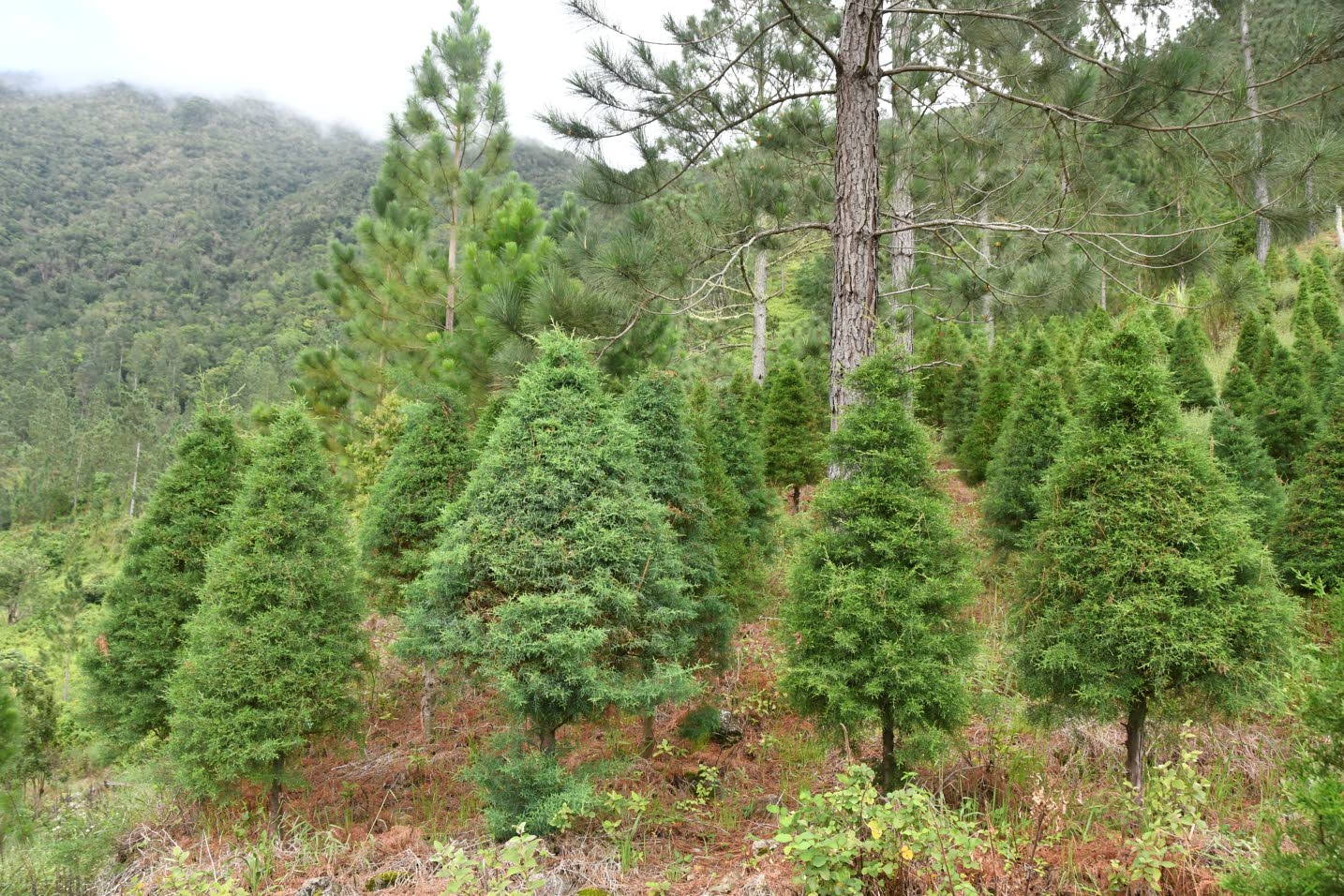
A section of one of the farms operated by Watson’s Christmas Trees in Penlyne Castle, St Andrew. Photo: Karl Mclarty
But when a
Jamaica Observer team returned to the community recently Watson was more optimistic.
“Though the business got a severe blow following the passage of the storm, there will not be a shortage this year because we have a vast amount,” said Watson.
She pointed out that several of the trees that were damaged during the passage of Melissa were already mature and ready to be cut.
“Some of them we used sticks to kotch them up so they didn’t bend and then some of them we had to destroy. So those that are ready to be cut this year, they were not destroyed so we have those,” she explained.
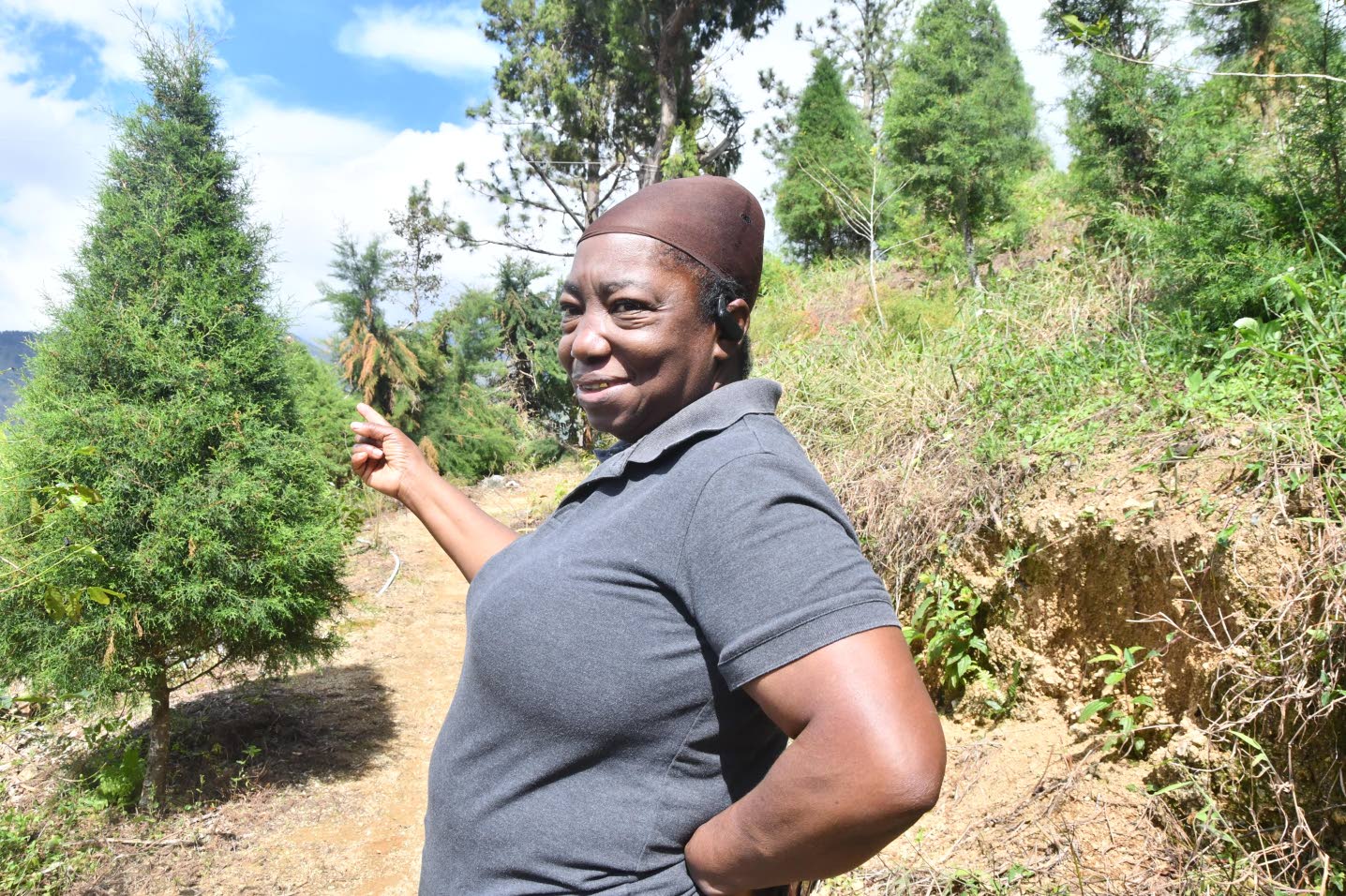
In this 2025 file photo Louis Watson, one of the owners of Watson’s Christmas Trees, points to what was left of the trees in her backyard in Penlyne Castle following Hurricane Melissa. Photo: Naphtali Junior
Pointing to drought that has gripped the country for much of this year, Watson told the Observer that production was affected but the recent rainfall has compensated for the dry season.
“Production kind of slowed down a bit because the trees didn’t get to grow out the way we would normally get them when we are having rain. We never got enough water so it slowed the growth of the trees. We have some trees that were never properly developed because of the drought but those that were almost developed and didn’t cut last year we have those to rely on,” Watson explained.
She pointed out that no decision has yet been made about pricing but said if there is any increase, it should not be significant.
“We are thinking about it… [but] I don’t know if we can have a price hike this year because everybody is crying. And then if the prices go up too much, I think we might… lose our customers. I’m not sure about the pricing yet but… even if we add anything, it won’t be anything much,” Watson said.
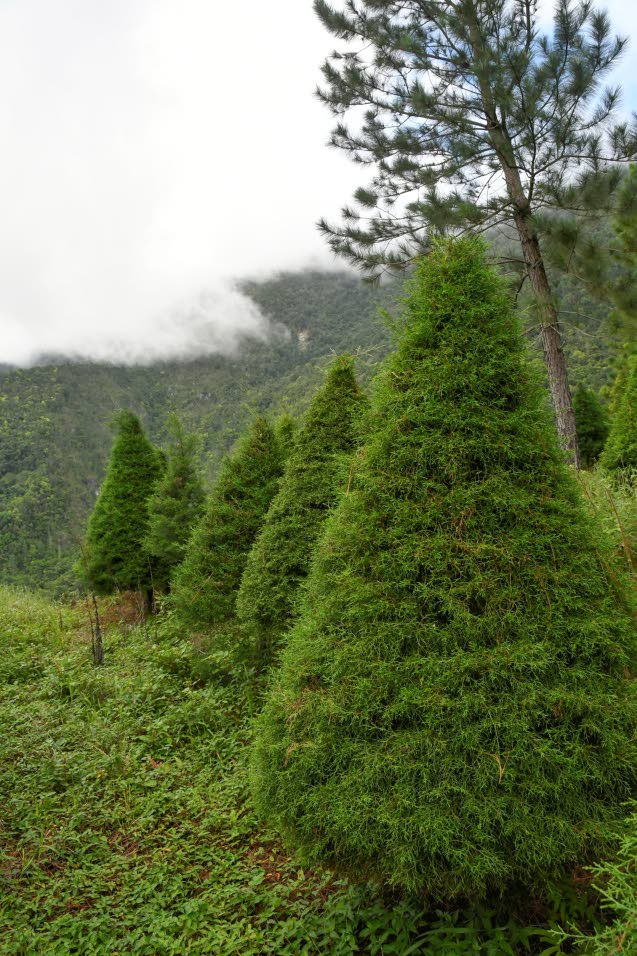
Ready to harvest are some of the trees on one of Watson’s Christmas Trees farm in Penlyne Castle, St Andrew, last Friday. Photo: Karl Mclarty
According to Watson, before the hurricane customers would usually pay approximately $1,500 per foot for a tree but that price was increased to approximately $2,500 per foot last year.
Meanwhile, the second partner in the business, Rudolph Watson, echoed his wife’s position as he told the
Observer that he is optimistic about the season.
“I am hoping to sell around 200 to 250 trees or if possible more. It’s kind of difficult to really say now. We have to just watch it through the season. We have new customers and we have some of the old customers who may scale down on the size of their trees because they can’t manage the size that they normally take each year. So they end up with a smaller one — that’s lower sales,” said Rudolph Watson as he argued that the market for artificial tress does not usually affect the company’s customer base.
“We will get sales, because people still want their trees. Some of them already started ordering; I have orders already, and I make one sale already. Some people don’t really gravitate to the artificial trees, mainly because of the smell of the plant. You have some people looking for the real trees because of the scent,” he added.


