$10-B LOGJAM
Chronic underspend on capital projects puts Jamaica’s economic growth at risk — fiscal commissioner
FISCAL Commissioner Courtney Williams has expressed concern about the Government’s ability to meet its spending targets after first-quarter capital expenditure was nearly $10 billion below budget, potentially affecting the country’s growth strategy. Williams stated that the underspend — part of a broader $18.7-billion shortfall in overall expenditure — reflects persistent challenges in execution across the public sector, not only within central government but also among key public bodies.
“All expenditure categories saw lower spending than budgeted, led by capital expenditure being almost $10 billion below what was programmed for the quarter; this has implications, of course, for growth — not just in this quarter but going forward,” Williams noted.
The concern comes as Jamaica’s economy, which contracted by 0.8 per cent last year, is projected to grow between 1 per cent and 3 per cent this year, with most forecasts clustering near the middle of that range.
First-quarter data shows capital expenditure — which funds infrastructure and development projects — stood at just over $8.8 billion against a budget of $18.6 billion. While recurrent expenditure has remained relatively close to budgeted amounts, both central government and public bodies have significantly underperformed in their capital programmes.
“It is not just in the central government we are seeing this; we are also seeing it with the public bodies,” he continued.
“So we will also be drilling down into the public bodies to see the performance there,” he added. Williams indicated that the next report, scheduled for early September, will include an assessment of the entire public sector’s performance for the quarter, excluding the Bank of Jamaica and the Jamaica Mortgage Bank, which are exempt from the review.
According to Williams, this persistent lag in capital spending highlights ongoing capacity challenges in implementing planned infrastructure and development projects in Jamaica. He highlighted that the concerns about capital expenditure performance across the public sector is a continuing one, reflecting on last year’s figures when both public bodies and central government significantly underspent.
“If you recall, the public bodies last year, for example, budgeted to spend about $95 billion in capital but only spent half of that. We also saw where the central government initially budgeted to spend $80 billion and they only spent about $47 billion. So across the entire public sector, central government and public bodies, we have seen under-expenditure on the capital side.”
Despite these challenges, the 2025/26 fiscal year budget showed an increase in capital allocations. Williams noted, “Now fast-forward to the current fiscal year, 2025/26, the public bodies have budgeted to spend about $101 billion on capital projects. Preliminary information so far is that they are way behind with that, and there would have to be a significant uptick in spending for both the central government and the public bodies for them to get in line with the budgeted figure.”
“So that is of concern.”
He also confirmed that revenues were broadly on target for the first quarter but warned of a potential full-year shortfall in tax revenue, attributing the risk to the way the budget is constructed. Williams noted that he had raised concerns in his inaugural report earlier this year about the Government’s heavy reliance on revenue collection in the final quarter — especially the last month — a risk he said materialised with significant shortfalls this past March.
“The tax base for 2024/25 was actually lower than what the Ministry of Finance used in its forecasts,” Williams explained. “They based their projections on a higher tax base when it should have been lower.”
He elaborated that the budget is prepared starting in January, with estimates for February and March — a critical revenue-collection period. However, actual March collections fell far below projections, resulting in a smaller-than-expected tax base that will affect this year’s revenue outlook.
“This shortfall will feed into the 2025/26 fiscal year and into future projections unless corrective action is taken promptly,” Williams warned.
His office is currently finalising its review of the Government’s fiscal performance for the April to June quarter. Williams added that his team continues to assess the results while looking “further beyond the first quarter to the end of the fiscal year in terms of what kind of forecasts we can anticipate.”
WILLIAMS… all expenditure categories saw lower spending than budgeted, led by capital expenditure being almost $10 billion below what was programmed for the quarter; this has implications, of course, for growth — not just in this quarter but going forward (Photo: Joseph Wellington)
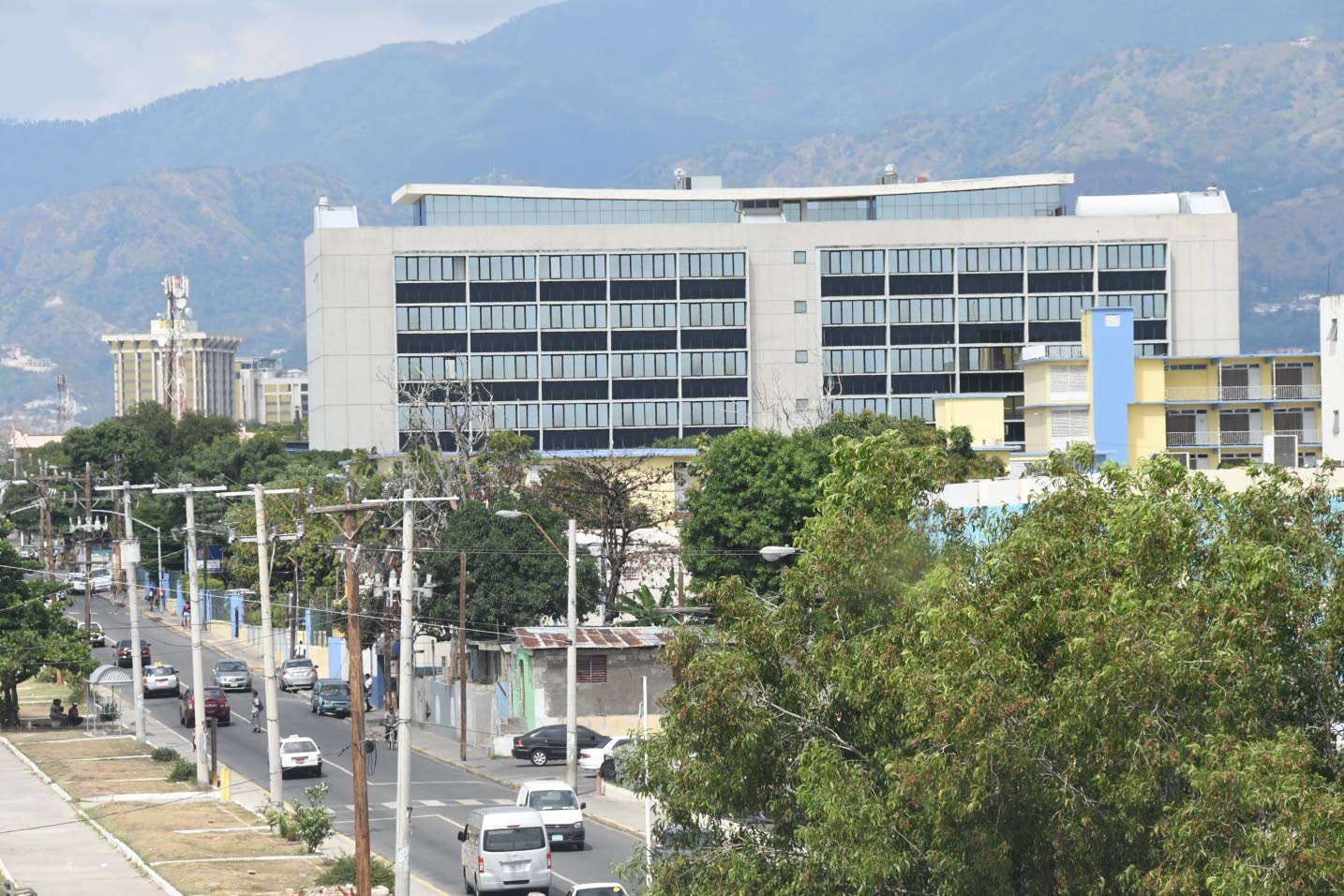
A shot of the Ministry of Finance building in Jamaica. The fiscal commissioner warns that tax revenues could underperform this year because of errors in calculation..