



Twin revelations of Hurricane Melissa
On Tuesday, October 28, 2025 Melissa made landfall in Jamaica as a Category 5 hurricane,bringing catastrophic winds and extensive flooding, destroying homes, disrupting essential services, and isolating communities on an unprecedented scale, mainly in the parishes of St Elizabeth, St James, Trelawny, Manchester, Hanover, and Westmoreland.
There are two important revelations from the passing of this tropical weather system: The awesomeness of its power, and the damage it wreaked. The first is that there is a divine force, the creator, which is beyond man’s ability to comprehend. Man must be forever searching, ever pursuing, but never fully attaining an understanding of the God of Genesis 1:1 who in the beginning “created the heaven and the earth”.
In the two weeks since the hurricane hundreds of sermons have been preached and many more conversations held putting forward different perspectives of God’s role in destructive natural events such as hurricanes. These range from the belief that a loving God does not directly cause them to the belief that God allows them for reasons such as judgement for sins and to test the moral fibre of a people.
While many struggle to find a balance consistent with their religious beliefs and cultural upbringing, others are more emphatic in their views. The chaplain of a major private hospital in the Corporate Area was reported in one of the daily newspapers as saying, “This is not the act of God. This is the act of the devil.
While there is no one causal factor to which people of different religious beliefs will agree, there is a universal, less incriminating position many Christians may find acceptable. According to Psalm 19:1-2: “The heavens declare the glory of God; the skies proclaim the work of his hands. Day after day they pour forth speech; night after night they reveal knowledge.” One way that God reveals himself in creation is through nature; solar and lunar eclipses; earthquakes and tsunamis; as well as cyclones, storms, and hurricanes. They tell us God exists.
There is a second, deeply worrying revelation coming from Hurricane Melissa: The socio-economic development model used by successive governments leaves many people vulnerable to the ravages of natural disasters. Like Hurricane Beryl and others before, Melissa was selective in choosing who suffered the most — the poor, the ghetto and gully bank dwellers; the homeless, who like stray animals are left to the ravages of the elements; as well as the uncared for elderly and sick. Those perceived to have no worth other than their vote, suffered disproportionately and will take longer to recover compared to society’s well-off.
In the successful campaign that returned it to Government, one of the solid achievements the Jamaica Labour Party (JLP) boasted about was halving of poverty from 16.7 per cent in 2021 to 8.2 per cent in 2023. The United Nations Development Programme (UNDP), in its 2025 Global Multidimensional Poverty Index (MPI) report, sheds light on a darker side of the poverty crisis. While poverty statistics traditionally have focused on the monetary aspect, the MPI goes beyond household income to measure poverty resulting from deprivations such as health care, education, nutrition, sanitation, housing, access to clean water, security, social inclusion, standard of living, and other factors affecting people’s feeling of well-being.
The UNDP report reveals that about 2.8 per cent of Jamaica’s almost 3 million population, 80,000 people, are trapped in multidimensional poverty. Of that number 52 per cent suffer deprivation in health; 21 per cent in education, and 27 per cent in standard of living. An additional 5 per cent, 142,000 Jamaicans, are vulnerable to multidimensional poverty.
According to the report, the incidence of multidimensional poverty is higher than the incidence of monetary poverty. It gets worse, 0.2 per cent of the Jamaican population is living in severe multidimensional poverty.
The changing skyline of some urban centres and high-end motor vehicles on our roads mask the serious deprivations suffered by, for example, the estimated 20 per cent of the population living in squatter settlements. Hurricane Melissa exposed the ugly underbelly of a society and economy aptly described by Manfred A Max-Neef in the book titled
Human Scale Development as the crisis of utopia. Neoliberal economics is ensuring that the vaunted prosperity of the national pledge “will remain but a fleeting illusion to be pursued, but never attained”.
The increasing frequency and severity of weather systems caused by climate change means increased vulnerability and suffering among marginalised communities and people. It’s not only about physical infrastructure. Jamaica must make the necessary adjustments to its socio-economic development model and its approach to disaster prevention and mitigation to increase the resilience of its most at-risk citizens and communities.
Dr Henley Morgan is founder and executive chairman of the Trench Town-based Social Enterprise, Agency for Inner-city Renewal, and author of My Trench Town Journey: Lessons in Social Entrepreneurship and Community Transformation for Development Leaders, Policy Makers, Academics and Practitioners. Send comments to the Jamaica Observer or hmorgan@cwjamaica.com.
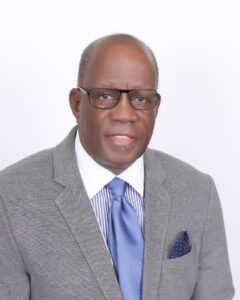
Henley Morgan


