



Human milk bank pilot possible in Jamaica
Tufton says Family Health Unit tasked with review
Jamaica’s Family Health Unit has been asked to examine the feasibility of establishing a donor human milk bank with the probability of a test run, Health and Wellness Minister Dr Christopher Tufton told the Jamaica Observer last week.
Tufton made the disclosure after the newspaper sought his response to a proposal by youth advocate and attorney Benyamin Cooke that Jamaica establish such a facility to support mothers who are unable to breastfeed after giving birth.
Cooke made the call in an article he sent to the Jamaica Observer, arguing that breast milk banks offer protection and health benefits to mothers unable to nurse their babies.
“When you think of the impact of non-communicable diseases you realise that these may have an impact on mothers’ ability to breastfeed. When you think of breast cancer, for example, where a person might lose their breast but would still want to have children, how would we navigate that? A human breast milk bank can facilitate that sort of nutritional value which is second to none,” he said.
“Where there are sick newborns, premature babies, and instances where mothers cannot breastfeed because of illness or ailments, pasteurised donor human breast milk is the appropriate solution,” Cooke argued, adding that, while formula provides the basic nutrients full-term babies need, it “doesn’t contain antibodies that provide immunity to diseases”.
The Sunday Observer canvassed Tufton, as well as health professionals and mothers on the proposal. The results were mixed.
Tufton framed his response against the background of community engagement and healthy parenting, saying that any such move toward a donor human milk bank must take into consideration cultural beliefs and practices.
“I do believe that given the network of health workers on the ground at the level of community, that messaging is one that could be conducted, and it’s certainly in keeping with my own personal philosophy as minister that our policy needs to be more far-reaching, needs to be more engaging, and needs to get the community more involved in how responsible and healthy parenting is conducted, whether it is from a single parent home or a male and female partner home,” he said.
“And so, from that perspective, I certainly welcome the conversation and the dialogue which could flow from it. So I’ve asked the Family Health team to look at it and to see how we can start by educating our own internal stakeholders, and from there determine how we probably could pilot a project of this kind in a particular community going forward,” he shared.
“It is a practice that is conducted in jurisdictions in different parts of the world. It does come with some cultural biases and/or significant public education for acceptance,” Tufton added.
“In the context of Jamaica, there are predisposed biases against the breast milk bank and we have to be sensitive to that. What it would mean, however, is that we would have to undergo public education, but I do believe that the concept of a community being involved, in a manner of speaking, in raising a child and providing healthy and responsible parenting is a concept that has been part of us and part of our history and culture. In addition to that, the increasing discussion around community and family and the need to refocus around this concept for better health and wellness, better values and attitudes, better development and upbringing, and, of course, peace, is one that I believe could provide fertile soil for this kind of conversation, in addition to the baby-friendly facilities that we have been developing in our hospital system,” the health minister said.
His comments were corroborated by the ministry’s Family Health Unit, which pointed out that in Jamaica and the Caribbean the main barriers include cultural beliefs and fear of disease transmission, for example HIV.
“In Jamaica, some men and other family members believe that expressed breast milk is nasty and so they do not want to touch it or feed it to infants,” the unit said. However, it pointed out that the process involves donor screening for HIV, Hepatitis, and other illnesses; processing, where milk is pasteurised to eliminate bacteria and viruses; and testing and storage, where milk is analysed for nutritional content, tested for pathogens, and stored in strict, hygienic conditions.
“Studies in other countries show that, when educated at human milk banks, the majority of mothers are willing to donate or use donor milk,” the unit said. “Successful implementation depends on addressing deep-seated cultural beliefs as well as ensuring that the country has the capacity to provide safe milk in terms of donor screening, processing and testing and storage.”
Jheanell Condappa, a midwife supervisor at a health centre in the Corporate Area, supports the idea of having a human milk bank.
“Majority of our patients who are breastfeeding, they feel like they don’t have enough and so they keep substituting with formula, and so, if they should have the option to substitute it with breast milk, that would be a better option, so having that access would be great,” Condappa, who has been practising for 18 years, told the Sunday Observer.
She said that based on the information collected by the health centre over the past two weeks, a total of 19 postnatal patients were seen, with only 16 partially breastfeeding as they were not producing enough milk to meet their babies’ needs.
Registered midwife Shemeka Ferguson agreed, describing the issue as a “daily challenge”.
“I have seen it very regularly since I have started working. Whether it’s due to medical reasons, or some mothers saying they don’t have enough milk to breastfeed, so that’s where the breast milk bank would come in and assist those mothers,” she said.
Those views, however, were not shared by a midwife at another health centre.
“Breastfeeding is very important; however, I don’t see a need for a breast milk bank. With the mothers that I have been interacting with I don’t see where more than two per cent of these mothers have issues with breast feeding; majority of the mothers that we see can breastfeed and just need help in initiating it and for it to be continued,” said the health professional, who spoke on condition of anonymity.
The midwife, who has also been practising for 18 years, questioned the need for a breast milk bank, noting that majority of breastfeeding-related issues can be rectified.
She also argued that many mothers may not be open to the idea.
“If we should have a breast milk bank I don’t know how many persons would participate in that because some people are not going to opt for their baby to be taking someone else’s milk. I think people would strongly disagree to that,” she said.
However, Condappa argued that “wet nursing”, as the practice is sometimes called, has long been a part of Jamaica’s culture.
“Initially, for a short period, the initiative may receive a little pushback, but once public education is prioritised it would be welcomed, especially given the introduction of technology and persons realising that this is something done in other countries,” she said.
Janice Brown, a mother of two children, shared that she never breastfed due to her inability to produce milk.
Brown, who was a patient at one of the clinics in the Corporate Area last week, told the Sunday Observer that if a breast milk bank were available in Jamaica she probably would have considered it, noting that the world is evolving and the facility would be beneficial to mothers with lactation difficulties.
“If there was another alternative, maybe I would have considered it, maybe I would have tried it, but I am not a hundred per cent sure. It depends, because remember it’s a decision you and your partner would have to make. We would have to come to an understanding and a conclusion. If he said he is willing to try, I would go,” she said.
Christal Crosdale, another mother who revealed that she is unable to produce milk, said while a “breast milk bank would be important for children who lost their mom or those who have a particular illness” she would not utilise the service.
“For me, being alive, I wouldn’t want my child/children to be drinking someone else’s milk. So I would always opt for formulas,” she said.
Jodian James, a mother of a six-month old who was also a patient at one of the Corporate Area clinics, told the Sunday Observer that she would utilise the facility.
Her view was shared by Aneka Grant, another mother at the clinic.
“I would donate,” she said. “There are mothers who cannot produce breast milk for whatever reasons and breast milk is recommended for babies 0-6 months, and you have babies getting formulas at a young stage for this reason, so the breast milk bank would be important.”
Historians have stated that from the dawn of humanity, women have shared their breast milk — often for the survival of babies whose mothers could not nurse. Until the 20th century this was usually done by directly nursing the babies.
According to the National Library of Medicine, the first human milk bank was opened in 1909 in Vienna, Austria, and today there are more than 700 such facilities in 60 countries globally.
The World Health Organization (WHO) and the United Nations Children’s Fund (UNICEF) first recognised donor milk from human milk banks as an alternative to mother’s own milk in 1980.
However, when HIV was identified in human milk later that same decade, trust in the safety of donor human milk was compromised, significantly stalling human milk bank growth and expansion for years.
The National Library of Medicine has also reported that there are no global standards to guide human milk bank operational procedures.
It also said that, “Even though most human milk banks attempt to employ quality control systems to provide safe donor human milk, differences in community needs, resource availability, and a range of methods and policies to execute processes result in significant variations in donor human milk quality and human milk bank operations.”
The WHO and UNICEF recommend exclusive breastfeeding from the first hour of life until at least six months of age, pointing out that the benefits of breast milk are, in large part, related to the properties of the milk itself.
The act of nursing is crucial for stimulating the production and flow of breast milk; the baby’s closeness to its mother, and especially the skin-to-skin contact, strengthens the baby’s immune system, and the frequent physical interaction promotes the development of mother-child emotional ties.
Health authorities point out that breast milk is especially important for low-birthweight premature infants because it lowers the risk of infection and thus, over the longer term, the risk of death.
The WHO recommends that low birthweight premature infants be breastfed and, if this is not possible for any extended period of time, that they be fed by a wet nurse or with donated milk from a human milk bank.
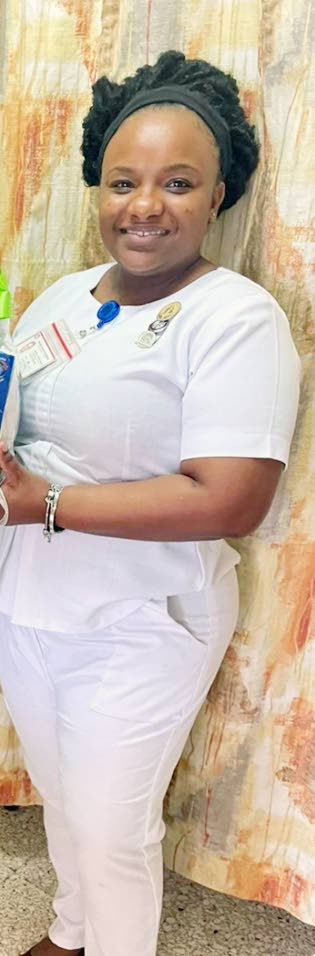
Midwife supervisor Jheanell Condappa supports the idea of having a human milk bank.
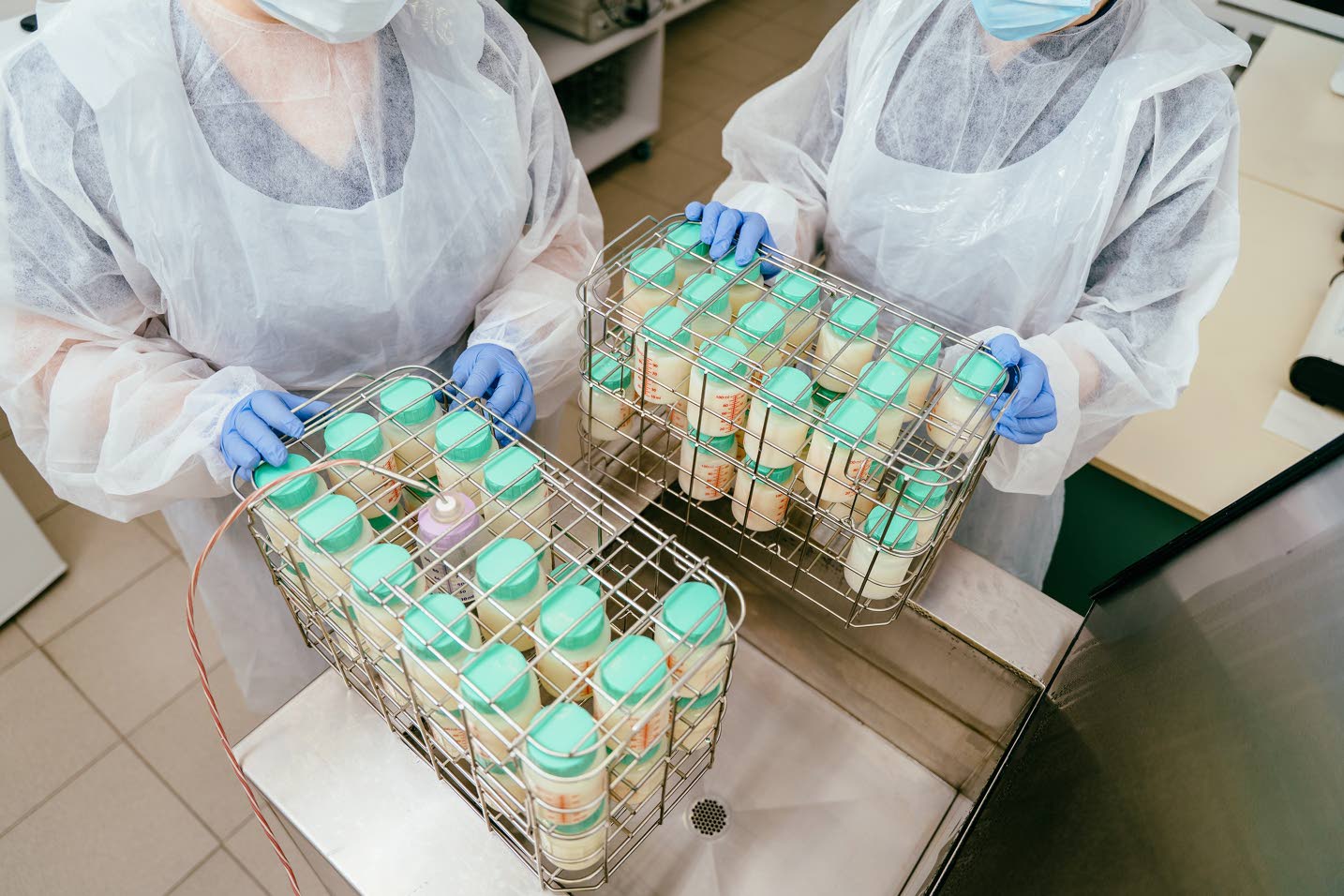
Today there are more than 700 human milk banks in 60 countries globally.
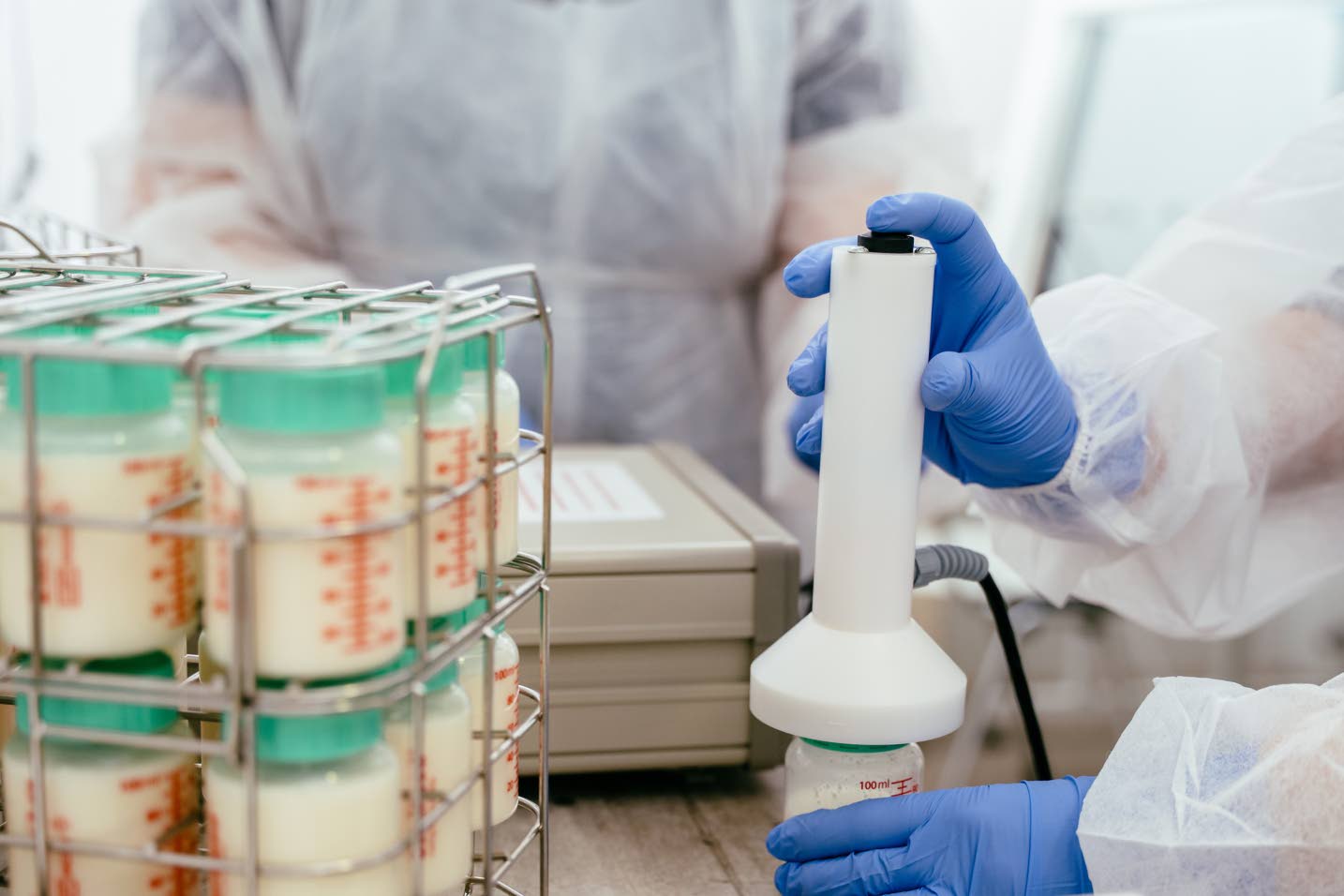
The human donor milk process involves donor screening for HIV, Hepatitis and other illnesses; processing, where milk is pasteurised to eliminate bacteria and viruses; and testing and storage, where milk is analysed for nutritional content, tested for pathogens and stored in strict, hygienic conditions.
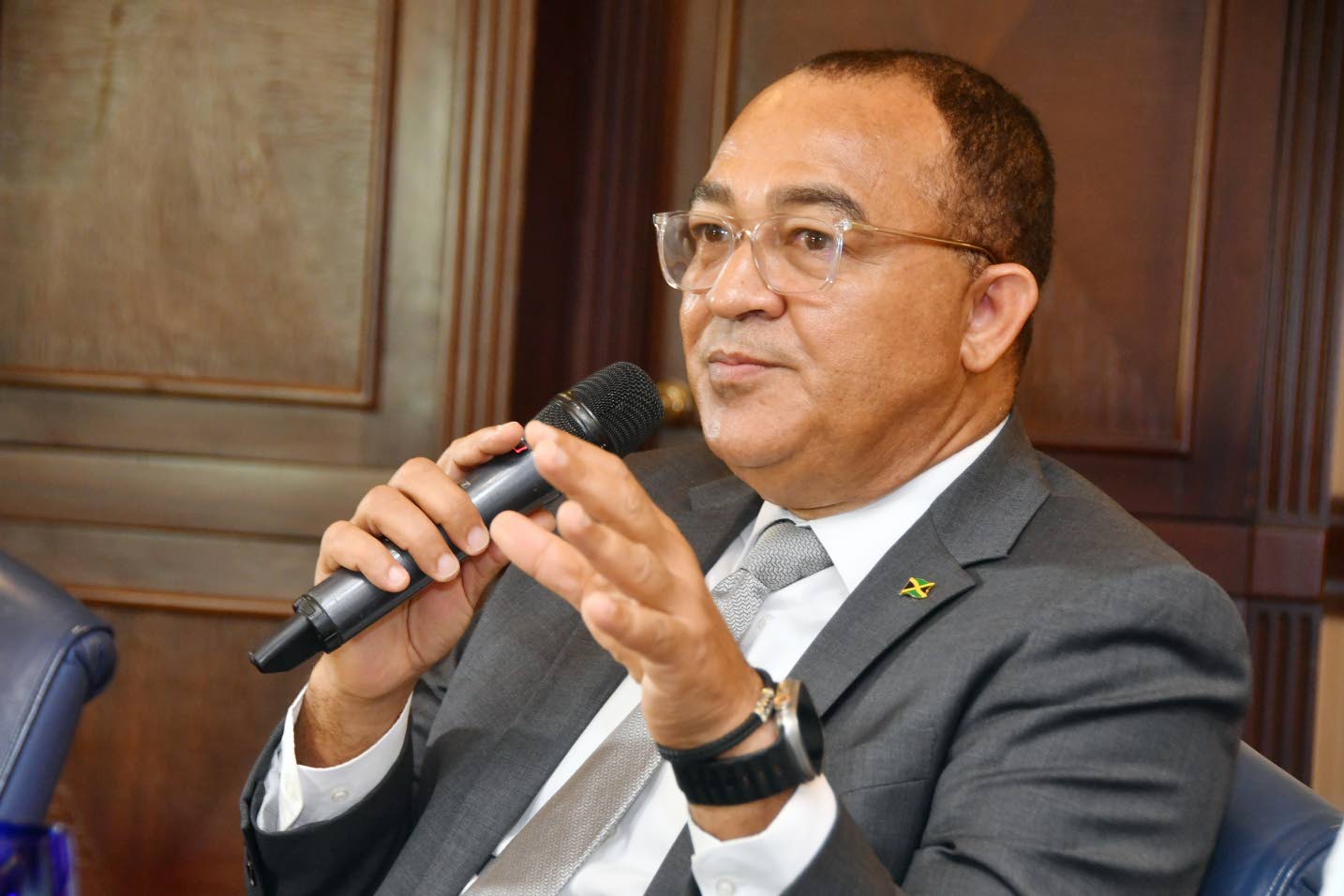
TUFTON… I certainly welcome the conversation and the dialogue which could flow from it


