



Needed, a church unusual
When the COVID-19 pandemic struck, the Church was among the first institutions to feel the devastating effects of the scourge. Suddenly, public attendance stopped and worshippers were literally forced to stay within the confine of their homes. Those that offered a modicum of attendance did so with attendants wearing masks and an abundance of caution. The use of digital technology for worship became necessary. Old and young alike had to find their way through this new Wilderness of Zin.
After the virus subsided and we returned to some normality in our day-to-day lives, it became abundantly clear that church would not be what it was before the pandemic — certainly, as far as worship was concerned. Those who had become accustomed to worship digitally found no reason to attend church physically. So there was a strong fall off in attendance, not dissimilar to that which affected physical workplace attendance after people grew accustomed to working from their homes for almost three years.
I have said repeatedly to those who would listen that what the pandemic did provide was the urgent need for a reset to look at new paradigms of doing ministry outside of the confines of church walls and institutional authority to revamp archaic systems that did not really serve the Church in the past and to return to the pristine understanding of the gospel as one of hope, forgiveness, and reconciliation which move people into the direction of healing and self-empowerment. What I was, and am actually appealing for is for us to abandon any notion of church as usual and return to a church unusual, a church that does the aforementioned.
A church as usual is one preoccupied with honorific titles. My good friend, the bishop of Jamaica, would never hear me refer to him as “mi lord” and I know that he eschews that categorisation strongly. Jesus would not fit comfortably in the institutional arrangements which define the Church today. His triumphal entry into Jerusalem on Palm Sunday riding on the “foal of an ass”, a donkey, bears this out quite well. He was not seated on a white steed which would have been fit for a king and the honour that the people bestowed upon him. And in Jerusalem, he died on a cross, a symbol of degradation and shame.
Yet, today, the institutional church, the church as usual, the Church that believes that the traditions we have inherited from the past are sacrosanct and unimpeachable even when they clearly are not serving the best interests of the gospel of Jesus Christ. The church as usual believes that it can make void the power of the gospel by maintaining our power traditions that we largely inherited from a colonial, hegemonic past.
Few would be willing to admit that in the Anglican tradition, with which I am more familiar, the use of honorific titles — canon, archdeacon, the right reverend, the most reverend, and so on — are derived from a colonial past in which we are content to still revel. These colonial legacies, which we hold on to for dear life, often set up hierarchies of power within the Church which can lead to animosity among the brethren and sistren, especially those who believe that they were skipped over in favour of others less qualified.
These titles are not biblically derived but are part of church tradition which, in my view, frankly, have not served the best interests of the Church. If I understand the mind of Christ well enough, I can be bold to say that he would not be comfortable wearing any of them. What really is it to be called ‘most reverend’? It does not even sound linguistically correct. They are indeed anathema to the spirit of humility which Jesus gave his life to teach us.
The church unusual understands that when the Holy Spirit empowers it for service we are being called to participate in the liberating work of God, not in institutional maintenance, but spirit-empowered reconciliation, healing, and liberation. I once heard Bishop Frank Griswold, one of the former heads of the Episcopal Church in the USA, remark that as clergy we are not called to be “technicians of the sacred”. This is an apt and fitting description of those who labour to “maintain” churches but who never really concentrate on the gravamen of their true calling, which is to bring the liberating power of God’s love to the world and to our hurting communities crying out for peace and reconciliation.
And you cannot do this if 60 to 70 per cent of the work that you do as the clergy is administration. Think about it. Any cursory reading of the ordination vows of clergy, in any denomination, will reveal that there is hardly any emphasis, if any at all, on the administrative function of the clergy. It is heavily concentrated on his pastoral work in feeding the flock, that is, interacting with his or her flock.
If a bishop, it means being there for those who pastor the sheep and being the shepherd to the shepherds. Thus, he should not be caught up in interminable meetings regarding budget and other minutiae of church governance. He or she should be freed up to spend time in the pastorate with his shepherds and the flock helping them to understand the good news about Jesus Christ and receiving some of the peace for which their soul craves. This he or she cannot do if they are worn out by the trammels of administration. Every Bishop, superintendent, and moderator of any mainline congregation know exactly what I am talking about. It is not just an Anglican phenomenon.
But you will say to me that the head of the church is acting in concert with the constitutions and canons. But I respond, who put those into being? Yes, the Church did at its annual synods or assemblies. But what is interesting is that while the canons provide the basis for church governance and order, which is necessary, it overburdens a bishop or church head by tethering him or her to administrative functions which leave little space for him or her to exercise his/her ordination vows. Thus, the canons are in variance with those vows. A church unusual would free up a bishop to concentrate his attention on doing the work of ministry and leave administrative functions to more qualified people in the church. There are talented people who can do this work more competently than the clergy. But they cannot let go of the money; they have to watch it, as one clergyman told me in a discussion like this.
Bishop Leon Golding was spot on when, at the last Anglican synod, he spoke of not putting new wines in old wineskins. This is not a call for a new paradigm of being the Church. It is instead a rediscovery of what makes the Church, the Church, a reassertion of the community of God as seen in action in the early Church under the power of the Holy Spirit.
By maintaining the old order of church as usual we are indeed attempting to pour new wine into old wineskins and expecting new and invigorating results. COVID-19, and now Melissa, has given the Church an impressive opportunity for a reset. Will we seize the moment under the authority of the Holy Spirit?
Dr Raulston Nembhard is a priest, social commentator, and author of the books Finding Peace in the Midst of Life’s Storms; Your Self-esteem Guide to a Better Life; and Beyond Petulance: Republican Politics and the Future of America. He also hosts a podcast — Mango Tree Dialogues — on his YouTube channel. Send comments to the Jamaica Observer or stead6655@aol.com.
Pull Quote
I have said repeatedly to those who would listen that what the pandemic did provide was the urgent need for a reset to look at new paradigms of doing ministry outside of the confines of church walls and institutional authority to revamp archaic systems that did not really serve the Church in the past and to return to the pristine understanding of the gospel as one of hope, forgiveness, and reconciliation which move people into the direction of healing and self-empowerment. What I was, and am actually appealing for is for us to abandon any notion of church as usual and return to a church unusual, a church that does the aforementioned
Raulston Nembhard
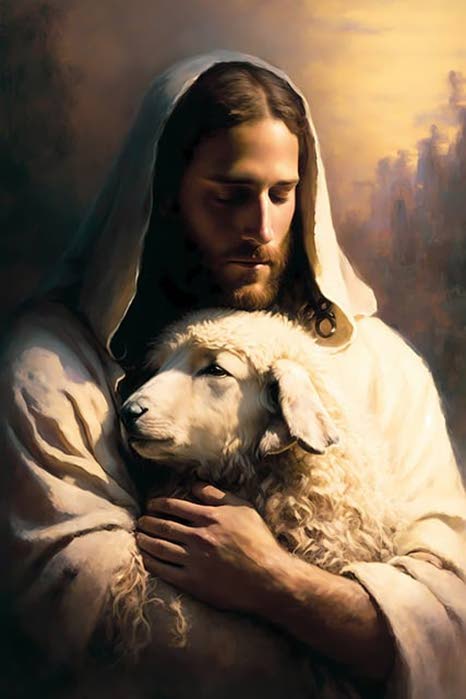
Jesus would not fit comfortably in the institutional arrangements which define the Church today.l


