



Recognition for patois requires policy, not performance
Dear Editor,
The confrontation in Gordon House over the use of Jamaican Patois was entirely predictable — not because the language lacks legitimacy, but because the Standing Orders of the House are clear.
When Opposition Member of Parliament (MP) and culture spokesperson Nekeisha Burchell attempted to deliver part of her sectoral debate contribution in Patois, House Speaker Juliet Holness acted within the rules in stopping her. Whatever one’s cultural sympathies may be, parliamentary democracy cannot function if members selectively decide which rules deserve obedience and which do not.
What made the episode troubling was not the desire to elevate Jamaican language and identity, but the now-familiar pattern of Opposition MPs deliberately provoking procedural conflict in the chamber. In recent months, Jamaicans have repeatedly witnessed behaviour designed less to advance policy than to generate spectacle — from the removal of the mace to orchestrated confrontations aimed at undermining the authority of the Speaker.
The persistent antagonism directed towards Holness by some Opposition MPs, including Angela Brown Burke, risks eroding public confidence in Parliament itself. Parliamentary dissent is healthy; parliamentary disorder is not.
It is essential that elected officials observe and uphold the rule of law at all times — not only when it aligns with their agenda. Behaviour of this nature sends the wrong message to the wider society and may be perceived as a dangerous double standard. Public officials must remember that ethical conduct is not merely about appearance; it must be consistently practised and clearly demonstrated.
Policies and procedural guidelines exist for a reason, and must be followed regardless of intent. Established protocols ensure a single standard of operation for all members. Deliberate misbehaviour in Parliament is not only disrespectful, but also mirrors the broader breakdown in discipline increasingly evident in society.
It is important to note, however, that the Opposition’s broader argument regarding Jamaican identity is not without merit. Jamaican Patois is not “broken English”, it is a legitimate linguistic system deeply embedded in the nation’s history, culture, and identity. Linguistic scholarship has long established the coexistence of Jamaican standard English and Jamaican Patois within a continuum shaped by history, education, and social class.
The issue, however, is that constitutional and parliamentary reform cannot be achieved through theatrical defiance of existing procedures. Meaningful reform requires legislative engagement, consensus-building, and formal amendments to the Standing Orders — not ambush politics in the middle of a sectoral debate.
There is, therefore, a strong case for the development of a policy proposal to guide the formal inclusion or regulated use of Jamaican vernacular in Parliament. Such a reform could acknowledge contemporary cultural realities while maintaining procedural order. If Jamaica is truly committed to advancing its culture, then every aspect of what defines its identity must be treated with seriousness and not reduced to political gimmickry. A policy reform of this nature would be both necessary and groundbreaking, as it would formally recognise the legitimacy of the Jamaican language, promote its acceptance, and help to eliminate the stigma often associated with its use.
Indeed, Jamaica must confront an uncomfortable contradiction: A nation proud of its cultural identity continues to operate many of its highest institutions through inherited colonial conventions. If Parliament is to reflect the linguistic reality of the Jamaican people, then the conversation about recognising Patois in formal State spaces must form part of the broader constitutional reform agenda, including Jamaica’s transition towards full republican Independence. One cannot credibly advocate for decolonisation while refusing to modernise institutional rules that continue to privilege colonial-era linguistic norms.
However, reform and indiscipline are not the same. A functioning democracy depends on respect for procedures, even while seeking to change them. Today it is Patois; tomorrow it may be another rule disregarded in the name of symbolism or protest. Once parliamentary rules become optional, the chamber risks descending into performative chaos rather than meaningful democratic deliberation. We must reject the notion that rules can be selectively applied based on convenience, as this undermines the very fabric of our national identity.
Jamaica deserves both: a Parliament that upholds order and a constitutional future that reflects its cultural realities. These goals are not mutually exclusive. However, they can only be achieved through mature legislative reform — not political provocation masquerading as patriotism. It is time we take this matter seriously and move forward with renewed national pride. Jamaica must see itself not as an actor in isolation, but as a global participant. The world is watching, and we must, therefore, conduct ourselves with respect, dignity, and integrity.
Ricardo Smith
ricardo.professional.edu@gmail.com
Oneil Madden
maddenoniel@yahoo.com
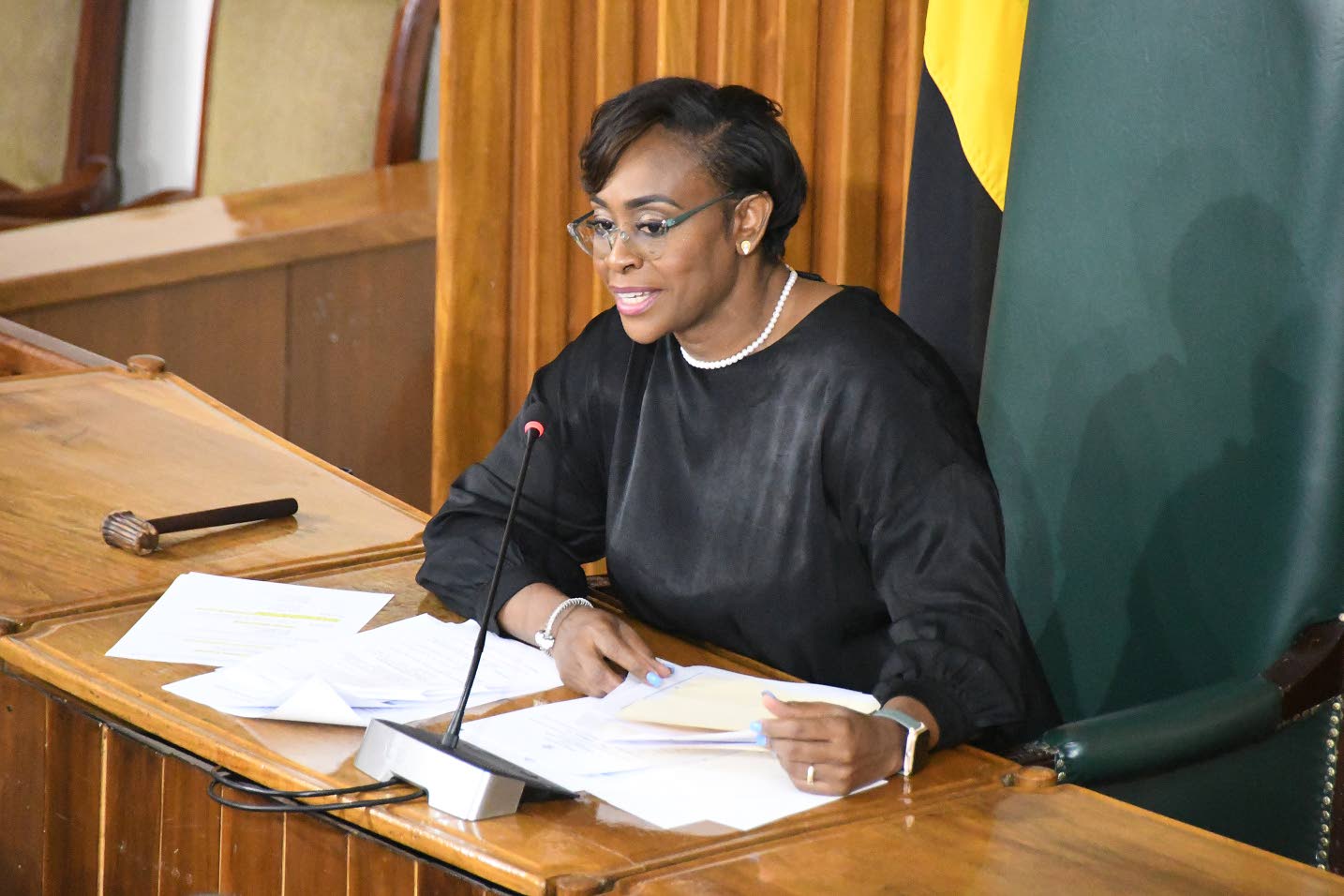
Juliet Holness a


