



IMF raises pressure on Trinidad and Tobago amid FX strains
THE International Monetary Fund (IMF) has raised fresh concerns about mounting pressure within Trinidad and Tobago’s foreign exchange regime, warning that declining reserves and persistent foreign exchange shortages may require a gradual move toward greater exchange rate flexibility over time.
In its latest Article IV consultation released on Friday, the IMF said policymakers should improve the functioning of the foreign exchange market while gradually moving toward “greater exchange rate flexibility”, alongside broader reforms aimed at safeguarding macroeconomic stability.
The warning comes as Trinidad and Tobago’s international reserves are projected to fall to about US$4.8 billion in 2026 from US$6.9 billion in 2021, while import cover is expected to decline by roughly 27 per cent to 5.5 months from 7.5 months over the same period despite support from higher global energy prices.
“Against the background of declining reserves, directors also called for efforts to improve the functioning of the foreign exchange market and, over time, move toward greater exchange rate flexibility with appropriate supporting measures,” the IMF said following discussions by its executive board.
While the IMF stopped short of explicitly calling for currency devaluation, the language represents one of the clearest recent signals from the Fund that pressures within Trinidad and Tobago’s foreign exchange regime are becoming increasingly difficult to manage under current policy settings.
The IMF also urged Trinidad and Tobago’s central bank to move interest rates closer to US levels in an effort to reduce incentives for capital to flow abroad, with the country’s 3.5 per cent repo rate remaining below the US Federal Reserve’s 3.5 per cent to 3.75 per cent benchmark range amid continued pressure on reserves and foreign exchange availability.
Businesses in Trinidad and Tobago have long complained about difficulties accessing foreign exchange, with shortages affecting imports, supplier payments and broader commercial activity across parts of the economy.
The IMF’s concerns over foreign exchange pressures come against a backdrop of slowing economic growth and continued fiscal strain, despite temporary support from stronger energy prices.
Real GDP growth is projected at 0.8 per cent in both 2025 and 2026, slowing from 2.5 per cent growth recorded in 2024. The IMF expects the non-energy sector to remain the main driver of activity, with non-energy growth projected at 2.6 per cent next year even as the energy sector is forecast to contract by 4.5 per cent.
The report said higher energy prices are providing near-term support to Trinidad and Tobago’s fiscal and external accounts, giving policymakers an opportunity to rebuild financial buffers.
However, persistent budget shortfalls continue to weigh on public finances. The IMF projects the overall fiscal deficit will narrow to 4.6 per cent of GDP in 2026 from 5.5 per cent in 2025 while central government debt is projected to remain elevated at 67.8 per cent of GDP.
Public sector debt is projected above 84 per cent of GDP, adding to concerns about Trinidad and Tobago’s shrinking policy room if external conditions deteriorate or energy revenues weaken.
The Fund also urged authorities in the two-island republic to strengthen fiscal consolidation efforts while protecting vulnerable groups, arguing that stronger revenue collection, reduced non-priority spending, and better-targeted social programmes would be needed to place debt on a sustainable downward path.
The IMF also said higher-than-budgeted energy revenues should be used primarily to rebuild financial buffers, including through resumed deposits into the Heritage and Stabilisation Fund.
The Washington-based institution nevertheless noted that Trinidad and Tobago retains substantial buffers through the Heritage and Stabilisation Fund whose liquid assets are projected at nearly 25 per cent of GDP.
Inflation, which returned to low pre-pandemic levels in 2025, is expected to rise temporarily to 3.1 per cent in 2026 — due mainly to global commodity price developments — before stabilising around 2 per cent over the medium term.
The IMF also pointed to several risks facing the economy, including possible disruptions to energy production, delays in new energy projects, and uncertainty linked to the war in the Middle East.
While the IMF said Trinidad and Tobago still retains significant buffers through the Heritage and Stabilisation Fund, the report suggests policymakers may face increasing pressure to adjust the country’s fiscal and foreign exchange framework if reserves continue to decline and external imbalances persist.
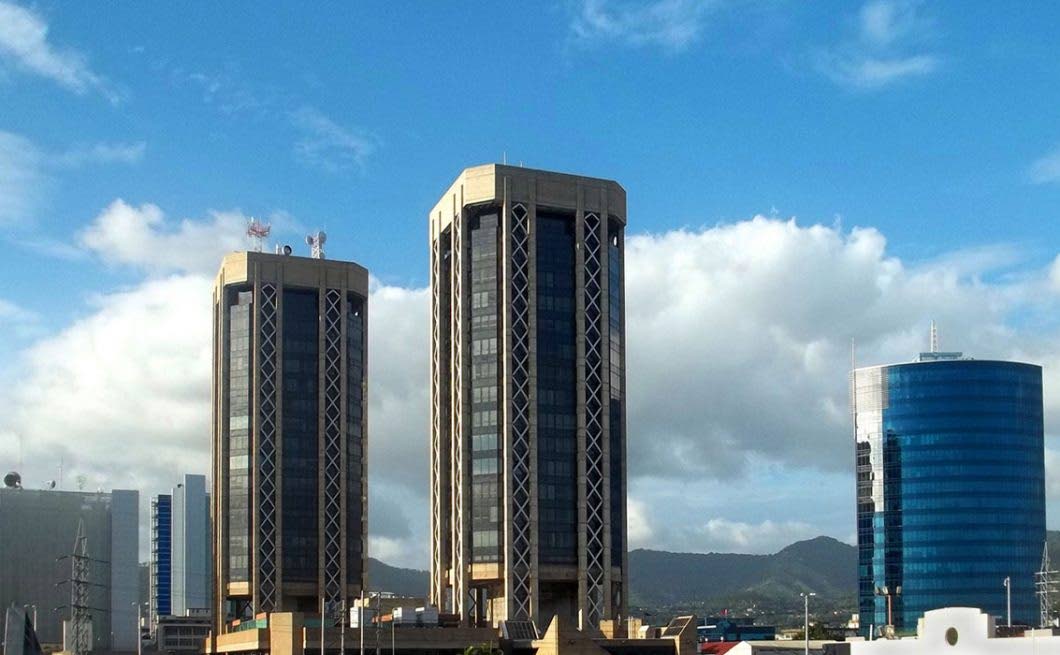
The IMF has raised concerns about mounting pressure within Trinidad and Tobago’s foreign exchange regime, warning that declining reserves, persistent US-dollar shortages, and capital outflow pressures are increasing strain on the Central Bank of Trinidad and Tobago’s (CBTT) current policy framework.


