



JA will beat the oil curse
When, not if, Jamaica finds crude oil in commercial quantities it will be a huge blessing and not a curse, as some are forecasting. Pardon my optimism, but I do not believe — and will never believe — that the Jamaican people are children of a lesser god.
I do not believe Jamaicans are condemned to be hewers of wood and drawers of water — meaning a people who perform menial, unskilled, or servile labour. Recall that in Joshua 9:21-27, the Gibeonites were condemned to lifelong labour as servants for the Israelites. The Gibeonites’ subordinate and drudging lot was set in stone. Jamaicans are not Gibeonites, and will never be. Verified receipts exist.
In athletics, we have proved that we are a superpower. In culture, Jamaica’s is a global hard currency. Jamaica has gifted the world at least six distinct major musical genres — mento, ska, rocksteady, reggae, dub, and dancehall. In addition to these milestones, Jamaica has influenced many sub-genres and styles, including roots reggae, lovers’ rock, and ragga, thereby shaping global music.
Our population is just under three million, but we punch far above our weight. We are global leaders.
Jamaica has demonstrated commendable leadership in several areas of international affairs, including foreign policy. In times past Jamaica was a world leader in agricultural output. Today, she is a trendsetter in tourism and related services. Our hospitality products have been recognised regionally and internationally. Our Minister of Tourism Edmund Bartlett is a bona fide international leader in hospitality services.
Jamaica has been recognised for achieving a near-miracle transformation in its management of debt over the last decade. I strongly recommend this very insightful article, ‘Sustained debt reduction: The Jamaican exception’ to everyone — particularly those who have mistakenly bought into the contorted view that we are not best placed to govern ourselves. Verified evidence proves the opposite.
The mentioned scholarly piece was authored by Serkan Arslanalp, an advisor to the International Monetary Fund (IMF); Professor Barry Eichengreen of the University of California, Berkeley; and Peter Blair Henry, senior fellow, Hoover Institution and Freeman Spogli Institute, Stanford University. The professors said, among other things: “First, Jamaica adopted fiscal rules that highlighted the debt problem, encouraged the formulation of a medium-term plan, and limited slippage from the plan’s targets. The fiscal responsibility framework introduced in 2010 required the minister of finance, by the end of the financial year 2016, to reduce the budget deficit to zero, the debt-to-GDP (gross domestic product) ratio to 100 per cent, and public sector wages as a share of GDP to 9 per cent.
“The framework as augmented in 2014 required the minister, by the end of financial year 2018, to specify a multi-year trajectory to bring the debt-to-GDP ratio down to 60 per cent by 2026. It included an escape clause to be invoked in the event of large economic shocks, which prevented the rule from being so rigid that it lacked credibility.
“Second, Jamaica’s leaders leveraged the country’s success in sharply reducing political polarisation since the end of the 1970s. The Government, parliamentary Opposition, and other stakeholders in 2013 formed the Partnership for Jamaica Agreement, which fostered a common belief that the burden of debt reduction would be widely and fairly shared. The agreement supported the creation and ensured broad national acceptance of the Economic Programme Oversight Committee (EPOC) to monitor and publicly report on fiscal policies and outcomes, and to provide independent verification that all parties kept to the terms of their agreement.” (Brookings Institute, March 27, 2024)
Jamaica has also made many other great strides.
Since gaining independence in 1962, Jamaica has successfully eliminated or eradicated several major infectious diseases, primarily through robust vaccination campaigns and public health vector control initiatives. Key diseases that have been banished or virtually eliminated include:
• Malaria: In 1965, the World Health Organisation (WHO) declared Jamaica free of malaria following a successful eradication programme initiated in 1957. While imported cases have occasionally appeared (notably in 2006–2007), the country has managed to maintain its malaria-free status.
• Poliomyelitis (Polio): Jamaica has achieved elimination of paralytic poliomyelitis, with the last reported case occurring in 1969.
• Measles: The country has successfully eliminated measles through sustained immunisation efforts over the past few decades.
• Yaws: Once a common infectious disease, yaws was significantly reduced and eliminated as a public health threat.
• Neonatal Tetanus: Jamaica has achieved the elimination of neonatal tetanus.
• Mother-to-Child HIV Transmission: Jamaica has made significant strides in reducing the transmission of HIV from mother to child.
• Significant reduction of infectious diseases: Rates of infectious syphilis, congenital syphilis, and gonorrhoea have also declined significantly in recent years. (Ministry of Health and Wellness, Jamaica).
These are extremely important achievements for a country which gained political independence in 1962. Those who believe life was better during colonialism need to read the Moyne Commission Report. I have discussed some of its findings here previously.
Jamaica has one of the healthiest Western-style liberal democracies. Our general elections since the bloody 1976, and even bloodier 1980 polls have been remarkably peaceful. This peace has been achieved through painstaking legislative and institutional reforms. The physical, cultural, and political efforts of many great Jamaicans — underpinned by the leadership and eventual cooperation of former prime ministers Michael Manley and Edward Seaga — helped bring about this paradigm shift.
Crime, especially murders, has been a painful burden on Jamaica’s growth and development for decades. That beast is finally being tamed. Up to the time of writing, there has been a 24 per cent decline in homicides compared with the corresponding period in 2025. That means 63 fewer Jamaicans have been murdered. I am not happy that any Jamaican has been murdered, but I am glad that, following the historic 31-year low in murders recorded in 2025, homicides continue to decrease appreciably.
THE GREAT OIL CURSE
I understand the huge misgivings of those who argue that Jamaica finding crude oil in commercial quantities would be a burden rather than a blessing. But I know Jamaicans will be able to coordinate the proper management of crude oil in commercial quantities if and when it is found.
Ponder this: “Since the 1990s, thanks to the insights of economists like Jeffrey Sachs and Andrew Warner (see ‘Natural Resource Abundance and Economic Growth’, Harvard University, 1997), it has been widely accepted that having an abundance of extractive resources such as oil is a curse rather than a blessing: Countries with the ability to score huge bundles of cash (aka petrodollars) from the sale of oil and other extractive industries inevitably suffer from slow economic growth, Government corruption, high levels of poverty, and authoritarian regimes.” (‘Whose oil curse is it?’,
National Geographic, November 30, 2015)
Those who embrace this reasoning invariably point to countries like Venezuela, Chad, Libya, Nigeria, Angola, Algeria, Russia, and others. However, it is corrupt leadership — not oil itself — that is the real culprit responsible for these countries’ failure to realise the full economic and related benefits of their resources. Jamaica does not have to repeat their mistakes.
TOO SHORT ON LONG-TERM
One of the greatest hindrances to Jamaica’s economic and social progress is our unfortunate penchant for ignoring the long game. This myopic approach has cost the nation dearly over many decades.
Far too many of our major political and other leaders, over many years, have allowed themselves to be hoodwinked by short-termism. Many have held the nation hostage to the demands of the next election. As a result, Jamaica has become poorer, weaker, and less respected because of their great folly.
These are some examples of how sunshine leadership and a preoccupation with the next election have blighted Jamaica’s long-term advancement.
Some credible sources indicate that former Prime Minister Michael Manley advocated for a national identification system as early as 1977. Yet it took Jamaica almost 45 years to get serious about its implementation. While we dilly-dallied, many other countries recognised the future and moved decisively ahead. Today, we are playing catch-up with the execution of the national identification system (NIDS).
Ponder this: “NIDS is a voluntary, secure, and electronic database being implemented by the Jamaican Government to provide a unique national identification number (NIN) to citizens and residents. It aims to simplify access to government services, improve safety, and enhance digital transactions.” (Office of the Prime Minister in Jamaica)
The project was launched, with enrolment beginning in the 2024/25 financial year.
I am fully on board with plans to build a new and modern parliament house to conduct the affairs of the country. That has been my position for many years. I seem to remember that when former Prime Minister Michael Manley returned to Jamaica House in 1989-92 he did put forward a proposal for a new parliament building. If memory serves me right, it would have then cost $500 million. Belly-achers who lack vision derailed the plans. Today it will cost billions.
Incidentally, I still hold firmly to the view that our parliamentarians should be among the highest-paid employees in this country, so that, among other things, we can attract the best and brightest.
In 1982, Esso Petroleum ceased its refining operations in Jamaica. Prime Minister Edward Seaga, to his eternal credit, organised for the Government to buy Esso’s Kingston refinery. This is the Petrojam petroleum refinery today. It has been upgraded by leaps and bounds since 1982. It was a good buy for us.
Think about this: “So it’s not a matter of not being able to buy; it’s the price. So there is no need to panic. I saw some footage yesterday in Guyana that there is a shortage and a run on the gas stations down there and panic; we are not in that at all.
“We are very, very clear as to what we need to do to ensure that we have supply; it is [just] the price and how, going forward, we can work to minimise the increase on a weekly basis,” he added. (
Jamaica Observer, April 16, 2026)
This could have been Jamaica had Seaga not had the foresight. Some might be wondering how this is possible when Guyana is a big exporter of crude oil. The answer is simple: It’s the absence of sufficient local refining capabilities. Guyana imports most of its refined petroleum products. This oil crisis has surely taught Guyana a valuable lesson. We must learn from the experience of others.
JAMAICA IS WISER
On the matter of lessons, those who are wishing and praying that Jamaica does not find oil in commercial quantities need to understand that Jamaica today is not the Jamaica of 50 years ago. We have matured.
I don’t buy into the notion that the ‘resource curse’ is inescapable. If it were, why did the leaders of a country like Norway, which discovered oil in 1969, have the foresight to create a sovereign wealth fund that essentially protects the country’s oil wealth from politicians who, left to their own devices, would engage in rampant corruption?
Guyana has also established a sovereign wealth fund called the Natural Resource Fund (NRF), modelled on Norway’s approach. However, its implementation and focus differ. Recent legislative changes have allowed for more immediate spending on national development priorities, rather than adhering strictly to long-term savings like Norway’s more conservative investment strategy. The resource curse can be avoided. We will!
Garfield Higgins is an educator and journalist. Send comments to the Jamaica Observer or higgins160@yahoo.com.
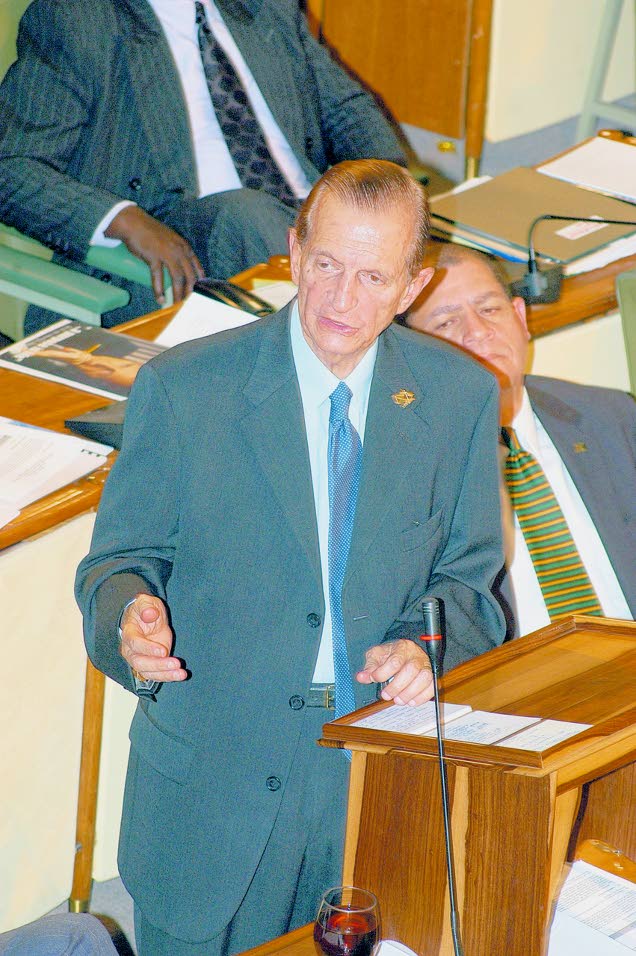
Edward Seaga delivering his final address to Parliament in January 2005.
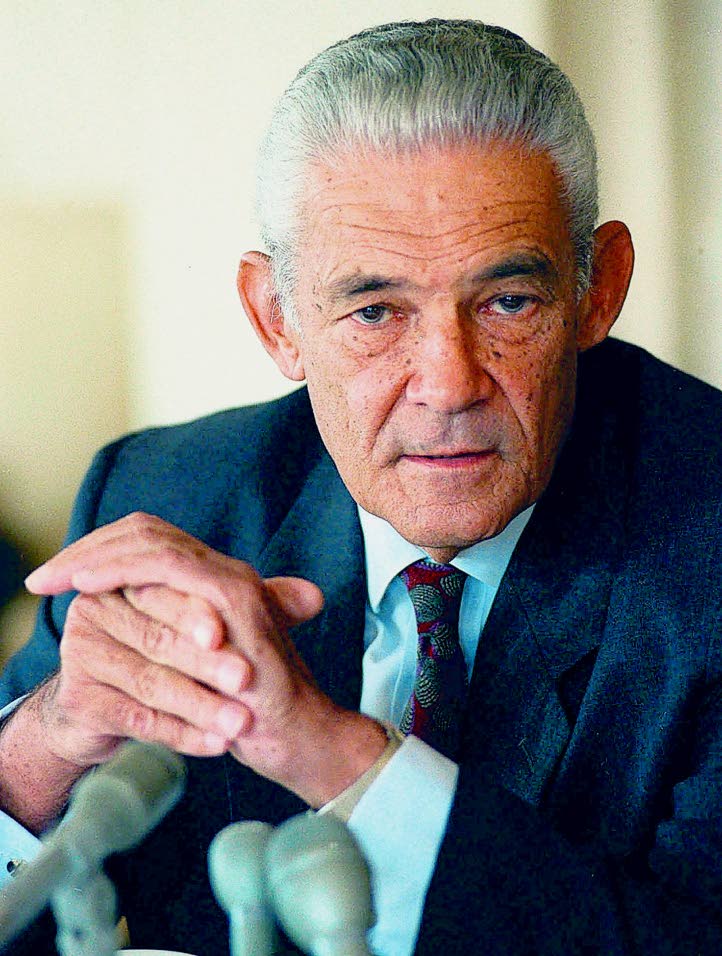
Former Jamaican Prime Minister Michael Manley in a March 1992 file photo
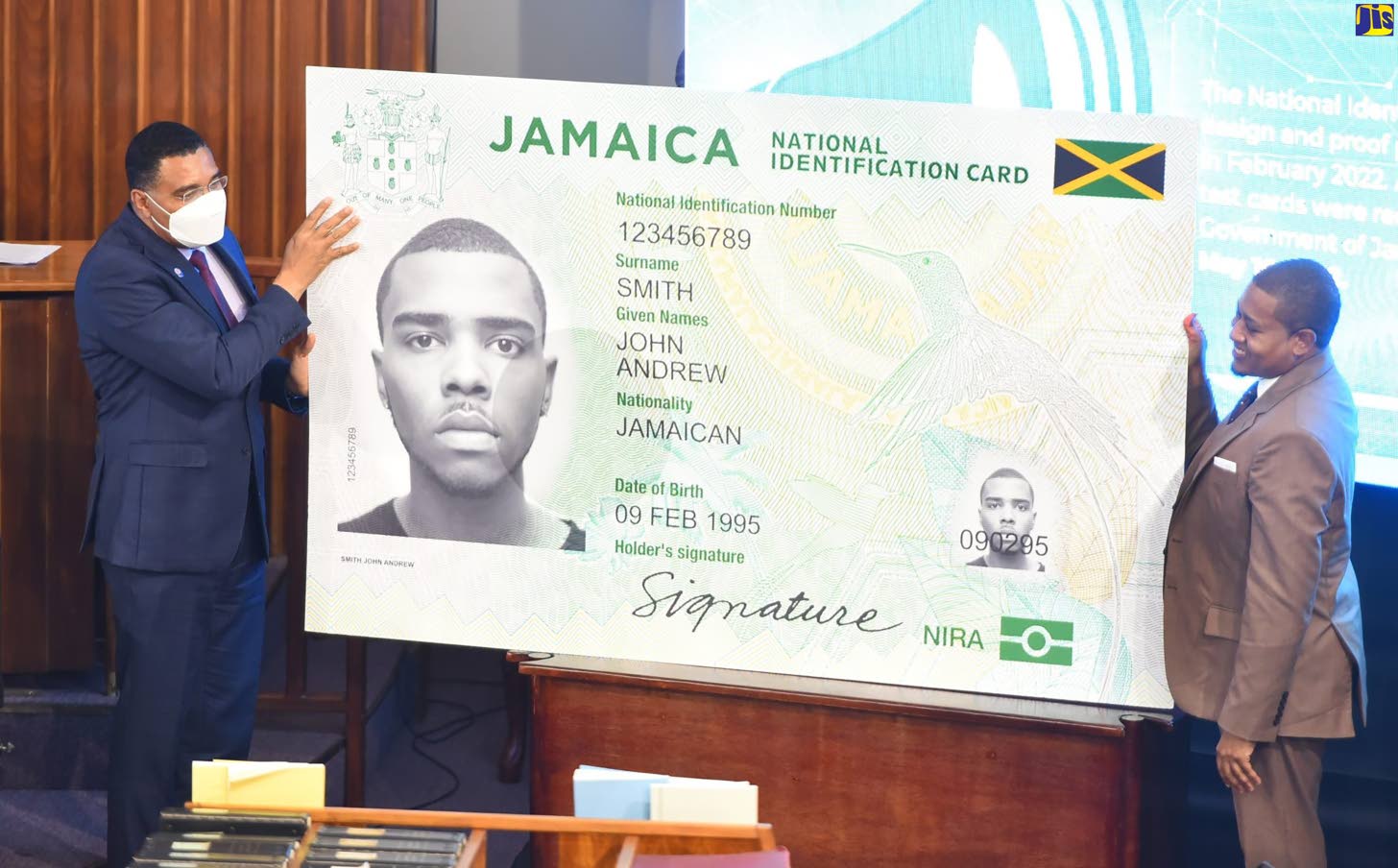
Prime Minister Andrew Holness (left) and Minister Floyd Green display the proposed national identification system card. Photo: Observer file
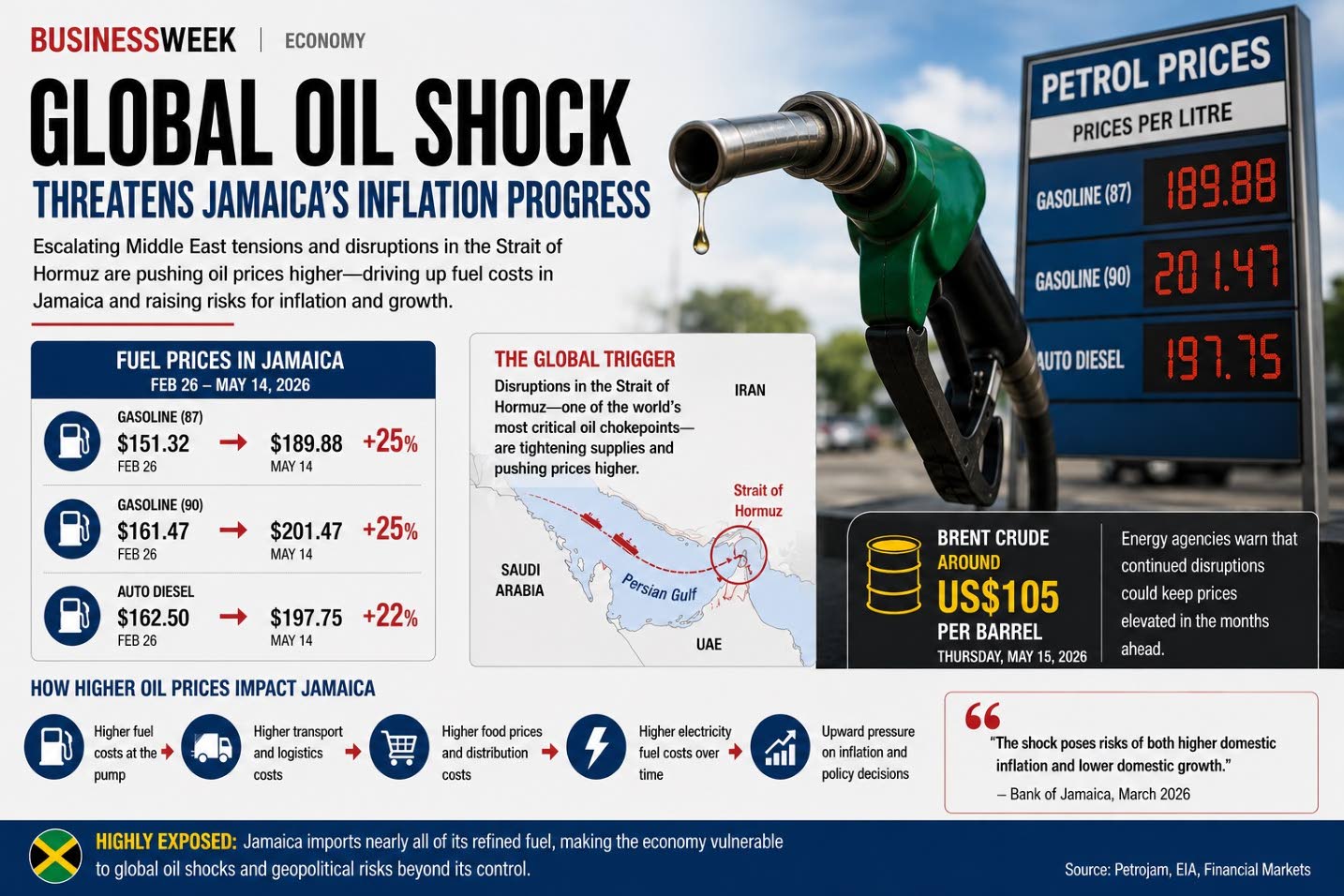
The global battle with oil prices continues.
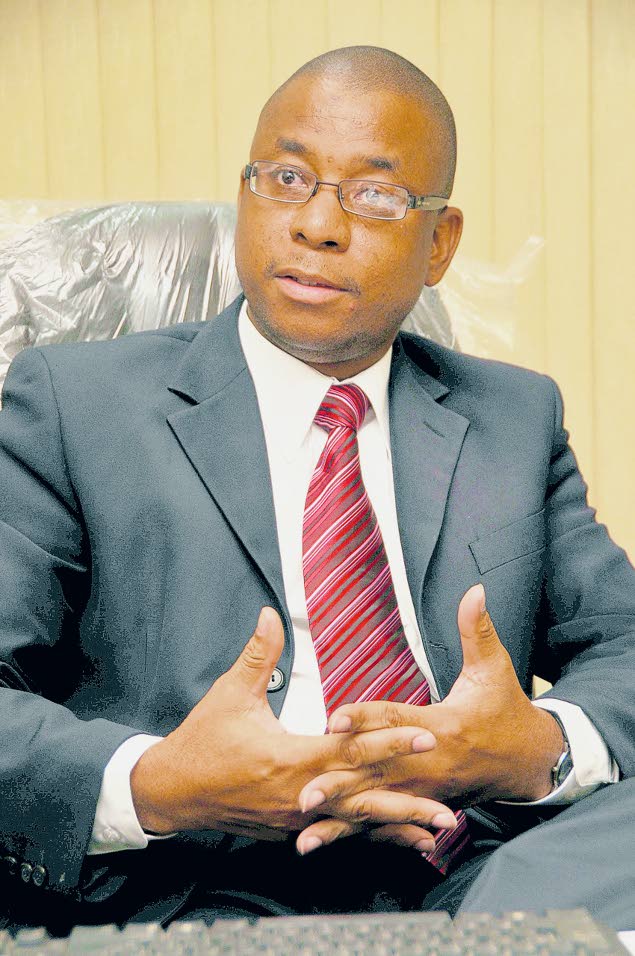
HIGGINS … articles are devoted to one purpose — the unmitigated distortion of Peter Phillips’ achievements.
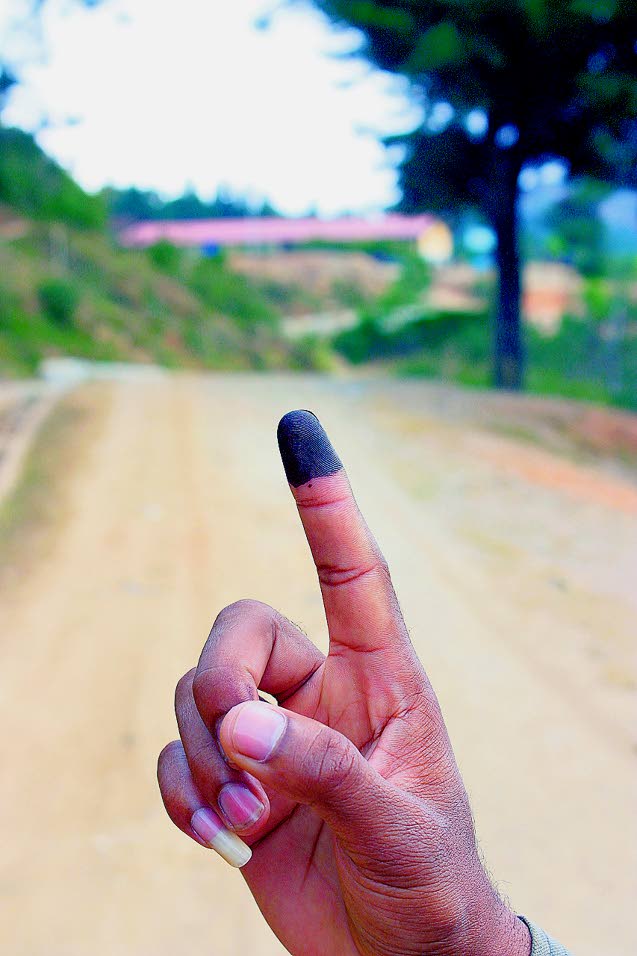
Jamaica has one of the healthiest Western-style liberal democracies.


