



Portland bee farmers lose big after failed April honey flow
FOR the first time in 15 years, Portland bee farmers were unable to reap honey in April — the month for their highest production — a situation Portland Bee Farmers Association President Bernard Walker says is a result of a change in the blossoming pattern of flora in the north-eastern parish.
He estimated that bee farmers in Portland have lost approximately 1,000 gallons of honey due to them missing their first major honey flow of the year, which, he said, equates to a conservative loss of $14 million.
“When I have discussions with the different farmers, they are all experiencing the same thing. Mango used to blossom holistically during December. We realised that mango was blossoming in its full glory in March, and this is not what we’re used to in Portland. By March, the mango really tapered off and then they moved into different crops that were blossoming, but we realised that most of the blossoming took place in March, so the time that they normally flower shifted somewhat,” he explained.
“I think that is one of the significant reasons that we’re not able to reap any honey in April. I get several calls from Jamaica Promotions Corporation, from the manufacturers of Jamaica, and they want honey because of what happened in the west with [Hurricane Melissa], so they’re seeking other places. A lot of them are calling us about honey to purchase. When I call all the farmers, and we have our meeting each second Thursday of the month and we have discussions on the availability of honey, there’s no honey at all within the parish,” he told the Jamaica Observer, noting that farmers are seven weeks behind their typical harvesting period.
Walker said bee farmers in Portland reap honey four times per year between March and September. However, since they’ve missed the March to April start time, Walker said bee farmers are preparing their first reap of the year in June, which would typically be their second harvest.
“Based on our observation, we don’t expect a lot of honey,” he said.
Walker further noted that June is the start of the Atlantic hurricane season, and given the current state of honey production in Portland, even a tropical depression could be a “disaster” for bee farmers.
“That could definitely just totally close the season, and knowing that in April we don’t reap any honey, this probably would just set a record because it could see that we don’t reap any honey at all, so we are hoping that we don’t have any hurricane, tropical storm, nothing at all, because this would be really devastating. This is what we do for a living. Some farmers kind of touch into other things, but the real commercial farmers, this is what they do in terms of their income, and so we’ll be looking at that aspect of it. It would be very, very devastating if something like that should happen,” he told the Sunday Observer.
Blake shared that after hurricanes Beryl and Melissa, the Jamaica Social Investment Fund (JSIF) and the Ministry of Agriculture were instrumental in providing feed for bees, which stabilised the population in Portland, especially coming out of the dry period.
“Going forward, we want to see if we can build on this and ensure that we use whatever we have left of the feed that we got to take us through 2026 and see if we can reach into the following year somewhat stronger. Because we want to ensure that if the bees can get adequate feed, the queen will lay more during the dirt period, and so the bees will have less collapsed colony because of sometimes starvation and things like that,” said Walker.
He said the association is also planning-tree planting exercises over the Labour Day weekend to increase the tree population and ensure there is adequate food for bees. He urged citizens to jump on board, noting that bees are not just for honey production and are crucial for food security. Walker explained that bees are the main pollinators across the globe, responsible for pollinating roughly one-third of the food people eat.
“We believe that for us to get enough feed for bees, the general public has to play a significant role. When you look at the urban area and when you look at housing schemes, for example, you may have one or two people who have an ackee tree, maybe a mango tree, and if this can be duplicated down the road, this will play a significant role,” he stressed.
Walker added that bee farmers have also adopted the use of moringa powder, a plant-based supplement that can be mixed into a sugar syrup to provide nutrition for bees.
“The results are excellent so far. It’s something that the bees take up pretty well. The nutrition within the moringa is one of the key things, and the availability. It’s easy to grow, and all of this makes it one of the prime things that can help us to kind of minimise some of the import, and so this safeguards us from a food safety perspective,” he explained.
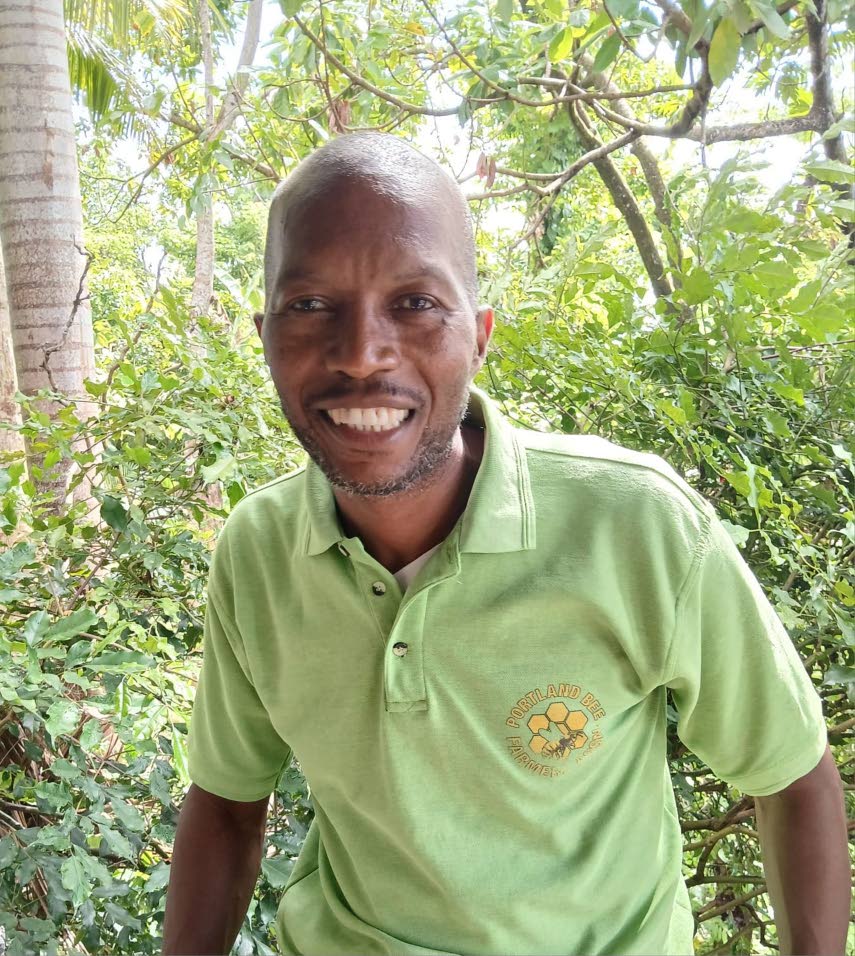
WALKER…we are hoping that we don’t have any hurricane, tropical storm, nothing at all, because this would be really devastating


