No single failure point
Utilities say they can operate even if nerve centres in Kingston take direct hurricane hit
THE island’s four major utility providers have moved to allay fears that if the Corporate Area is hit by a major adverse weather event this hurricane season their services to the rest of Jamaica would be curtailed.
After Hurricane Melissa ravaged Jamaica’s south-western and north-western parishes last October, there were concerns voiced that if it had made landfall in the Corporate Area, where the nerve centres for the major utility providers are based, the impact on the rest of the island would have been catastrophic.
But, in responding to questions during a meeting of the Jamaica Observer Press Club last Thursday, representatives of the Jamaica Public Service Company (JPS), National Water Commission (NWC), Digicel, and FLOW Jamaica were adamant that they have systems in place to continue providing service even if their head offices are crippled.
Chief operating officer at JPS Lance Becca told Observer editors and reporters that while the company’s main office is located in the Corporate Area, the resources needed to provide services are available across the island.
“We have everything there is. We do have various workout locations all over the island. So what we try not to do is be anchored into one area because when we are required to respond to emergencies in all kinds of different situations we work out different locations, so we’re servicing all parts of the island,” said Becca.
If the system should go down, we are in a position to do what we call block start to bring back the system from four major areas including Montego Bay, St Catherine, and Kingston,” added Becca.
He pointed to Hurricane Melissa, which meandered towards the island last October before making landfall in western Jamaica on the 28th, and noted the difficulty faced in tracking the storm and projecting where it would hit.
Becca said in preparing for Melissa JPS positioned resources in a central location where they could be accessed as needed.
“One of the things that was probably evident during the hurricane was that we were able to mobilise and move some of our resources and also our command post. We started off in Kingston, I was over with the group in St James, and we were able to stay in a continuous response mode because of the resources.
“We have all kinds of different resources, whether it is bucket trucks, all kinds of different things, so we’re able to diversify and move accordingly,” said Becca.
It was a similar claim from NWC Corporate Public Relations Manager Delano Williams, who underscored that its operations are not conducted from a central water supply, with more than 60 per cent of its customer base covered by major systems across the island.
“You are talking about Logwood [Hanover], Great River [St James], Martha Brae [Trelawny], Bouge in St Ann, and then you’re talking about the systems in Portland coming back to St Catherine, and Kingston,” said Williams.
He defended the NWC’s decision to spearhead its operations from the Kingston location during Hurricane Melissa, citing communication challenges experienced in the affected areas which hampered its services.
“We still needed to be outside of the hit zone, so to speak, in order to mobilise, but we had…our team launching from Mandeville for the southern side going into St Elizabeth and sections of Westmoreland and that allowed us to be strategically attacking or launching from more various hubs, in terms of storehouses, water trucks, and every other equipment that we needed to move,” added Williams.
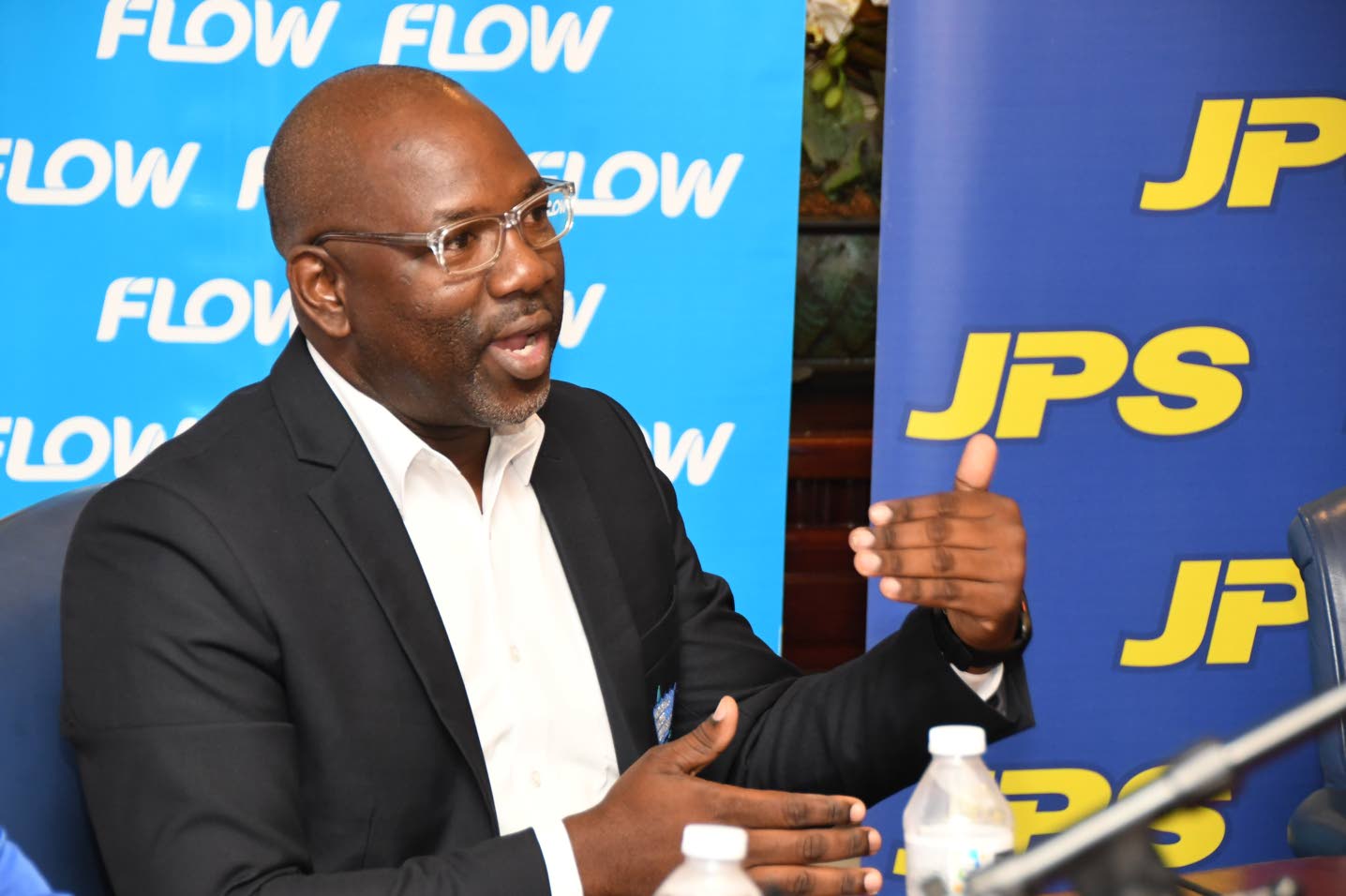
In the meantime, FLOW Jamaica Vice-President and General Manager Stephen Price was adamant that telecommunication services would definitely not cease operations in the case of a direct hit on the Corporate Area.
“We have at least seven or eight hubs right across the island in terms of where we store actual spares, fibre, equipment, in order to respond from there. We have multiple locations where we can operate our network from. We can operate from Montego Bay, we can operate from Kingston,” he said.
“If we hit a point where, for instance, our site in Montego Bay or our site in Kingston is hit, we can operate it from Barbados or Puerto Rico or another market in order to have it running and operating. So we have that capability from that perspective,” declared Price.
According to Price, for convenience FLOW Jamaica’s operations are centralised in Kingston, but Category 5 Melissa served as a major lesson of the importance of diversifying its operations.
“We are staging people right across the island, which we did before, but on a smaller scale. St James will become a larger part of the hub. Savanna-la-Mar will become a larger part of the whole, in terms of increased capabilities from that perspective, and St Thomas. So we’re doing quite a bit from that perspective in terms of spreading the resources across the island,” said Price.
For his part, Digicel’s Chief Executive Officer Stephen Murad argued that despite its main building being situated in downtown Kingston and housing an industrious workforce, it does not accurately reflect the reality of the company’s operations.
“I would love to say where I’m based is where the real workers work, but that’s not the case at all. We have 50 points of presence, or POPs, centred around the island so we can operate independently. The critical thing that I think is important to understand is that the transport network is critical for the network operations — the international capacity coming into the island…and then you have got the on-island transport network. They are critical for us as a country. We also have diversity in Miami as well. We don’t take our jobs lightly at all whatsoever, we are an essential provider of services and we don’t stop until [our customers] get those services,” said Murad.
WILLIAMS…we still needed to be outside of the hit zone, so to speak, in order to mobilise

BECCA…if the system should go down we are in a position to do what we call block start to bring back the system from four major areas


PRICE…we are doing quite a bit from that perspective in terms of spreading the resources across the island