



Stanley Motta’s new tower lifts profit, but debt becomes the next test
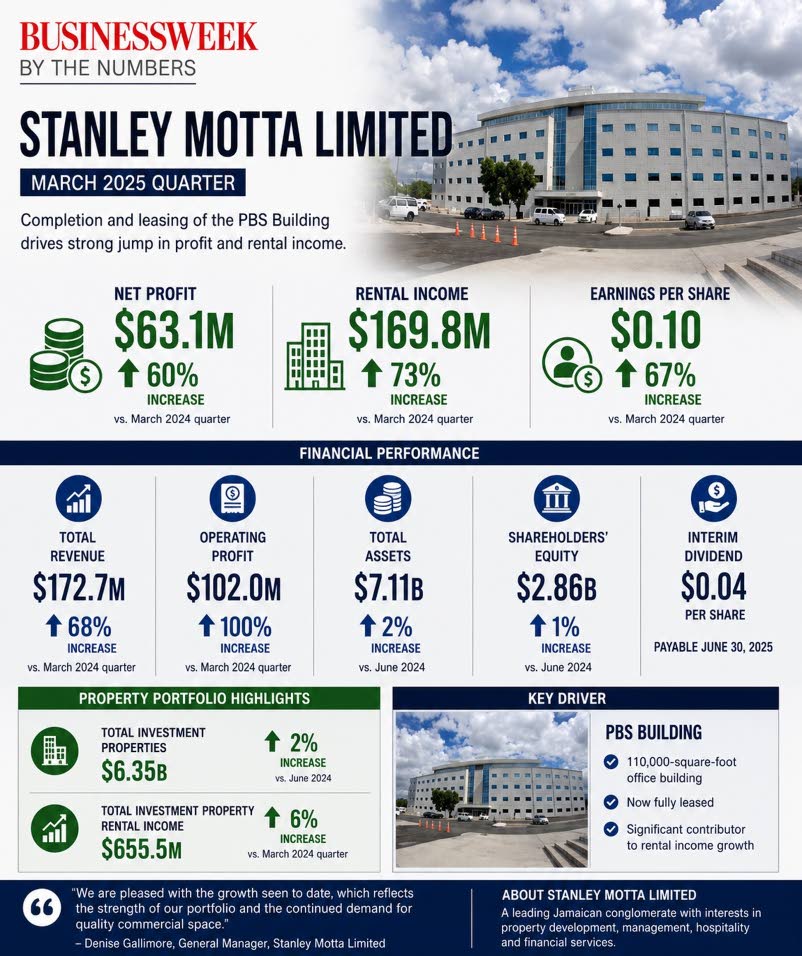
STANLEY Motta Limited’s newly completed office tower is beginning to deliver the returns the company hoped for when it embarked on a major expansion of its Half-Way-Tree Road, St Andrew, technology park, helping drive a 60 per cent increase in quarterly profit as rental income surged.
The same building, however, has also pushed financing costs sharply higher, setting up what may become the next test for management: Ensuring rental income grows fast enough to stay ahead of the debt used to build it.
Net profit for the three months ended March 31 rose to $145.4 million from $90.7 million a year earlier, while rental income climbed 45 per cent to $237 million. Earnings per share increased to $0.19 from $0.12.
The primary driver was the completion and leasing of the 110,000-square-foot PBS building, where Stanley Motta has secured commitments for all available space and expects tenants to complete occupancy during the current financial year.
For investors, the results represent an important milestone. The company has spent years expanding its commercial real estate portfolio and increasing capacity at its technology park at 58 Half-Way-Tree Road. The latest figures provide some of the clearest evidence yet that those investments are beginning to generate meaningful earnings.
The expansion is also reducing one of Stanley Motta’s longstanding risks: dependence on a single tenant. Alongside long-standing tenant Alorica, the company has added new occupants, including a technology company and a government entity.
According to Shane Bennett, senior research analyst in the Asset Management and Research Department at Barita Investments Limited, the company’s largest tenant previously accounted for 78 per cent of rental income but now contributes 57 per cent.
Bennett said the broader tenant mix makes the income stream more resilient because the company is less dependent on any one occupant.
“That is exactly what you would like to see when a big new building goes from empty to occupied,” he told the Jamaica Observer.
The financial impact of the new tower was visible throughout the quarter. Revenue increased 45 per cent, but operating profit rose even faster, climbing 75 per cent to $188.4 million. Administrative expenses fell to $49.6 million from $56.4 million. In practical terms, Stanley Motta collected significantly more rent while spending less on administration, allowing a larger share of each additional rental dollar to flow through to profit.

GALLIMORE…We are pleased with the growth seen to date, which reflects the strength of our portfolio and the continued demand for quality commercial space..
“The 45 per cent jump in rental income is mostly the new 10-storey building now being leased and earning,” Bennett said.
The results also suggest the company is entering a different phase of its growth cycle. For several years, the focus was construction. Now the focus is generating returns from assets already built.
Signs of that shift can be seen elsewhere in the numbers. Investment in the property fell to roughly $54 million during the quarter from $134 million in the corresponding period last year, suggesting construction activity is winding down.
Bennett said the company appears to be moving from development toward income generation. But the transition also brings a new challenge.
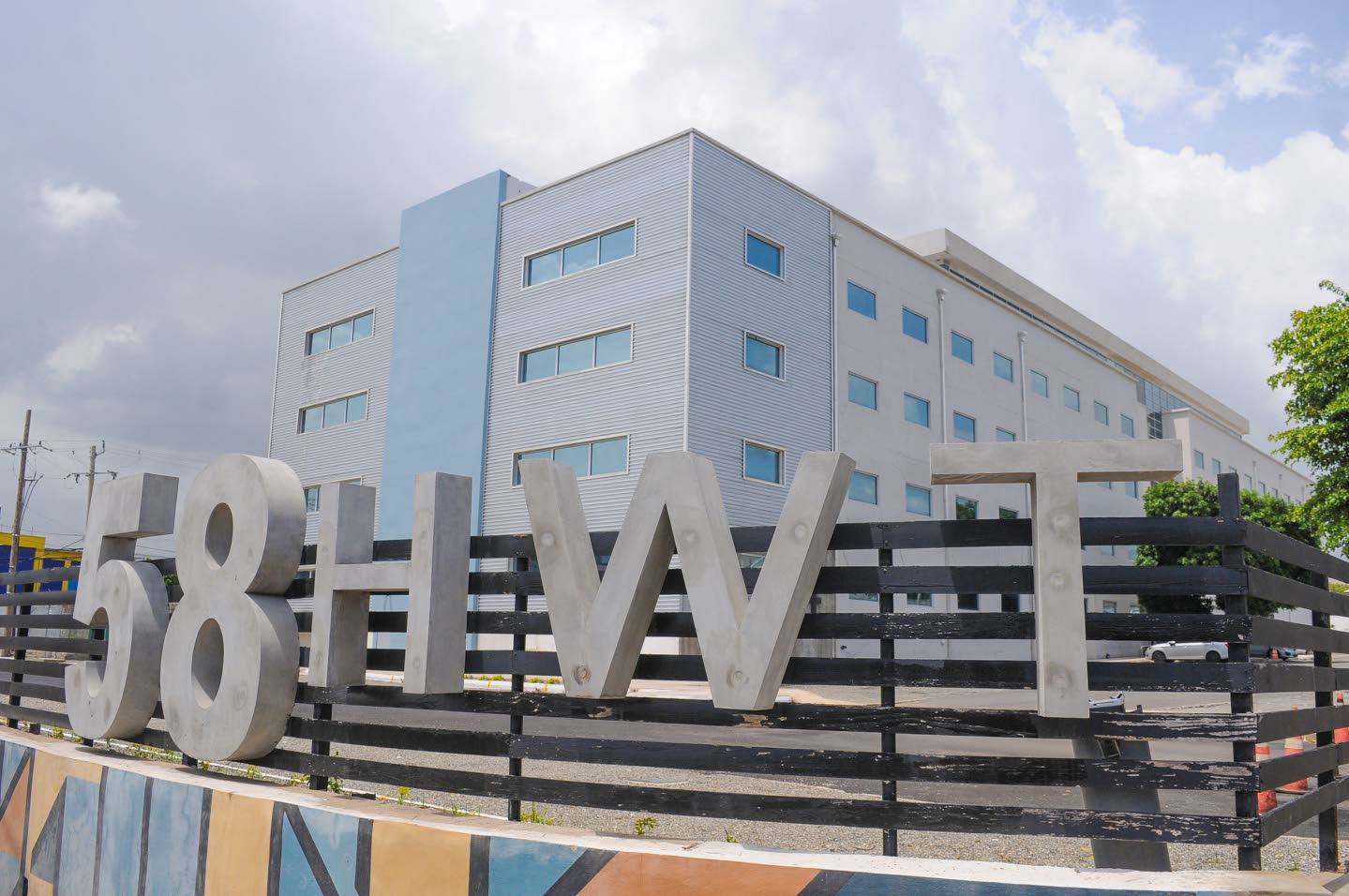
The 58 Half-Way-Tree Road technology park in St Andrew. The completion and leasing of the 110,000-square-foot PBS Building helped drive a 60 per cent increase in Stanley Motta Limited’s quarterly profit as rental income surged. (Photo: Garfield Robinson)
The tower that is now generating rent is also generating a larger debt bill. Finance costs rose to $41.8 million from $13.2 million a year earlier. Interest paid in cash also increased sharply after a payment holiday on the company’s largest loan came to an end.
“The opportunity and the risk are really two sides of the same coin,” Bennett said.
The opportunity, he argued, is that the heavy lifting has largely been completed. With the building leased, it can continue generating rental income for years without requiring another major round of construction spending. The risk is that the debt used to finance the expansion must now be serviced consistently through rental income.
Bennett said the next phase of Stanley Motta’s growth story will depend on whether occupancy levels remain strong and rental income continues growing fast enough to stay ahead of those obligations.
“The good news is that on Q1’s numbers, the rental income is comfortably covering everything,” he said. “The honest assessment is that there is less margin for error than there used to be, and management has to execute.”


