



A cleaner Kingston Harbour underway
In the late 60s our school group had an outing to Gunboat Beach on the Palisadoes Road. Emerging from the sea, we saw dark, oily deposits on our legs — our beloved beach was polluted and no longer usable. Last Friday — World Environment Day — we were relieved to learn from the annual GraceKennedy Foundation (GKF) Lecture that the Kingston Harbour Cleanup Project (KHCP) had made significant strides.
The heartening news was shared by presenters GKF CEO Caroline Mahfood Michael McCarthy, managing director of Clean Harbours Jamaica Limited; and Professor Mona Webber, marine biologist and holder of GKF James S Moss-Solomon Sr Chair in Environment Management.
The KHCP is funded by non-profit organisation The Ocean Cleanup, a global leader in river and ocean plastic interception, and is spearheaded by the GKF in collaboration with Clean Harbours Jamaica. McCarthy confirmed that 5.5 million kilos (12 million pounds) of trash was collected by the booms, sparing the harbour from further pollution.
We were embarrassed to see — posted on social media by The Ocean Cleanup — some of the items collected by the barriers: couches, whatnots, divans, cribs, refrigerators, washing machines, even a motor vehicle. They said the number of refrigerators was astounding. After clearing over 100, another 150 appeared one week later.
Caroline Mahfood says that private sector input brought measurability and accountability and community partnerships ensured implementation. However, she is calling for government intervention to promote behaviour change as the project can only work as a Band-Aid if we do not change our habits.
McCarthy noted that the installation of the technology provided by The Ocean Clean-Up proved that it was “not a one-size-fits-all”. He said they adapted the first barriers set up in Rae Town. For Kingston Pen, assailed by wind and ocean currents, more robust booms have remained intact. For Mountain View, which has high water velocity described as “rain bombs”, a secondary barrier had to be installed.
He described challenging installation for Sandy Gully, called The Beast, 2,889 feet wide, which empties into the Kingston Harbour. He said a 16-ton anchor with six tons of chains were needed to keep the booms in place. He said local adaptation was continually evolving.
McCarthy noted, “Our local ingenuity was applauded. We learned from each community and the fishers, the unsung heroes of the project. They even retrofitted a paddle boat so we could access Sandy Gully.”
McCarthy’s experience of local adaptation of international technology is a teachable experience for other aspects of business. Every country has its unique characteristics — a reminder that our human intelligence, experience, and sensitivity will always have a place, artificial intelligence notwithstanding.
Professor Webber described Kingston Harbour as “a real treasure”. She noted, “Our mangroves have been estimated to have a US$10-million value — ecological and economic in regulating the flow of nutrients, supporting biodiversity, providing food, recreation, and education.”
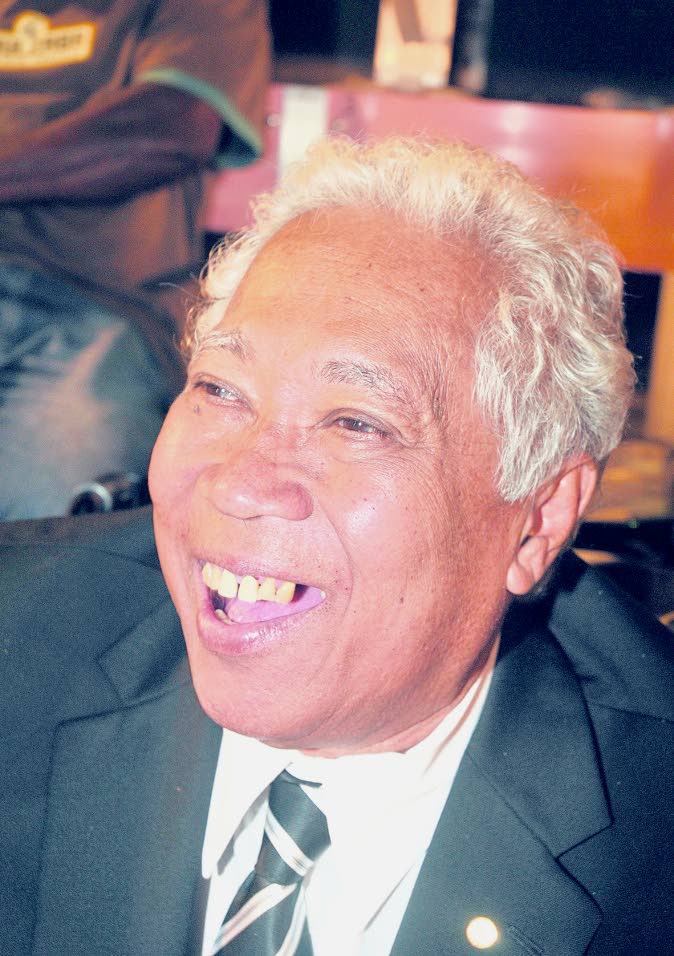
Winston Chung Fah
She said for the 300 years that the Harbour was monitored, it remained stable until the Port Royal Marine Laboratory saw fish kills from a red tide in 1965. Dr Barry Wade was the first scientist to document the finding of solid waste in the harbour in 1972, followed by Chow and Tolan who provided the first baseline for trash and plastics.
She cited the Refuge Key transformation. It had lost one-third of forestation up to 2018 as a barrier of plastic prevented water flow. With the assistance of Kingston Freeport, Garbage Disposal & Sanitation Systems and Jamaica Environment Trust, the removal of plastics has led to the regeneration of the forest
Professor Webber said Environmental DNA studies are ongoing, and as water quality in the harbour improves, there is increased regatta/sailing, a recent dragon boat racing event, and more fishing activity as dolphins and yellow-tail snapper are returning. She says science is being used to show recovery is possible and environmental action must remain evidence-based.
Ten years from now, she hopes that old plastics which had floated up to 100 metres into the forest will be removed so the mangroves will be able to better filter the water in the Harbour. Hopefully, by then, Gunboat Beach will again be enjoyed.
World Cup Fever
Perhaps because it has similar colours to ours, the Brazil flag is the most popular one on our Jamaican streets, announcing the imminence of the FIFA World Cup. This brings back memories of my conversation with the late legendary Winston Chung Fah, widely regarded as the godfather of Jamaican football, so I will use excerpts from the column I wrote after we qualified for the 1998 World Cup.
I had asked “Chungie” why football had this ability to transfix us, and he said the great Pele had one short answer, “Football is not a game; it is an emotion.” Chungie likened the game to love, and asks, “How can you really define love?” How indeed. There are still no words to describe that day in November 1997, the day we took to the streets to hug each other, wave flags, and honk our horns, when Jamaica drew with Mexico at our National Stadium to qualify for the World Cup.
Winston Chung Fah took me back to the year 1950 when post-World War II euphoria reached an all-time high as Brazil hosted the World Cup. They built the gigantic Maracana Stadium, capacity of over 200,000, with the expectation that Brazil would triumph. Brazil lost and gloom engulfed the country. Several fans committed suicide, and the once-popular president lost the elections held soon afterwards.
He quoted Bill Shankley, the great coach of Liverpool, who said, “You’re acting as if football is a matter of life and death — let me tell you, it is much more than that!”
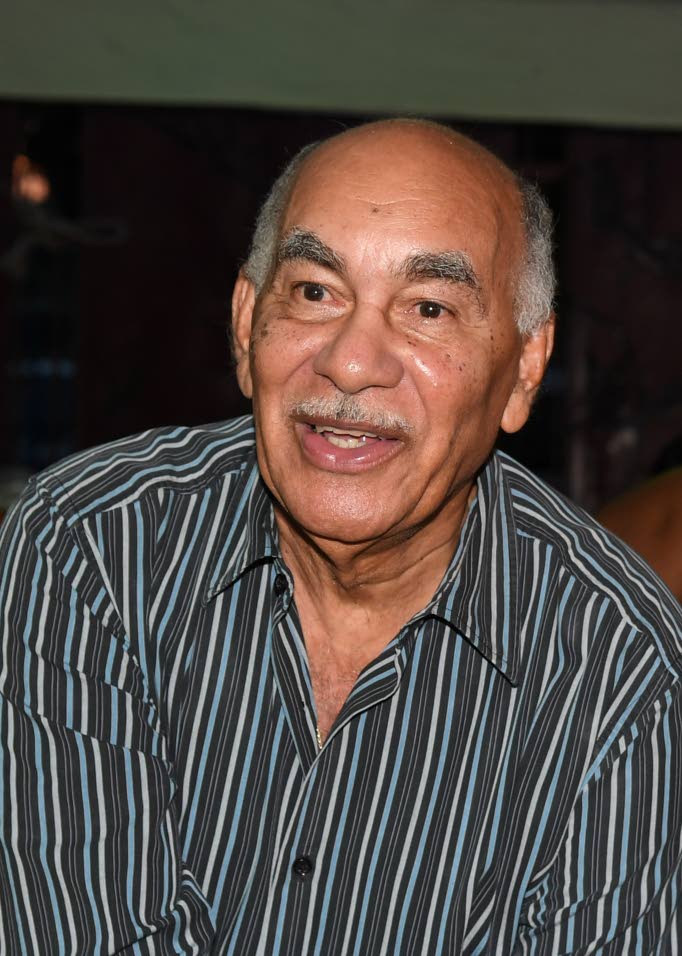
Ian Forte
Chungie created the Santos Football Club in 1964, describing it as “the tent under which all classes could meet— uptown, downtown and cross-town”. In a later interview with Coach Carl Brown, he said football had the power to bring peace to communities, declaring, “It’s the ball or the bullet.”
The growth of football and the emergence of stars like Khadija “Bunny” Shaw is proof that our women are taking their place in “The Beautiful Game”. It is regrettable that they are still facing financial obstacles not being experienced by their male counterparts. Kudos to Cedella Marley and the Bob Marley Foundation for assisting them again recently.
While there was good explanation from Jamaica Public Service for the islandwide power cut we experienced over the past weekend, I do not think or our telecoms companies will be easily forgiven if there is any disruption in World Cup coverage.
Farewell, extraordinary Jamaicans
Lecturer and author Dr Hazel Bennett passed away last month. I was blessed to have enjoyed the banter of Dr Bennett and her husband Wycliffe Bennett — two brilliant but contrasting personalities. While Wycliffe Bennett’s voice echoed across the National Stadium as he directed a cast of 20,000, Dr Bennett’s steady and understated contribution influenced the islandwide and regional development of the Jamaica Library Service.
In his tribute to Dr Bennett, Wayne Chen wrote: “Her leadership helped transform libraries from limited urban facilities into a nationwide network supporting education, literacy, and community development. Bennett later joined The University of the West Indies, where she served as lecturer and senior lecturer (1971–1988) and briefly as head of the Department of Library Studies. She trained generations of Caribbean librarians, established documentation centres, advised on library development in several islands, and contributed to regional training initiatives… Awarded the Silver Musgrave Medal in 1998 for her contributions to librarianship, literature, and historical scholarship, Dr Bennett died in 2026 at age 102, remembered as one of Jamaica’s most influential cultural figures.”
It was an honour to contribute to The Jamaican Theatre, which Dr Bennett co-authored with her husband. She also co-authored The Story of the Jamaican People with Sir Phillip Sherlock, a vivid account of our historic milestones.
Retired Justice Ian Forte, who passed away last Friday, rose through the ranks of the Jamaican judiciary, serving as director of public prosecutions and as president of the Court of Appeal. Graduates of the Norman Manley Law School have lauded his lectures, and he was conferred with the Order of Jamaica for his contribution. The distinguished Justice Forte also served on the courts of appeal of the Cayman Islands and the Turks and Caicos Islands.
We remember him as a St George’s College Hall-of-Famer and a resolute church brother. He was past president of the Stella Maris Church Council and of the church’s ushers association. My deepest sympathy to his dear wife Marlene Malahoo Forte and members of his family.
Jean Lowrie-Chin is an author and executive chair of PROComm, PRODEV and CCRP. Send comments to lowriechin@aim.com.


