



Dairy farmer calls for faster action on import of cattle genetics
…says improved breed key to cutting milk powder imports
One of Jamaica’s largest dairy producers is urging the Government to accelerate efforts to improve the genetic quality of the country’s dairy herd, warning that continued delays could further hamper local milk production and prolong the island’s dependence on imported milk powder.
Peter McConnell, managing director of Trade Winds Citrus Limited (TWCL), in a recent interview with the
Jamaica Observer said that the lack of high-performing dairy genetics remains the single-largest constraint on the industry’s growth, despite significant investments by farmers to improve productivity.
“Right now about 75 per cent of the milk that Jamaicans consume comes into the island in the form of powder,” McConnell said. “We should not be importing powder if we can produce the real thing.”
TWCL entered the dairy industry in 2020 after acquiring the assets of Jamaica Beverages and now produces approximately 100,000 litres of fresh milk each month. Its dairy portfolio includes the Tru-Shake, Tru-Milk, Tru-Moo, and Dairy Farmer’s Milk brands.
Despite significant investments in expanding production, McConnell said profitability remains out of reach because local cattle are not producing enough milk. Of the company’s herd of more than 700 cattle, only about 200 are currently in milk production.
“We have improved nutrition significantly and that has helped us double production from the national average of five to six litres per cow per day to about 12 litres,” McConnell noted.
He noted that gains have come largely from investments in feed production, including the cultivation of sorghum, corn, and grass for silage. Even so, yields remain well below the level needed to make the operation commercially viable.
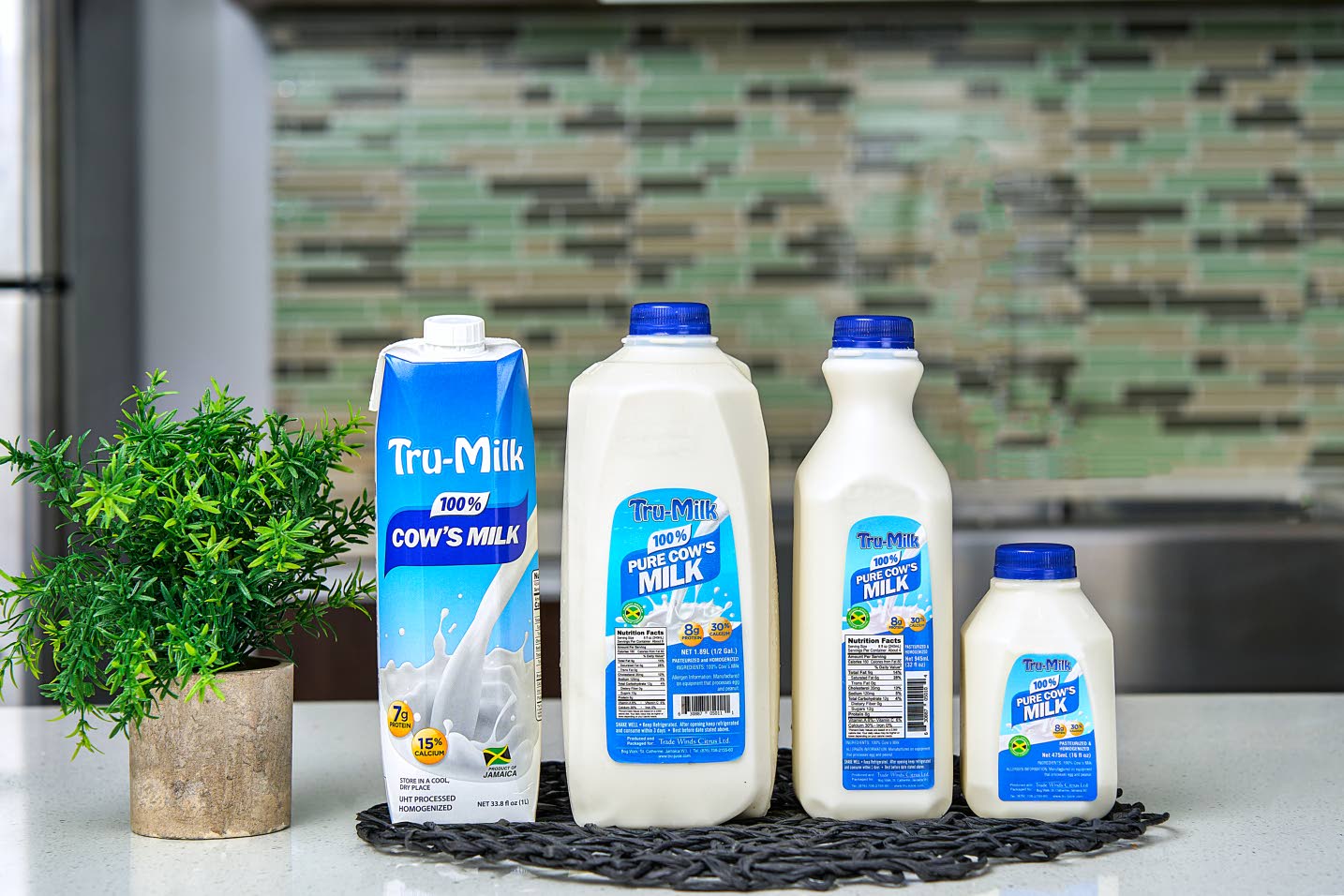
Tru-Milk dairy products manufactured by TWCL
“Twelve litres is our break-even point. We need to get to 18 litres per cow per day, and the only way we’re going to get there is through better nutrition and better genetics.”
TWCL has invested more than US$5 million in its dairy operations over the past six years, but the business continues to incur losses.
“I don’t even like to think about what the losses are because it’s too much,” the managing director admitted.
“The encouraging thing is that we are seeing improvements, but we are restricted by the genetic capability of the animal. If the animal doesn’t have the capacity to produce more than 12 litres, it won’t produce more than 12,” he added.
To address the problem, McConnell, however, said he continues to advocate for the importation of proven dairy genetics from tropical countries with climate conditions similar to Jamaica’s.
“We need genetics from countries producing 18 to 24 litres per cow per day under the same environmental conditions that we have. That would be revolutionary for the dairy sector,” he indicated.
Although TWCL breeds its own replacement stock, the dairy farmer argued that importing superior genetic material would dramatically accelerate improvements in milk yields.
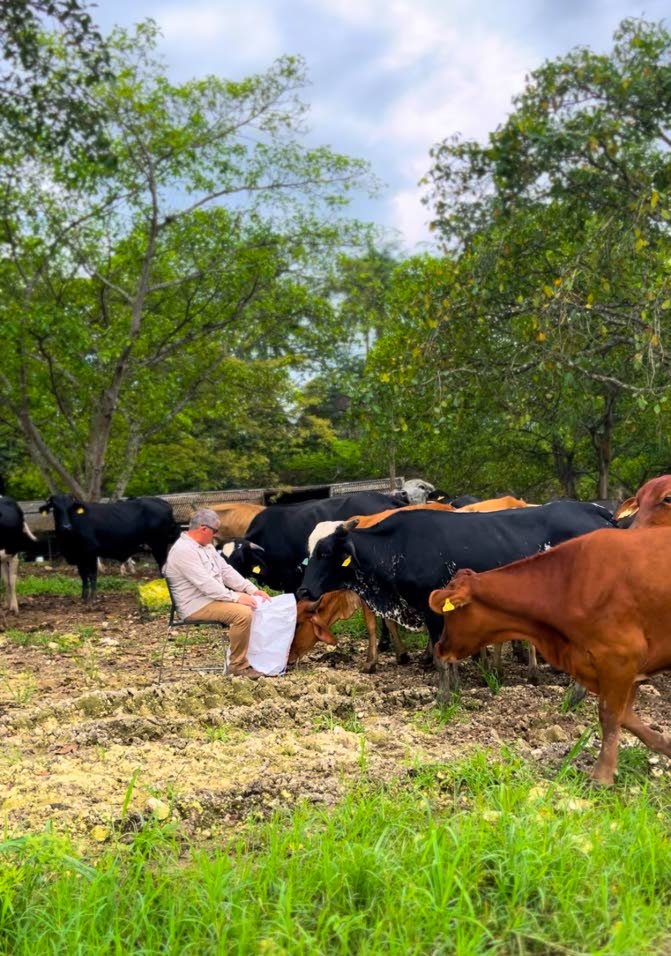
Peter McConnell, managing director of TWCL with some of the over 700 cattle at his dairy farm in Bog Walk, St Catherine
“We’re doing it on our own and our yields have improved, but it could be a lot better and a lot faster if we can secure improved genetics,” he stated.
The concerns of TWCL’s boss come as stakeholders continue to debate the future of the Jamaica Hope breed, long regarded as the backbone of the country’s dairy industry.
Developed through a cross of Jersey, Sahiwal, and Friesian cattle, the Jamaica Hope was once regarded as one of the Caribbean’s premier dairy breeds. However, McConnell said the breed has not benefited from sustained genetic advancement over recent decades.
“Fifty years ago, the Jamaica Hope was the jewel of the Caribbean. But the genetic improvement has not continued, and as a result the breed is not as efficient as it once was,” he noted.
While supporting efforts to strengthen the breed, McConnell said Jamaica cannot afford to wait for long-term breeding programmes to deliver results. “We should absolutely continue the work to restore the Jamaica Hope to its former glory, but we don’t have that luxury of time.”
The businessman, indicating that he has repeatedly raised the issue with policymakers, said he is now awaiting action.

McConnell…I’ve lobbied the Government and told them what we need. They’ve said they’re working on it, so let’s see how fast they work on it. We need the new genetics and we need them fast, because there’s only so long that I will continue to absorb losses
“I’ve lobbied the Government and told them what we need. They’ve said they’re working on it, so let’s see how fast they work on it. We need the new genetics, and we need them fast, because there’s only so long that I will continue to absorb losses.”
Despite current challenges, McConnell, however, said he remains optimistic about the long-term potential of the dairy industry and the company’s role in reducing Jamaica’s food import bill.
TWCL currently controls an estimated 65 per cent of the chilled milk market, but only about 10 to 15 per cent of the shelf-stable tetra-pak segment that imported products dominate.
While the company hopes to also eventually expand into value-added dairy products such as yoghurt, butter, cream, and ice cream, McConnell said the immediate priority is to increase local milk production to help with displacing imported milk powder.
“The first goal is to replace the milk powder being used to make milk. Once we achieve that, then we can focus on the other value-added products.”
For now, he, however, maintains that improving the genetic potential of Jamaica’s dairy herd remains the quickest route to transforming the sector.
“If the Government allows the importation of the proper genetics, there would be a dramatic turnaround in the dairy industry,” McConnell said.


