



The uniform matters
In recent years, Jamaicans may have noticed a subtle but significant change in policing. The traditional police uniform, once the unmistakable symbol of law, order, and public service, has increasingly given way to military-style fatigues as the everyday attire of many members of the Jamaica Constabulary Force (JCF).
While this shift may appear cosmetic, uniforms are never merely clothing. They communicate values, shape perceptions, and influence the relationship between citizens and the State.
The traditional police uniform, with its distinctive appearance and historic red seam, has long represented the authority and legitimacy of the State. It symbolised public service, community policing, professionalism, visibility, and accountability. It projected the image of a police officer as a guardian of the public peace — someone approachable, accessible, and connected to the community he or she serves.
By contrast, fatigues originated in the military and are designed for tactical operations. They are appropriate for high-risk interventions, anti-gang activities, search operations, and situations requiring enhanced mobility and protection. They signal operational readiness and specialised enforcement.
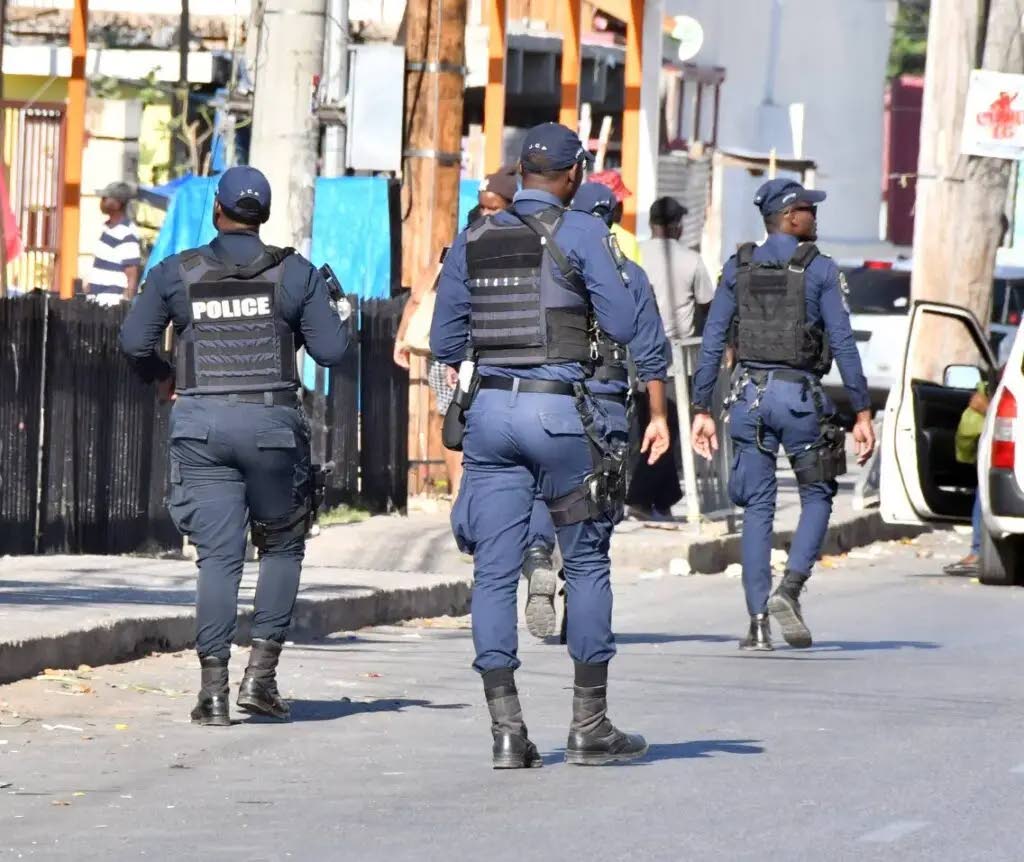
The style of the Jamaican police uniform has evolved in recent years.
The problem is not the fatigue itself. The problem arises when the fatigue becomes the dominant public face of policing. Military-style attire inevitably conveys a more combative posture. It is associated with force, confrontation, and heightened security operations. In communities already struggling with distrust of law enforcement, the widespread use of fatigues can reinforce the perception that citizens are viewed as threats rather than partners in public safety.
A police force cannot shoot its way to legitimacy. Effective policing depends on trust, cooperation, intelligence-gathering, and public confidence. Citizens are more likely to share information, cooperate with investigations, and respect the law when they see the police as protectors rather than occupiers.
This is not an argument for abandoning tactical capabilities. Jamaica faces serious challenges from organised crime, gangs, and heavily armed criminals. Specialised units must be equipped and dressed appropriately for the dangers they confront. Fatigues unquestionably have their place. However, that place should be reserved primarily for tactical operations and specialised assignments — not routine community engagement.
The everyday image of the JCF should be that of a modern, professional, technologically advanced civilian police service. The officer walking a beat, directing traffic, visiting schools, attending community meetings, or responding to neighbourhood concerns should be easily identifiable as a community police officer, not a combat operative.
Around the world, successful police organisations are investing heavily in technology, intelligence-led policing, body-worn cameras, forensic science, predictive analytics, and community partnerships. The future of policing lies not in the projection of brute force, but in the intelligent application of law, technology, and public cooperation.
Jamaica’s police officers perform one of the most difficult jobs in society and deserve every available resource to keep them safe. But safety and professionalism are not mutually exclusive. A modern police force can be both tactically capable and publicly approachable.
The JCF’s ongoing transformation should, therefore, include a reconsideration of the image it presents to the public. The traditional uniform should once again become the standard face of everyday policing, while fatigues should be reserved for the specialised circumstances for which they were intended.
The uniform matters because symbols matter, and in a democratic society, the most powerful symbol of policing should not be fear. It should be service, legitimacy, and trust.
A police force that looks like a military force may secure compliance. A police service that looks like part of the community is more likely to earn cooperation. Jamaica needs both security and trust — but trust begins with the image we choose to wear.
odamaxef@yahoo.com
O Dave Allen


