



Banks park $29b more at BOJ as Government deposits fall
Data point to easier liquidity in May, with possible implications for rates, lending and the Jamaican dollar
JAMAICA’S banks ended May with significantly more money sitting at the Bank of Jamaica (BOJ) — and the reason matters beyond the numbers.
It matters because money inside the banking system can help shape loan rates, deposit rates, business financing, returns on short-term investments and pressure on the Jamaican dollar.
BOJ’s latest figures show that Jamaica’s monetary base rose by almost $31 billion in May. Most of that increase came from commercial banks’ current account balances at BOJ, which rose by about $29 billion during the month.
In plain English, banks held much more money at the central bank.
The term monetary base sounds technical, but it simply means the foundation money in the financial system. It includes cash issued by BOJ, money banks are required to keep at BOJ, and extra money banks hold there.
And liquidity simply means money that can be used quickly.
So the May numbers point to a banking system with more ready money than it had a month earlier.
But the BOJ balance sheet gives the story more shape.
On May 13, commercial banks and other licensed financial institutions had $242.2 billion in deposits at BOJ. By May 27, that had risen to $272.9 billion — an increase of roughly $30.7 billion in two weeks.
Over the same period, public-sector deposits at BOJ moved in the opposite direction, falling from $222.7 billion to $189.5 billion — a drop of just over $33 billion.
That is important because Government money held at BOJ is largely outside the day-to-day banking system. When those balances fall, some of that money may be moving out through payments, spending, debt operations or other cash-management activity. Once it leaves Government accounts, it can end up in the banking system.
BOJ has not confirmed the cause, but the timing and size of the two movements point in the same direction: public-sector cash movements were likely part of the reason banks had more money sitting at the central bank in May.
The wider BOJ data also show that open market operations contracted by $22.4 billion in May. That suggests BOJ’s own liquidity-absorbing instruments were less of a pull on the system during the month.
Together, those forces appear to have left more money inside the banking system.
Money has a price. That price is interest.
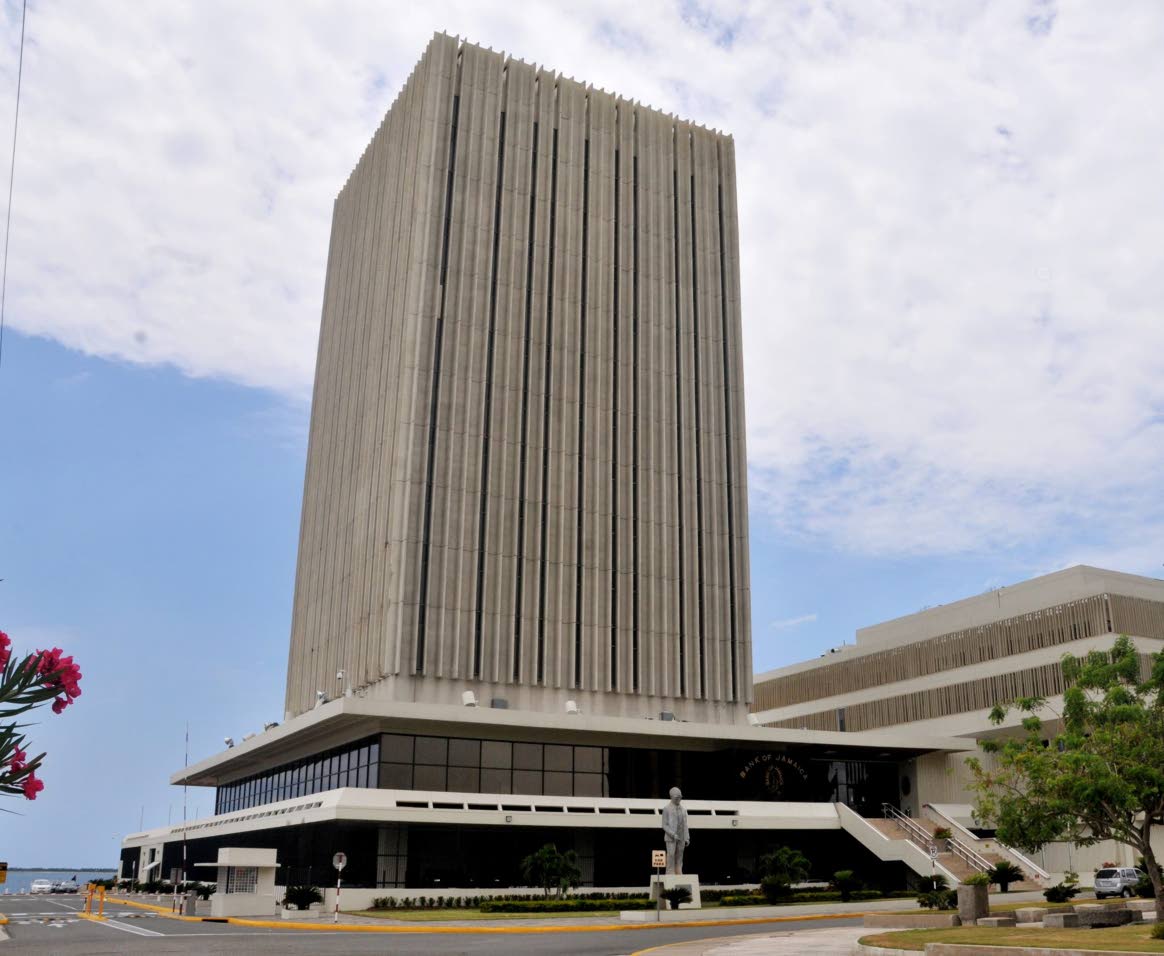
The Bank of Jamaica in downtown Kingston. BOJ data show banks ended May with significantly more liquidity at the central bank, a movement that could influence interest rates, lending conditions and pressure on the Jamaican dollar.
When banks have less available money, they may compete harder for deposits, pay more to borrow from each other, or price loans more cautiously. When they have more available money, some of that pressure can ease.
That does not mean mortgages, car loans, credit cards or business loans will suddenly become cheaper. Banks set loan rates based on many things, including inflation, borrower risk, the BOJ’s policy rate, operating costs and demand for credit.
But the amount of money in the banking system helps set the tone.
That matters for savers watching deposit rates, borrowers pricing loans, businesses assessing financing costs, and investors in short-term instruments such as Treasury bills.
The foreign exchange market is another reason this matters. If extra Jamaican-dollar liquidity starts chasing US dollars, it can add pressure to the exchange rate.
That does not mean the dollar will automatically weaken. BOJ’s May release showed net international reserves of US$6.48 billion, enough to cover more than 40 weeks of goods imports and more than 26 weeks of goods and services imports.
Those reserves give BOJ a buffer if foreign-exchange pressure emerges, including room to sell foreign currency into the market if needed. But strong reserves do not make local liquidity irrelevant.
That is why the next few weeks matter.
If this was mainly a temporary Government cash-management movement, the extra liquidity may fade or remain parked at BOJ with limited effect on households and businesses.
If it becomes a period of easier liquidity, the signs may show up in money-market rates, Treasury bill yields, banks’ appetite for deposits and loans, or demand for foreign currency.
The important point is that this was not mainly about Jamaicans walking around with more cash in hand.
It was about more money showing up inside the banking system — and BOJ’s own balance sheet points to a likely reason: Government deposits fell sharply while bank deposits rose.
When banks have more money available, the question is not only where it is sitting.
It is whether that money stays parked, lowers pressure in the money market, supports more lending — or starts looking for US dollars.


