



Jamaica Broilers backs blood drives, urges other entities to give too
FOR the past three years, Jamaica Broilers Group Limited has partnered with the National Blood Transfusion Service of Jamaica, donating a total of 208 pints of blood through company-led drives to save lives.
In fact, the company is encouraging other corporate entities to join the mission to increase the island’s blood supply.
Listed as one of the top corporate donors in 2025 by the National Blood Transfusion Service, the company donated 103 pints of blood last year — a big improvement from its first blood drive in 2024, when the company donated 40 pints of blood. They continued their mission this year with 65 pints of blood donated.
Trecia Allen, group safety, standards, and sustainability manager of the Jamaica Broilers Group, said the company’s mission to save lives was driven by its desire to support Jamaica’s health-care system in a very practical way.

Trecia Allen, group safety, standards and sustainability manager, Jamaica Broilers Group (Photo: Gabre Cameron)
“Following that first initiative, we also experienced instances where members of our own Jamaica Broilers Group (JBG) team and their families were in urgent need of blood, which reinforced just how critical and personal this issue can be. As a result, what started as a trial effort quickly became something we felt strongly about sustaining. After seeing the response and the real-life impact, we made the decision to establish it as an annual initiative,” Allen told the Jamaica Observer.
She shared that since 2024, the company has hosted registration blitzes across all locations with internal nurses answering questions for nervous donors. She said that the company, having recognised that there is often a natural fear of needles, had a strong communication plan which included identifying blood donor ambassadors across its locations, who helped to share information and encourage their colleagues.
Additionally, the group developed video content highlighting personal stories from first-time donors and team members who have had experiences where they or a loved one required blood, which helped to make the message more relatable.
Through these efforts, she said, they successfully convinced many employees to become first-time donors. General Service Attendant Semory “Chappy” McCalla was one such employee who stands out as someone who was nervous about donating blood, but soon became an advocate.
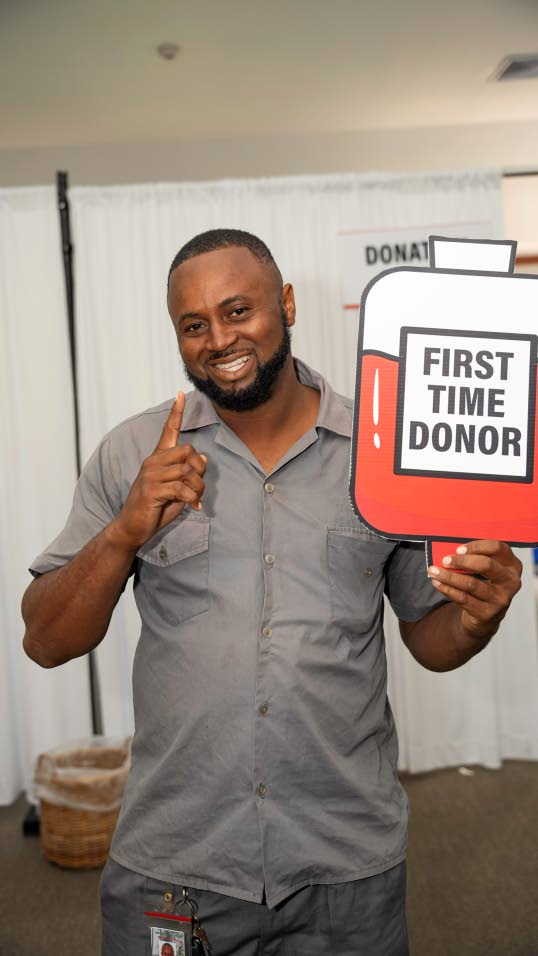
All smiles from first time donor, General Service Attendant, Semory “Chappy” McCalla member after donating blood during the company’s blood drive in 2024.
“Initially, he was very firm in his refusal to donate, and even on the day of the blood drive remained determined not to participate. At one point, he would spot the nurses from a distance and quickly head in the opposite direction. However, thanks to the patience and encouragement of the nursing team, he was gently reassured and supported through the process, including being told they would stay with him every step of the way,” said Allen.
“After much persuasion, he eventually agreed to take a seat. There were several moments when it seemed he might make a dramatic exit, but he ultimately stayed the course and successfully donated. Following his experience, he became noticeably more confident and even began sharing his story with colleagues to help ease their concerns and fears. Chappy was elevated from reluctant participant to blood donation ambassador — quite the transformation! I wouldn’t be surprised if next year he’s the one convincing others to roll up their sleeves,” she told the Sunday Observer.
Highlighting one of the benefits of company-led donation drives, she said they create the space and time for individuals who wish to donate but do not always have the flexibility to do so. She shared that in some instances, employees were initially not qualified after pre-screening due to things like elevated blood pressure, but given the flexibility provided through the drive, they were able to stay on-site and try again at a later time, an opportunity they probably wouldn’t have if they went on their own time.
“Many of them were able to donate later, which showed real determination and care. We also cannot forget those who were afraid of needles but still turned up and made the effort to participate. That courage, in itself, was deeply meaningful and inspiring,” she said.
Allen encouraged other members of corporate Jamaica to get on board with blood drives, noting that the impact can be transformative.
“It would close a major gap in the national blood supply if more companies mobilised their teams in the same way. Blood donation would become more consistent and predictable rather than dependent on emergencies and urgent appeals. That level of corporate participation would help stabilise supply and ensure more patients get access to blood when they need it,” she said.
She encouraged employers to start the conversation and partner with the National Blood Transfusion Service to engage employees early.
“Hosting a blood drive is more manageable than many organisations may think, and the benefits extend well beyond the event itself. With the national demand far outpacing supply, the message is clear: Corporate involvement is no longer optional, it is essential,” she stressed.


