



The real mangrove threat
Samuda says charcoal burners doing more damage than commercial developments
CORAL SPRING, Trelawny — While mangrove loss is often associated with coastal development projects, Minister of Water, Environment and Climate Change Matthew Samuda has argued that the biggest threat facing Jamaica’s mangroves is the unlawful harvesting for charcoal production.
According to Samuda, poverty reduction and economic development are critical to protect the country’s critical coastal ecosystems.
“The biggest issue affecting our mangroves is the illegal cutting of them to be used for firewood,” said Samuda.
“If you don’t reduce poverty, mangroves become charcoal, and that’s where we have significant degradation of our mangrove forest — not from housing developments or commercial developments,” added Samuda while responding to questions during the Rotaract District 7020 Conference at Ocean Coral Spring Resort in Trelawny on Friday.
Samuda pointed out that much of Jamaica’s mangrove degradation has occurred along the south coast rather than in tourism-dependent areas on the north coast.
He listed sections of southern Clarendon, St Catherine, Manchester, and St Elizabeth — which historically contained significant mangrove forests and where the ecosystems are especially important in mitigating storm surges — as areas impacted by people seeking wood for charcoal.
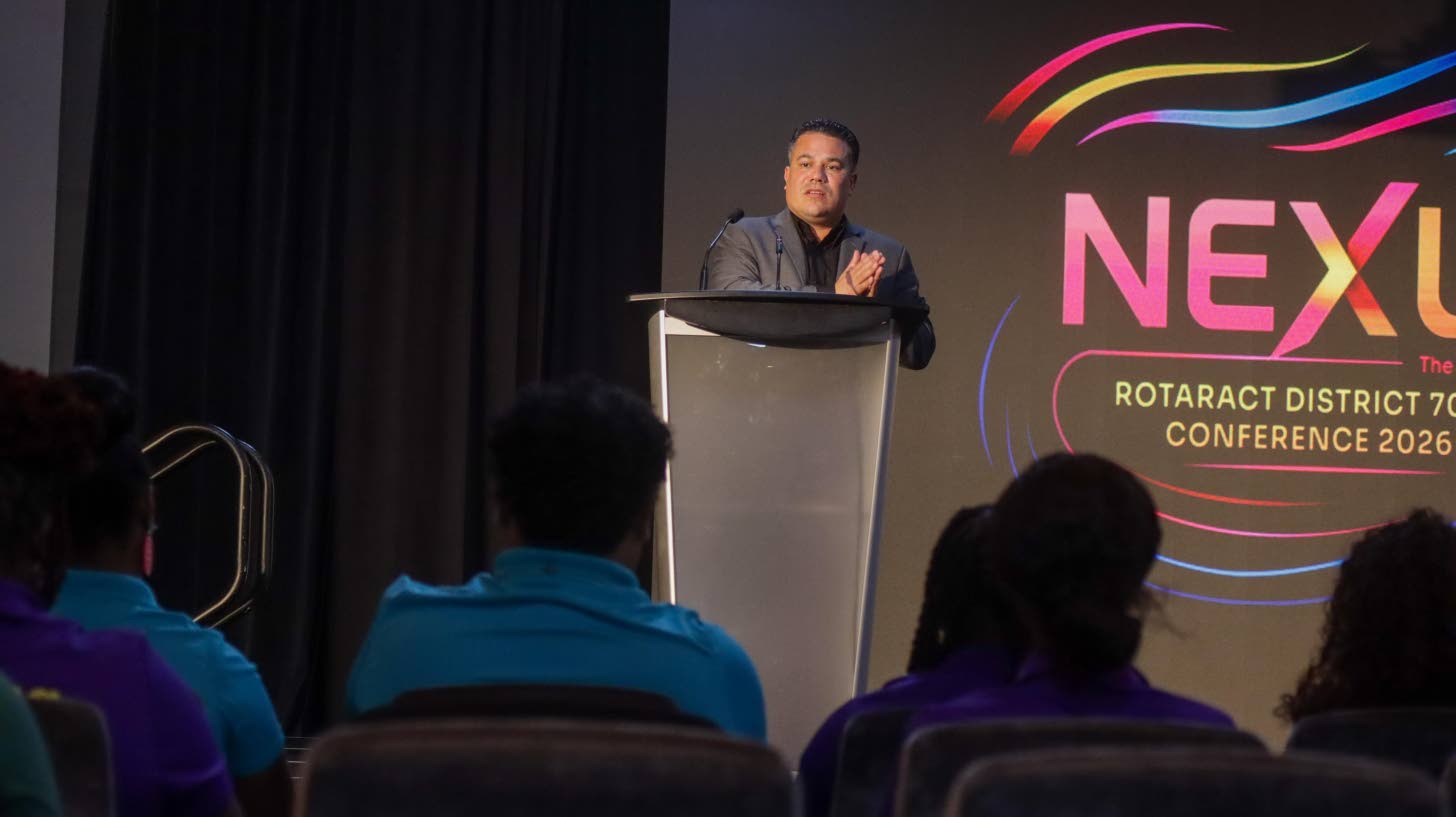
Minister of Water, Environment and Climate Change Matthew Samuda addressing the Rotaract District 7020 Conference at Ocean Coral Spring Resort in Trelawny on Friday.
Samuda also highlighted the impact of poor solid waste disposal practices on mangrove health, explaining that blocked waterways disrupt the natural mixing of fresh and seawater required for mangrove ecosystems to flourish.
Responding to a participant who highlighted the importance of protecting Jamaica’s coastlines and asked whether there is an opportunity for partnership with Rotaract clubs to establish mangrove nurseries and support restoration efforts, Samuda welcomed the involvement of service organisations.
“The scale of the environmental challenges we face cannot be managed solely by the Government. Groups like Rotaract are absolutely critical stakeholders if we’re going to mobilise all of society,” said Samuda.
He noted that community leaders, church leaders, civil society groups, and service clubs often have greater success in mobilising citizen action and participation in national initiatives.
Acknowledging the fiscal and operational constraints facing government agencies, Samuda said partnerships with volunteer organisations and community groups are essential.
“We have to look at maintaining the water canals, which in many cases the National Works Agency, the parish councils, and the National Solid Waste Management Authority simply don’t have the capacity to do on their own,” he said.
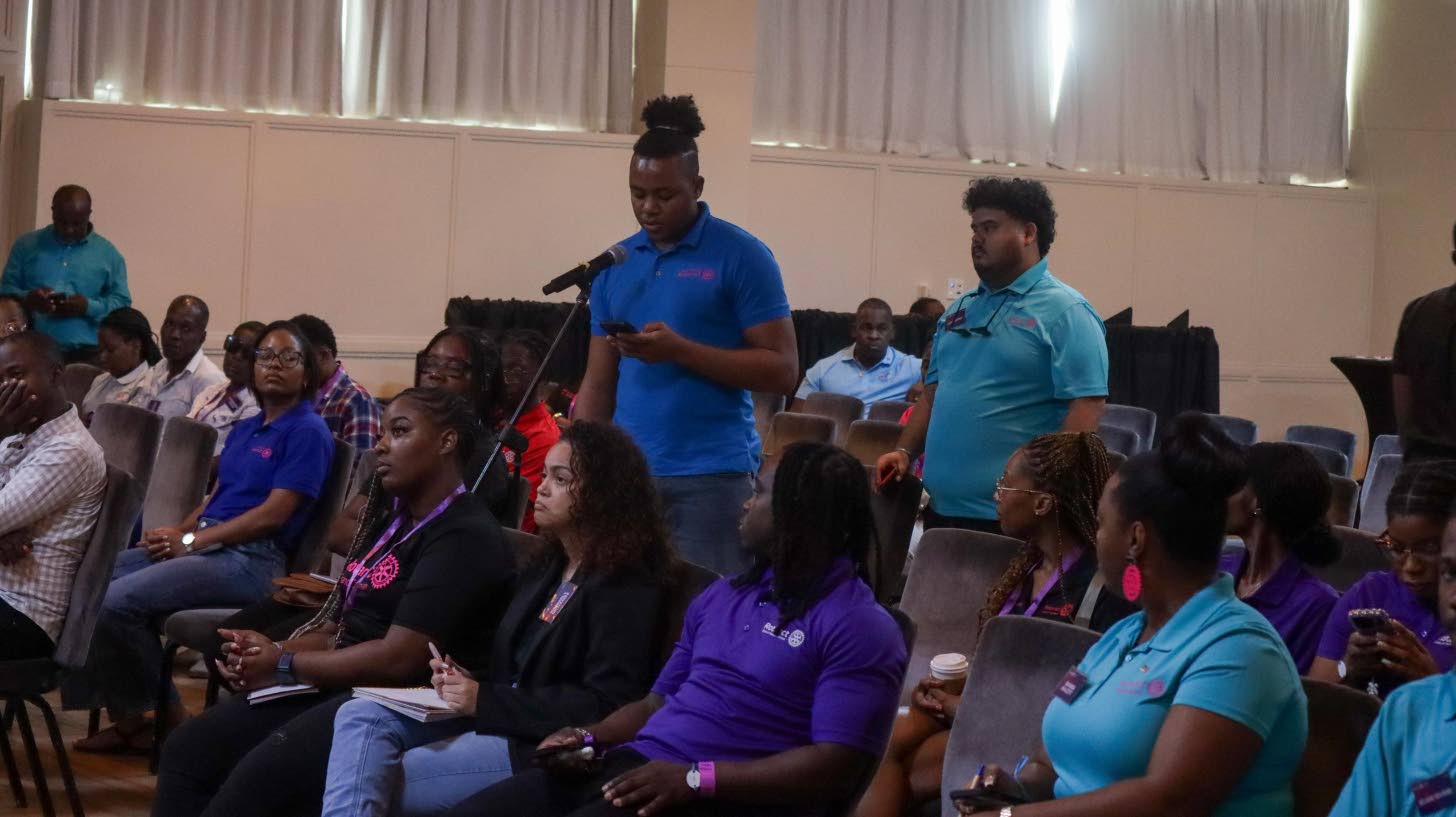
Participants in the Rotaract District 7020 Conference at Ocean Coral Spring Resort in Trelawny posing questions at Minister of Water, Environment and Climate Change Matthew Samuda last Friday.
Samuda welcomed clean-up activities and other interventions aimed at restoring mangrove habitats and maintaining waterways.
He also expressed support for the establishment of mangrove nurseries by Rotaract clubs and other stakeholders.
“If there’s an investment that can be made in establishing a mangrove nursery, we would certainly welcome Rotaract as a partner,” Samuda said.
“I think there’s a role for Rotaract,” he added.
He cited the work of the Alligator Head Foundation in Portland, and The University of the West Indies marine biology programmes as examples of successful mangrove restoration initiatives.
Samuda further noted that Jamaica is part of the international Mangrove Breakthrough coalition, through which funding will support restoration efforts involving organisations such as The UWI, the Caribbean Coastal Area Management Foundation (CCAM) in Clarendon, and the Alligator Head Foundation.


