



FAO/JACRA training programme targets ginger sector sustainability
A major push to revive Jamaica’s struggling ginger industry recently received a significant boost following a series of training workshops that equipped approximately 170 farmers, nursery operators and industry stakeholders with the skills needed to boost production and improve access to clean planting material.
The programme, coordinated by the Food and Agriculture Organisation of the United Nations (FAO) in collaboration with the Jamaica Agricultural Commodities Regulatory Authority (JACRA) under FAO’s One Country One Priority Product (OCOP) initiative, forms part of wider efforts to rebuild a sector that has been severely impacted by disease outbreaks, declining yields and shortages of quality planting material.
Through the recent workshops, participants received practical instruction in sustainable ginger production, seed propagation and nursery management, all of which are seen as critical to restoring the industry’s productivity and long-term viability.
For ginger farmer Xavier Latty of Kellits, Clarendon, the trainings done offered renewed hope for communities that were once major contributors to national ginger production.
“The training expanded my knowledge about ginger production, which comes as a big help for farmers in our area,” Latty said. “For many years Kellits was a major ginger-producing area, but over time much of the land became affected by disease. As we look to move forward and increase yields, I will be utilising the new method of planting in pots, using a small amount of planting material to achieve greater yields.”
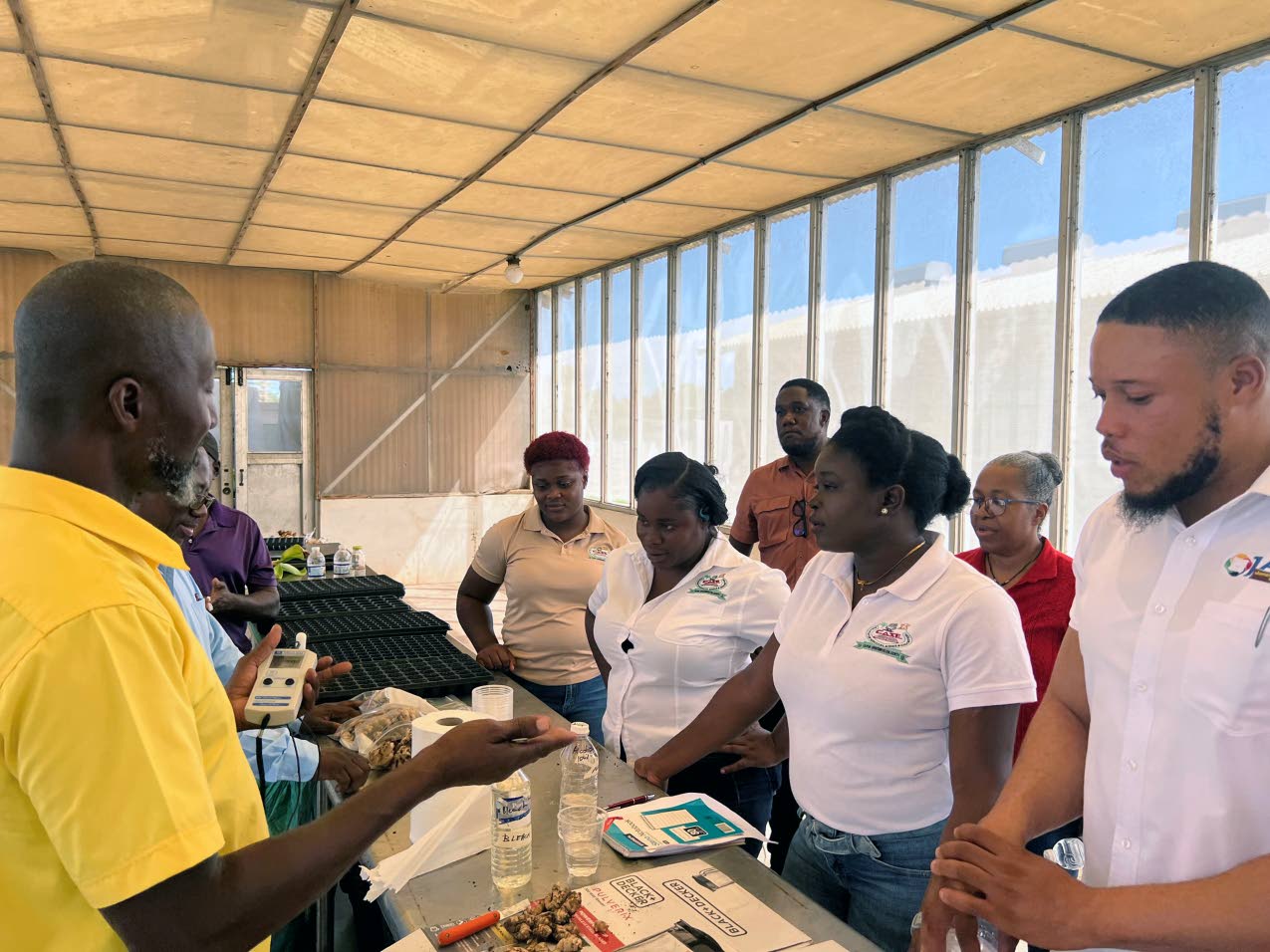
Charles Webster (left), plant project officer in the Ministry of Agriculture, performs an electroconductivity test to assess suitable conditions for growing ginger.
He added: “The training means that there’s help and that you can move forward and not give up. You just have to do it the right way.”
Jamaica’s ginger industry has faced significant setbacks in recent years, largely due to rhizome, or soft rot disease, which has devastated production and reduced the availability of clean planting material. Despite these challenges, demand remains strong for varieties including yellow ginger, native ginger, Jamaica blue, and Hawaiian Chinese, which are all prized internationally for their flavour and aroma.
The workshops, which sought to address some of the industry’s most pressing challenges, also provided guidance on disease management, nursery establishment, seed production systems and the use of healthy planting material. During the various sessions, participants were given the opportunity to explore practical measures to reduce disease risks and improve farm productivity.
In addition to Latty, hundreds of other farmers, nursery operators, researchers and plant protection specialists also participated in the workshops. Sessions related to sustainable production were held in Clarendon, Hanover, Manchester, St Ann, St Elizabeth, St Thomas, and Trelawny, while specialised training in ginger seed production and nursery management took place in St Catherine.
A key feature of the programme was the introduction of single-bud technology — an innovative propagation method that enables farmers to multiply limited planting material more efficiently while improving the quality of planting stock.
With planting material now accounting for between 40 and 46 per cent of the total cost of ginger cultivation, technical experts have said that the single-bud technology can significantly reduce production costs by allowing farmers to generate more planting material from limited supplies. The technology as an important screening tool, could also help producers to identify potentially infected planting material before it reaches the field.
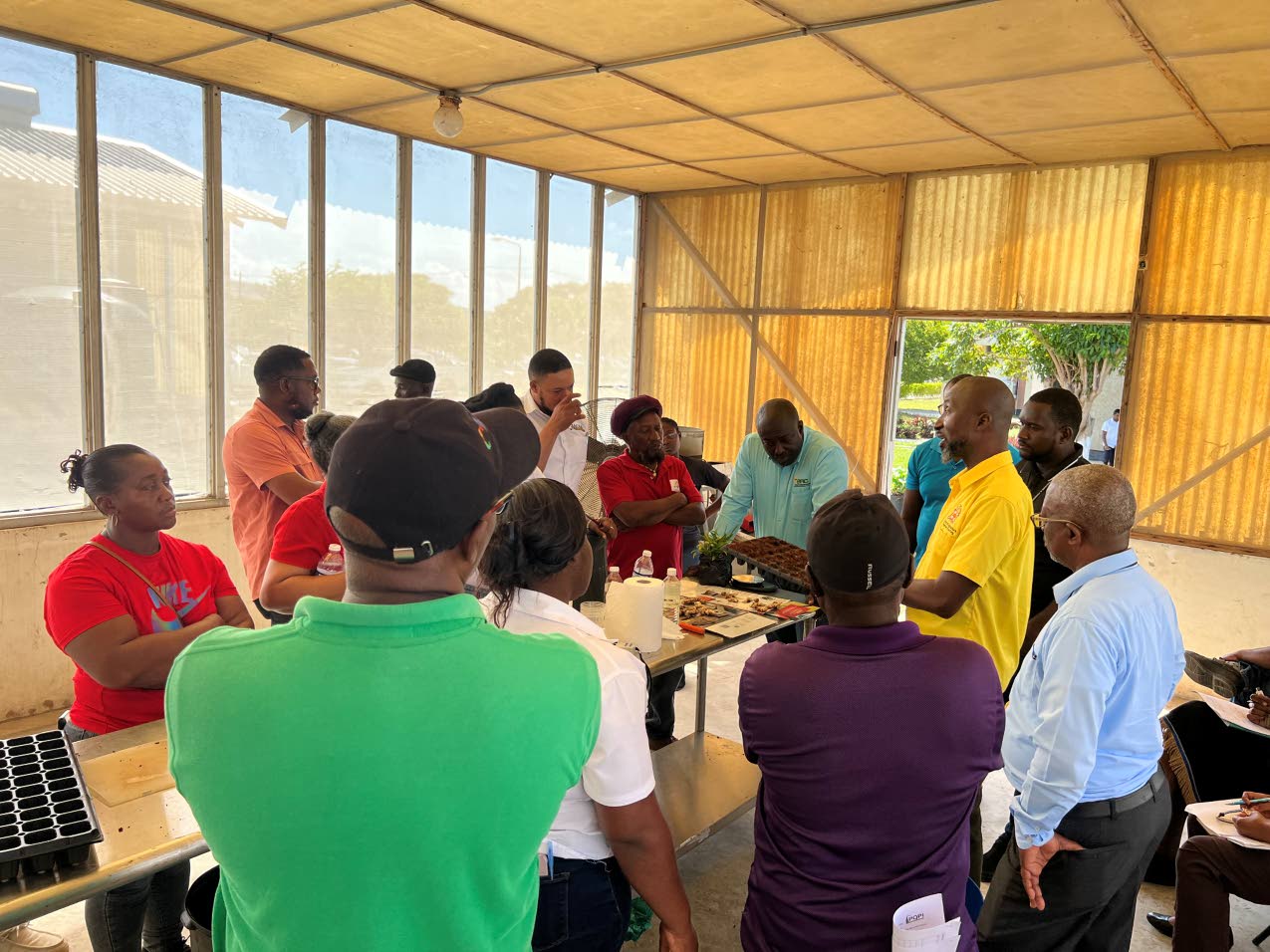
Participants engage in a demonstration activity during the ginger seed and nursery training led by FAO and JACRA at the Bodles Research Station in St Catherine.
The trainings, which featured contributions from the FAO, JACRA, the Scientific Research Council (SRC), the Plant Quarantine Produce Inspection Unit, the Seed Certification Unit and the Research and Development Division of the agriculture ministry, provided participants with a comprehensive understanding of systems that can support ginger seed production in Jamaica.
According to OCOP training facilitator Dr Lisa Myers Morgan, the workshops highlighted the importance of sustainable production in rebuilding the industry’s value chain.
“It was a robust discussion looking at their connection with production, processing and marketing — the entire value chain. Participants were able to appreciate that they are critical to the industry’s success because without sustainable production there is no value chain,” she said.
Acting director general of JACRA Wayne Hunter, in noting that the initiative will form part of broader efforts to position the sector for recovery, said it will significantly help to strengthen local production systems and support long-term growth.
“Although the industry has experienced significant declines due to disease and underinvestment, rising global demand for high-quality, organic ginger presents an opportunity for recovery,” he said in his remarks at the start of the programme, as he also pointed to the scaling up of production, improved disease management, and improved value-added products as key to the sector’s long-term sustainability.


