



Metal Detection: The Hidden Food Safety System
A recent social media video showing a Jamaican consumer using a magnet in a bag of sugar sparked widespread public concern and debate. The video quickly went viral, raising questions about whether metal particles were present in the product and whether consumers could trust what was on supermarket shelves.
What happened next is an important lesson in how food safety systems work.
The concerns raised by consumers prompted investigations and testing by the relevant authorities and the manufacturer. The findings ultimately led to a product recall, highlighting the critical role that both consumers and food safety systems play in protecting public health.
While many people focused on the magnet and the sugar itself, the incident brought attention to a much broader food safety issue that exists across the global food industry: Physical contamination.
When people think about food safety, they often think about bacteria such as Salmonella, Listeria, or E coli. However, food safety hazards are generally grouped into three categories: Biological, chemical, and physical hazards. Metal fragments fall into the category of physical hazards and can pose serious risks to consumers if they find their way into food products.
The recent sugar recall serves as a reminder that food safety is not only about preventing food poisoning. It is also about preventing foreign objects from entering the food supply and ensuring systems are in place to detect them before products reach consumers.
Why Metal Detection Matters
The presence of metal in food can cause dental injury, choking, internal lacerations, or worse. Even when the harm is not physical, the discovery of a foreign object erodes consumer trust and triggers expensive recalls. For food businesses, recalls linked to metal fragments are not uncommon: In the United States, over 16 million pounds of food were recalled in 2019 for contamination with extraneous materials, including metal. In 2022, nearly half-a-million pounds of meat products were withdrawn from the market for the same reason. Beyond financial losses, these events damage reputations built over decades.
On this basis, regulatory authorities and food safety standards often recognise metal detection as a critical control point. A properly installed and well-maintained detector can prevent a contaminated batch from leaving the factory floor, protecting both the consumer and the brand.
How Metal Contamination Comes About
Metal fragments can enter food at almost any point along the production chain. Processing equipment itself is one of the most common sources — slicer blades, mesh screens, bolts, or bearings can loosen or break under continuous use. Maintenance work is another risk; stray metal filings from welding or repair can easily fall into open product streams.
Raw materials are not exempt either. Harvesting tools, fencing wire, and metal tags can be inadvertently mixed in with produce or animal products. In other cases, the source is entirely avoidable: jewellery, pens, and small personal items carried by employees have all been linked to contamination events. Even packaging materials, such as staples or clips, can introduce foreign metals into food if not controlled.
The variety of possible sources explains why detection systems are indispensable. Regardless of how careful a facility is, the possibility of fragments slipping through remains.
Metal Detectors Protect Consumers
Metal detectors operate by generating an electromagnetic field. When a metal object passes through the detector, it disrupts that field, triggering an alarm and activating a rejection mechanism designed to remove the affected product from the production line.
Modern detectors can identify ferrous metals, non-ferrous metals, and many grades of stainless steel. The technology is remarkably sensitive. Depending on the product and equipment used, detectors may be capable of identifying metal fragments measuring only a few millimetres in size. However, detection is not always straightforward.
Foods with high moisture or salt content can interfere with detector performance because they naturally conduct electricity. Products such as bread dough, cheese, processed meats, sauces, and seafood often require specialised equipment settings to achieve reliable detection.
For particularly challenging products, manufacturers may use X-ray inspection systems, which can identify not only metal fragments but also other foreign materials such as glass, stone, dense plastics, and bone.
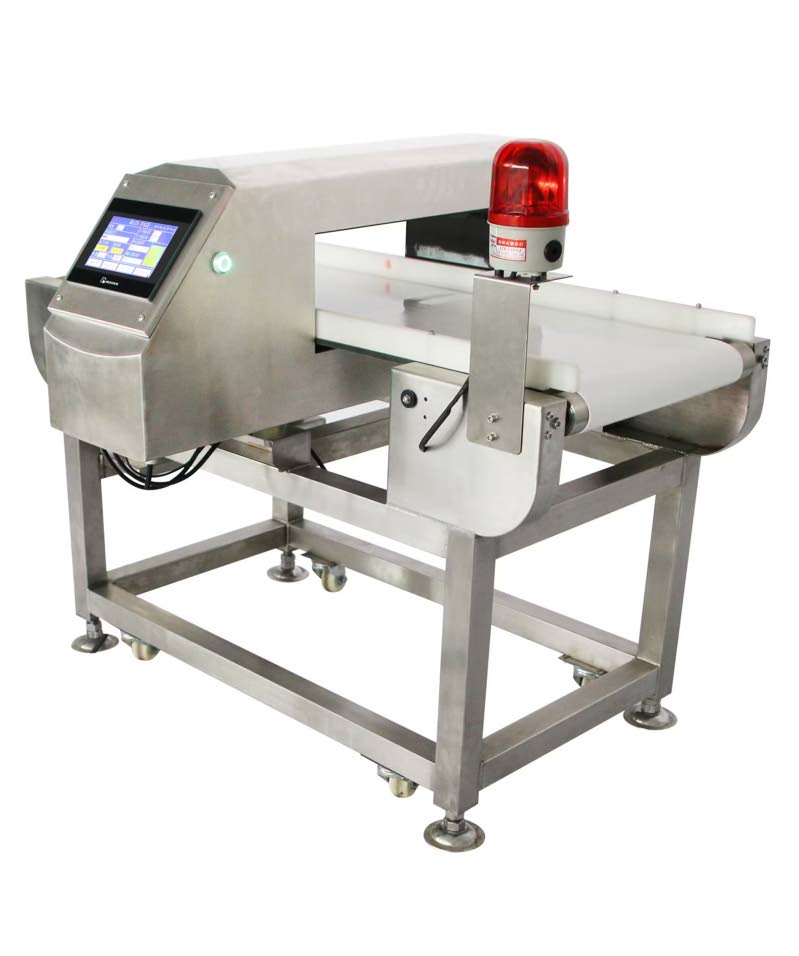
Modern metal detectors can identify ferrous metals, non-ferrous metals, and many grades of stainless steel in food.
More Than One Line of Defence
One of the biggest misconceptions about metal detection is that it occurs only once at the end of production. Ideally, food manufacturers should establish multiple layers of protection.
Metal detectors may be positioned after grinding operations, after mixing, before packaging, and immediately before products are shipped. Each location serves a specific purpose.
Early detection prevents contaminated products from damaging downstream equipment and reduces the amount of product affected. Final inspection provides assurance that products leaving the facility meet food safety requirements.
Consider a bakery producing sliced bread. Over time, slicer blades can become worn or damaged. Installing a detector after slicing but before packaging creates a critical checkpoint capable of identifying fragments before products reach consumers.
Similarly, processors handling liquids, powders, seafood, meat products, or sugar can instal specialised systems designed for those specific product types. The result is a layered approach to food safety where prevention, monitoring, and detection work together.
What the Sugar Recall Teaches Us
The recent sugar recall offers several important lessons.
First, it demonstrates that physical contamination remains a relevant food safety concern, even in products that many consumers consider low risk.
Second, it highlights the important role consumers play within the food safety system. The initial concerns raised through social media prompted further scrutiny and investigation. Consumer vigilance remains an important component of food safety surveillance.
Third, the incident reminds us that food safety decisions should be guided by scientific investigation and evidence. While social media may raise awareness, laboratory testing, inspections, and technical assessments are necessary to determine the nature and extent of any hazard.
Finally, the recall serves as a reminder that food safety systems are designed not only to respond to hazards but also to identify them before widespread harm occurs.
Recalls are often viewed negatively, but they can also demonstrate that monitoring, investigation, and corrective action systems are functioning as intended.
Strengthening Food Safety in Jamaica
The recent sugar recall is a reminder that food safety is about more than bacteria and viruses. Physical hazards, including metal fragments, can enter the food supply when equipment fails, maintenance controls break down, or detection systems are inadequate.
It is also a reminder that consumers have a role to play. In this case, a social media video prompted questions that ultimately led to further investigation and a product recall. While scientific testing — not social media — must guide food safety decisions, consumers remain an important part of the food safety system.
For food manufacturers, the lesson is clear. Metal detection, equipment maintenance, employee training, and strong food safety programmes are not optional safeguards. They are essential measures that help prevent hazards from reaching consumers in the first place.
_____________________
About the Author
Allison Richards is a food safety communicator, certified trainer and the founder of The Food Safety Girl, a consumer awareness platform promoting food safety in Jamaica and the Caribbean. She is the Caribbean Chapter Director for Women in Food Safety (WIFS) and host of The Big Bite Food Safety Show. With over 14 years of experience in food safety regulation, she is committed to public education and consumer empowerment. Through public education initiatives, including free community webinars, she continues to create space for learning, dialogue, and practical food safety awareness.
Allison Richards thefoodsafetygirlja@gmail.com –


