



Afreximbank pushes Caricom EXIM bank plan
Proposal now before leaders as region seeks new ways to fund growth
The Caribbean may be inching closer to creating its own regional export-import bank, in a move that could reshape how governments and businesses access financing for trade, infrastructure and climate-resilient development.
The proposed Caricom EXIM Bank, now under review by regional policymakers, is being positioned as a vehicle to help close what development financiers describe as one of the Caribbean’s biggest constraints — limited access to affordable, long-term capital.
Okechukwu Ihejirika, acting chief operating officer of Afreximbank’s Caribbean Office, said the initiative was recently presented to Caricom’s Council of Foreign Ministers and is expected to move next to heads of government for consideration.
“It’s an initiative that is now undergoing review. In fact, it was presented to the Council of Foreign Ministers recently, so very soon we will get it cleared by the heads,” Ihejirika said in an exclusive interview with the Jamaica Observer on the sidelines of the Climate Smart Summit in Bridgetown, Barbados.
“The study has been done, it’s been presented, it’s now being reviewed, and once there is affirmation as to the need for that EXIM bank, then we will go into implementation,” he added.
The proposal comes as the region pushes to finance everything from port upgrades and logistics infrastructure to renewable energy, food security and disaster resilience — all while dealing with high debt levels, elevated borrowing costs and climate-related vulnerabilities.
At present, many Caribbean businesses, particularly small and medium-sized enterprises, struggle to access financing large enough or structured well enough to support meaningful expansion.
That financing gap was a recurring theme during the two-day Climate Smart Summit at the Hilton Barbados Resort, where entrepreneurs pitched climate-focused projects to investors, banks and development agencies in search of funding.
During his presentation, Ihejirika said Afreximbank has increased its approved investment envelope for the Caribbean to US$5 billion, up from an initial US$1.5 billion when the bank established its regional office in Barbados in 2023.
But he acknowledged that capital alone is often not enough.
Many projects emerging from the region, he said, fail to meet the bankability standards required by major lenders.
“We recognise the need that most of the projects coming up may not actually meet the bankable requirements of the bank,” he said, noting that Afreximbank has established project preparation facilities to help entrepreneurs and developers move from concept to investment-ready proposals.
That issue — weak project preparation — is one of the structural gaps a Caricom EXIM Bank could help address.
Unlike commercial banks, EXIM banks typically provide specialised financing aimed at supporting trade expansion and the infrastructure needed to facilitate it. That can include ports, logistics corridors, transport links and resilient infrastructure critical to maintaining supply chains.
Ihejirika said a Caricom-owned institution would be designed to mobilise capital specifically for regional development priorities.
“There is a huge financing gap,” he said.
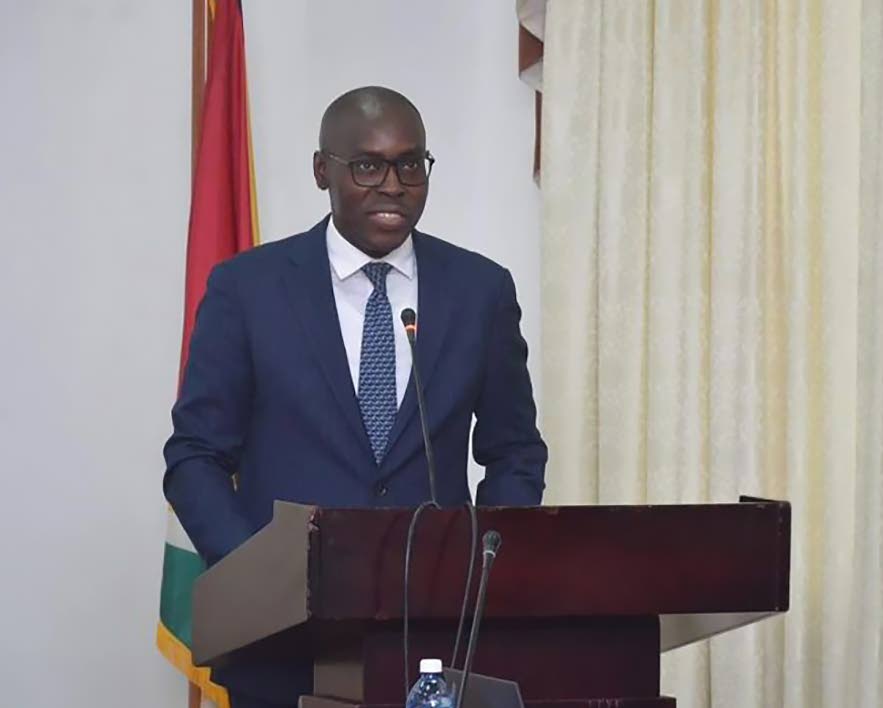
IHEJIRIKA… the study has been done, it’s been presented, it’s now being reviewed
“This is going to be a project owned solely by the region — an investment for the region, by the region and for projects within the region. I think that’s going to be a win-win.”
He said the institution’s primary role would likely mirror EXIM banks elsewhere in the world, focusing on financing trade between member states and external markets while supporting infrastructure that enables commerce.
“That will include building bridges, building ports in a resilient way, in such a way that ensures member states stay up and able to trade with the rest of the world,” he said.
The significance of such an institution extends beyond lending.
For decades, Caribbean leaders have argued that the region remains structurally disadvantaged in global capital markets. Many countries face relatively high borrowing costs despite strong debt reforms, while private sector projects often struggle with collateral requirements and limited risk appetite from local lenders.
A regional EXIM bank could potentially ease some of those constraints by pooling capital, sharing risk and creating financing structures better suited to Caribbean realities.
Afreximbank appears to be positioning itself as a catalyst rather than operator.
Ihejirika said the proposed bank would not be managed by Afreximbank, though the African lender could participate as an investor.
“It wouldn’t be managed by us. It would be its own structure…We could be an investor in it for sure,” he told the
BusinessWeek.
The initiative also reflects Afreximbank’s broader strategy of deepening trade ties between Africa and the Caribbean.
Since launching its Barbados office, the bank has approved nearly US$700 million in credit facilities for projects across the region, including climate-linked financing in Saint Lucia, according to Ihejirika.
The lender sees major opportunities in tourism, the blue economy, infrastructure and the creative industries, but also in helping Caribbean firms scale beyond small domestic markets.
That may ultimately be the bigger opportunity.
For many Caribbean entrepreneurs, the challenge is not just finding capital, but finding markets large enough to justify expansion. Through initiatives such as the upcoming AfriCaribbean Trade and Investment Forum, Afreximbank is trying to connect Caribbean businesses to Africa’s rapidly expanding consumer base.
With the African Continental Free Trade Area set to create the world’s largest single market by participating countries, Afreximbank believes deeper trade links could give Caribbean producers access to scale they have never had before.


