



The LAB positions for growth in booming short-drama market
…inks streaming partnerships, expands content monetisation strategy
Media and advertising company Limners and Bards Limited (The LAB) is seeking to capitalise on the rapidly expanding global market for short-form entertainment as new streaming and licensing deals begin to unlock fresh revenue opportunities for its growing portfolio of owned content.
Encouraged by the early success of Happily Ever Awkward, a short drama produced under its fast-content model, the company said its content strategy is beginning to generate tangible returns, opening new revenue opportunities beyond its traditional advertising and production businesses.
The film, after generating more than 380,000 views within two months of its release, is now set to reach a wider international audience following recent distribution agreements with major streaming platforms.
“The film will reach wider audiences through releases on Amazon Prime Video and Apple TVon June 30, 2026 and on Tubi on July 26, 2026. We have also secured our first licensing agreement in the vertical micro-drama space through a partnership with Mansa, a revenue-sharing project expected to launch this summer. Together these milestones signal that the assets we have spent years building are beginning to generate opportunities well beyond their original production,” a recent report to shareholders signed by Chairman Steven Gooden and CEO Kimala Bennett stated.
The LAB’s venture into content creation, which began to take form over the last five years, has steadily expanded its in-house film production efforts, laying the foundation for a business model centred on content ownership and monetisation. Following the release of its first major short drama, management is seeking to establish a foothold in the rapidly expanding vertical micro-drama market, a segment widely regarded as a multi-billion-dollar industry
Vertical micro-dramas, having emerged as one of the fastest-growing segments of the global entertainment industry, is designed primarily for mobile consumption. The productions typically feature episodes lasting between 60 and 90 seconds, filmed in a 9:16 vertical format and structured for binge viewing on smartphones.
Known for exaggerated storylines, high emotional stakes and cliffhanger endings, the genre has disrupted traditional film and television models by offering lower production costs, faster production cycles and highly targeted audience engagement.
The LAB’s push into the space aligns with its broader ambition to diversify revenues beyond its traditional advertising and production businesses while creating content assets that can be monetised across multiple platforms and markets.
The company’s broader content pipeline also continues to advance as discussions are progress on the distribution of two additional productions — Love Offside and Spices of Christmas — which management expects will begin to generate revenue in upcoming quarters.
Additionally, interest generated through SLATE – Jamaica on Screen, coupled with growing demand from international distributors seeking authentic Caribbean stories, have further strengthened confidence in the long-term prospects of the company’s content business.
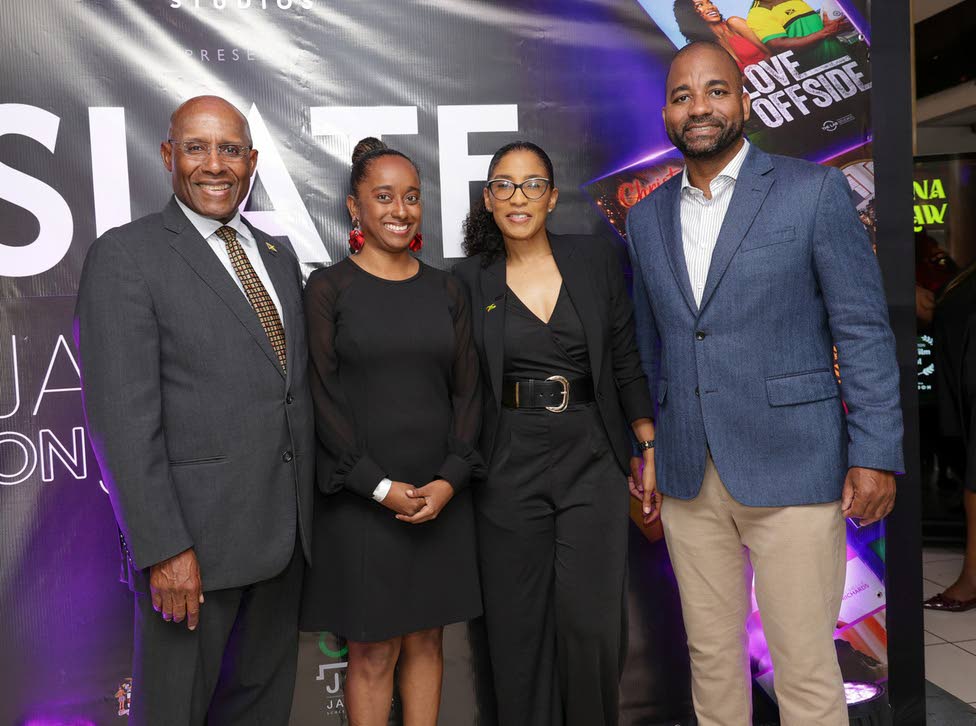
From left: Minister of Industry, Investment and Commerce Aubyn Hill and Shullette Cox, president of Jampro, join LAB Studios CEO Kimala Bennett and Chairman Steven Gooden at the SLATE | Jamaica on Screen showcase held recently.
Unlike traditional production contracts, where revenue is generated primarily from project fees — owned content provides creators opportunities to earn from advertising, licensing, distribution, sponsorships and future derivative projects. As such, management believes this model offers a more durable and scalable source of earnings over the long term.
“We are optimistic both will begin contributing financially during the current financial year,” the directors stated.
At the end of the six-month period ended April 30, 2026, The LAB, despite progress on strategic initiatives, reported weaker financial results which management attributed largely to the lingering effects of Hurricane Melissa which struck Jamaica last October and disrupted commercial activity during one of the company’s strongest seasonal periods.
During the period, revenue declined 26.6 per cent to total $337.7 million, down from $460.2 million. The media division remaining the strongest contributor to revenue, generated $166.9 million as production delivered $108.3 million, while agency services accounted for $62.4 million. The company, however, posted a net loss of $13.4 million for the period, reversing profit of $20.6 million recorded a year earlier.
As it works to recover from the downturn, management said it has implemented a series of cost-containment measures, including organisational restructuring and tighter resource allocations — all of which it believes will over the next few quarters help to enhance operational efficiency and support profitability as business activity normalises.
With audience engagement growing, international distribution expanding and new licensing opportunities emerging, management also expressed confidence that the company is laying the foundation for a more diversified, resilient and sustainable business model.
While acknowledging that the company remains in an investment phase, the directors likewise said they remain optimistic about the long-term potential of the intellectual property strategy.
“The opportunity that lies ahead of us is substantial,” they noted. “An intellectual property business rewards those willing to invest patiently and think in years rather than quarters and that is precisely how we are building it.
“That groundwork is already paying off, with our audience growing, our distribution widening, and new revenue channels opening across the business, each a building block in a portfolio of assets designed to generate value for years to come.”


