



Defining deportees
Gov’t adamant third-country nationals headed to Jamaica from US are not being deported
THE Government has doubled down on its claim that third-country nationals (TCNs) heading to Jamaica under a deal with the United States are not deportees.
In a social media post, Prime Minister Dr Andrew Holness reiterated the claim that Jamaica is not accepting foreign deportees from the US under the memorandum of understanding (MOU) concerning the transfer of TCNs.
This despite Amnesty International describing third-country removals as a policy under which “people that the United States wants out of its territory” are sent “to countries other than their own”, fuelling debate over exactly who Jamaica has agreed to receive.
The controversy has emerged days after Minister of National Security Dr Horace Chang confirmed that Jamaica had concluded an agreement with the US to facilitate the transfer of a limited number of TCNs, while insisting repeatedly that those individuals should not be classified as deportees.
In his post, Holness sought to reinforce that distinction, stating that Jamaica was not receiving foreign deportees under the arrangement.
“The only deportees Jamaica accepts are Jamaican citizens returning to their homeland under established agreements between both countries,” Holness said.
This came after Chang, during Wednesday’s post-Cabinet media briefing, disclosed that the agreement contains strict limits, stating that Jamaica would accept no more than 25 TCNs at two-week intervals, and that transfers would be suspended if more than 10 individuals remained on the island at any given time.
He insisted that the individuals covered under the agreement are not deportees because they are not being returned to their countries of origin.
According to Chang, the arrangement applies to third-country nationals who have exhausted legal avenues to remain in the United States but whose home countries are either unwilling or unable to accept them.
“They are not deportees. They are third-country nationals. They are persons who are in the US who have exhausted all legal means to remain there and for one reason or another their home country will not receive them,” Chang said.
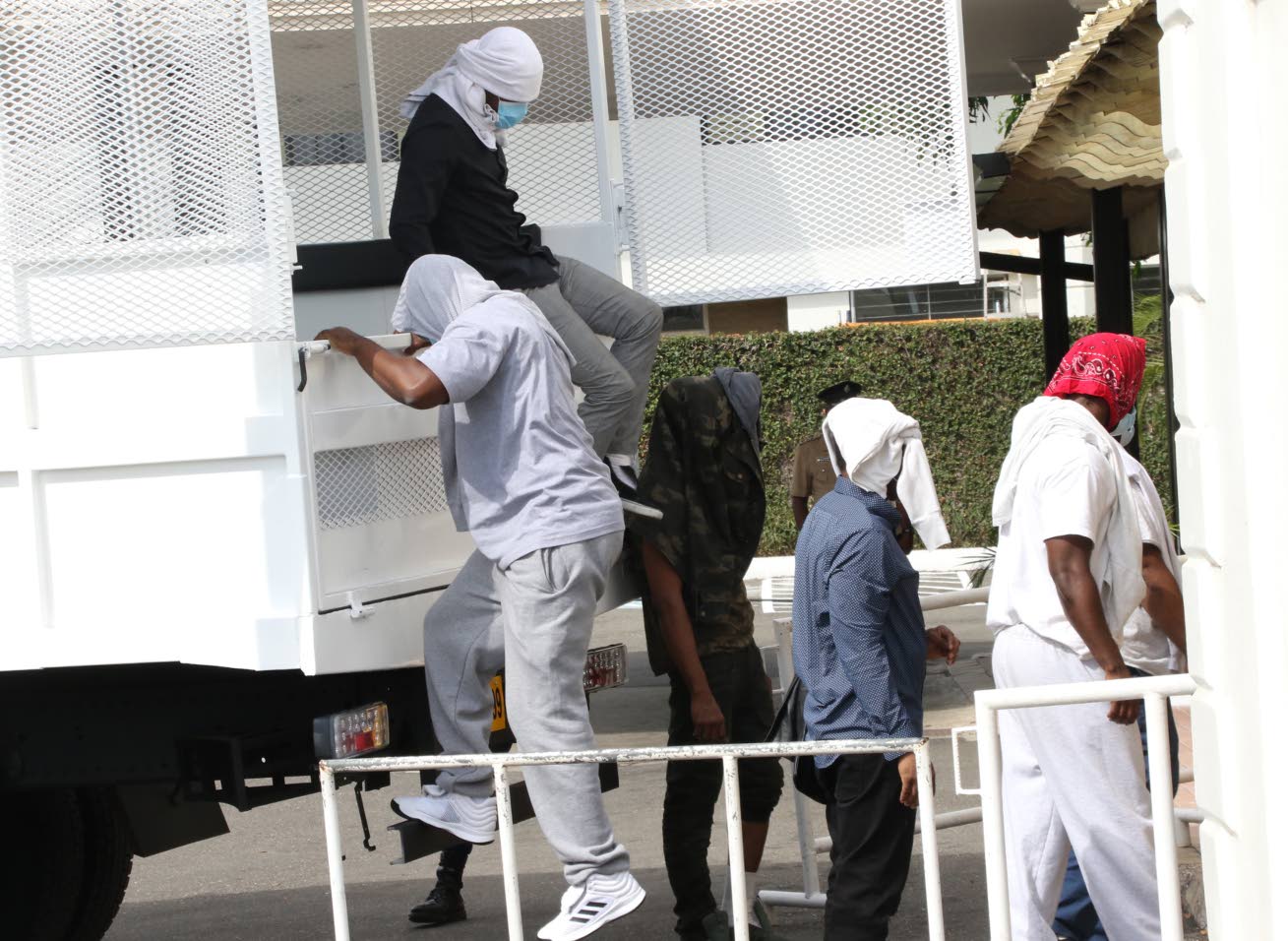
Jamaicans deported from the US reach home
He argued that describing the individuals as deportees creates a misleading impression that Jamaica is accepting people who have been formally removed to their country of citizenship.
The minister further sought to assure the public that those transferred under the arrangement would be carefully vetted before being accepted by Jamaica.
However, Amnesty International’s description of third-country removals appears to conflict with the distinction being advanced by the Jamaican Government.
The London-based human rights organisation — which campaigns globally on issues ranging from political freedoms and armed conflict to migration and refugee protection — argues that third-country removals involve transferring people the United States wants removed from its territory to countries other than their own, regardless of whether those individuals are ultimately returned to their homelands.
Amnesty, on its website, also argued that the policy raises concerns about due process and the treatment of migrants once they arrive in destination countries.
However, Chang, speaking during a sitting of the House of Representatives on Wednesday, explained the Government’s position is that the people covered under the MOU are not being permanently settled in Jamaica and would only remain on the island while arrangements are made for their onward movement.
“The persons contemplated under this framework are nationals of countries other than Jamaica who would transit through Jamaica under a controlled process while arrangements are made for their onward movement, including return to their countries of origin or another appropriate destination,” he said.
He further stressed that the arrangement is not an immigration settlement arrangement and is not a programme to permanently resettle individuals in Jamaica.
He also maintained that Jamaica would retain full discretion over who is accepted under the agreement, with each case to be considered individually and all available identity, medical and criminal history records to be provided before any transfer takes place.


