



Firefighters now have ‘eye in the sky’
First drone class graduates
TOWER ISLE, ST Mary — With 14 members now officially trained in the use of drones, the Jamaica Fire Brigade (JFB) has taken a significant step forward in modernising its emergency response capabilities.
During the week-long session on unmanned aerial vehicles (UAVs), the brigade’s first-ever, participants learned how drones can be used to support firefighting, search and rescue, disaster assessment, hazardous material-related incidents and public safety operations.
“The technology improves firefighter safety, increases operational efficiency, supports inter-agency collaboration and enables informed decision making during emergencies,” said Assistant Superintendent Clayton Beason, who is in charge of the JFB’s UAV department.
He was speaking with the Jamaica Observer during a June 19 graduation ceremony held at Madge Saunders Conference Centre in Tower Isle, St Mary.
Drones are already being used in search and rescue operations, wildland fires and hazardous material (hazmat) incidents. For example, they can capture video of real-time views of smoke plumes and fire scenes that ground crews cannot safely access. Adding trained operators within the JFB increases the effectiveness of UAVs. They are able to operate both day and night, using thermal imaging to detect heat signatures through smoke and darkness.
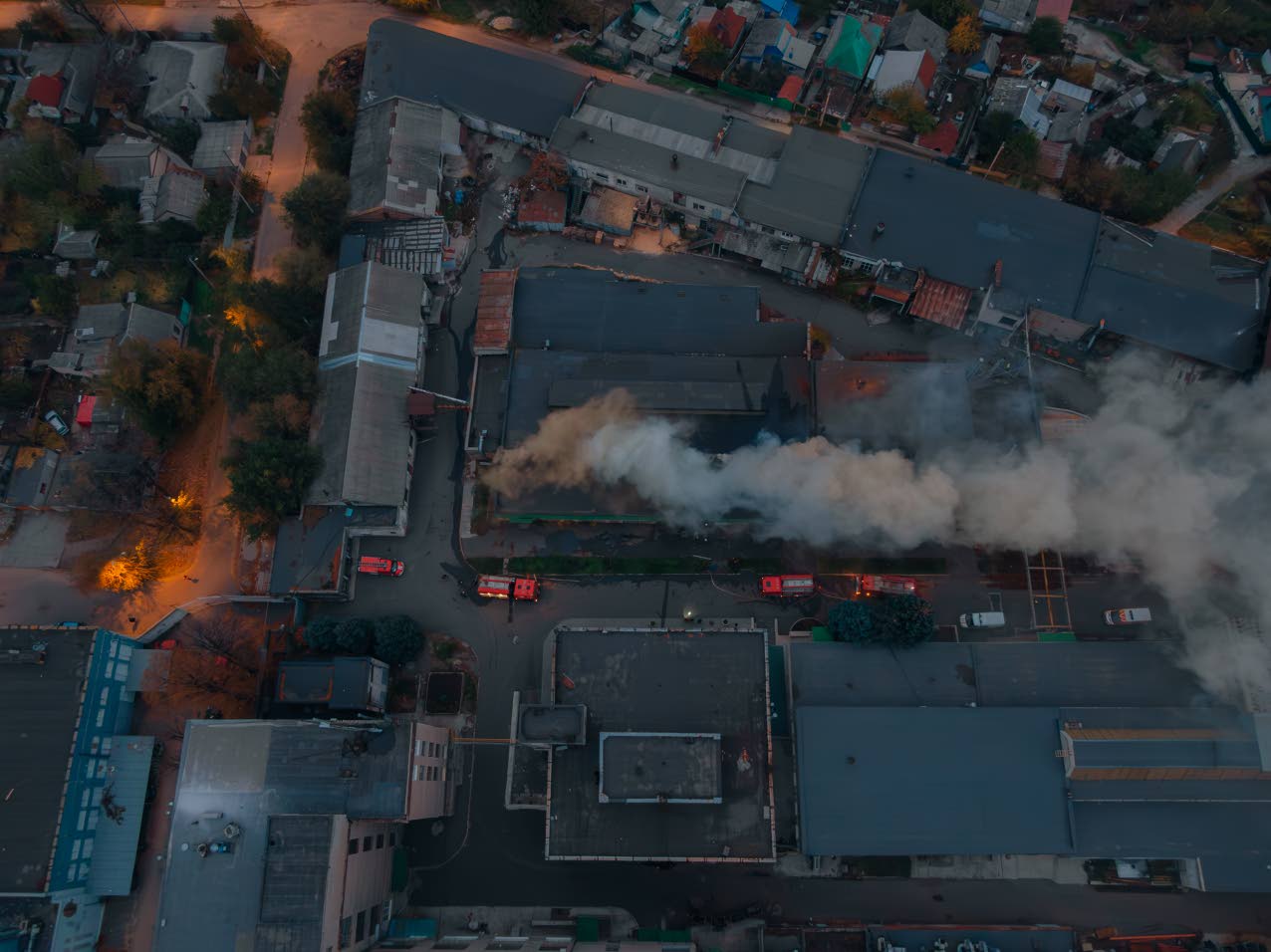
File photo showing a drone’s eye view of a fire.
“We just graduated 14 UAV pilots that are added to our operational structure,” Beason said, adding that this will play an increasingly important role in protecting lives and property.
Meanwhile, the hazmat component of the training continues to expand the JFB’s capacity to respond to chemical, biological, radiological and other hazardous incidents, a strategic objective aimed at increasing specialised response islandwide.
The first trained crew will be deployed to Area 1 — covering Kingston and St Thomas — as well as Area 4, which includes St James, St Elizabeth, Westmoreland and Hanover.
— Ingrid Henry


