



Deliver or perish!
Over the last 10 years the United Kingdom has averaged a new prime minister roughly every 19 to 20 months. Since 2016, 10 Downing Street has cycled through six different prime ministers: David Cameron (resigned in July 2016), Theresa May (resigned in July 2019), Boris Johnson (resigned in September 2022), Liz Truss (resigned in October 2022), Rishi Sunak (resigned in July 2024), and Sir Keir Starmer (resigned in June 2026). This rapid turnover provides further evidence that the privilege of especially high political office typically starts with cheers and ends in jeers. This reality has hounded politics since time immemorial.
Starmer’s recent resignation clears the way for Britain’s seventh prime minister over this decade. He led the British Labour Party — the fraternal twin of the local People’s National Party (PNP) — to a historic 2024 landslide after 14 years of Conservative rule. But major U-turns, big benefit cuts, a sordid diplomatic scandal, and constant pressures from Reform UK right wing political party ruined Starmer’s authority within two years. He was pushed just when intense internal and external political forces would have caused him to jump.
The rapid displacement or replacement of prime ministers is a movie Britons have seen before, notably during the Second World War, and during the infamous “Winter of Discontent” in the 1960s and late 1970s. What was the common denominator during those periods? Hard times!
The British economy nose-dived and social and related services almost flatlined. A majority of Britons had to “suck salt through a wooden spoon” (endure excruciating personal and national uncertainties and hardships). Understand this crucial reality: Even in times of crippling crisis, people do not suspend their physiological and related needs for long.
Here at home, Prime Minister Michael Manley learned this lesson the hard way on October 30, 1980 when he was booted from Jamaica House in a landslide defeat by Edward Seaga and the Jamaica Labour Party (JLP). After two terms of experimenting with democratic socialism, the economy was on its face. No matter where one sits on the ideological or political continuum, it’s always, “It’s the economy, stupid!” (Think James Carville.)
Right now, things are tough in Britain, very tough. Meaningful economic growth is playing hide-and-seek. Hospital waiting lists are growing. Thousands of young people, in particular, are rapidly losing hope. Legal and illegal immigration sits on the front burner of local politics. Crime is on the rise in some parts of Britain. The biting impact of Britain’s long-standing housing crisis is increasingly being felt by young working professionals, who, according to credible polls, fear they will not be better off economically and socially than their parents — and that their own children will be worse off than they are. Infrastructure deficits are visible across many parts of Britain.
Polls show that many Britons feel their country is no longer a superpower militarily or economically, and that Britain is rapidly being pushed into the ignominious category of the ‘Poor Man of Europe’. This decline is being hastened by the severe consequences of Brexit (a portmanteau of “Britain” and “exit”), the process by which the UK withdrew from the European Union. Recent polls indicate that a majority of Britons regard Brexit as a big mistake and want Britain back in.
Prior to the last 10 years of prime ministerial and related instability the UK had only four prime ministers over a period of 37 years: Gordon Brown (2007–2010), Tony Blair (1997–2007), John Major (1990–1997), and Margaret Thatcher (1979–1990). Why? It’s the economy, stupid!
Prior to becoming prime minister, Sir Keir Starmer repeatedly declared in the highways and byways that the Conservative Party, commonly called the Tories, was “feckless, reckless, and useless”. He promised to get rid of “sticking plaster politics” and to “get things done”.
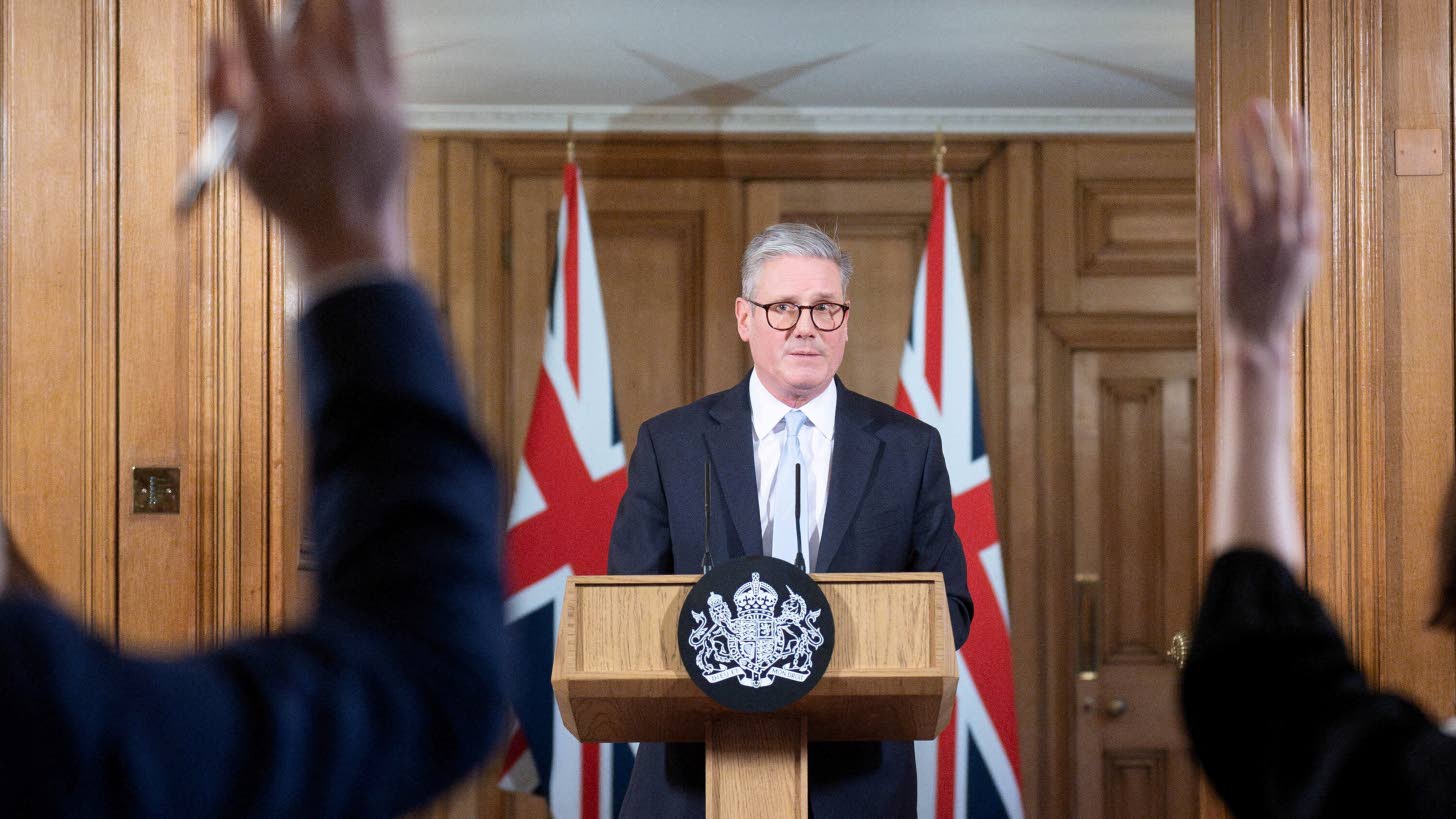
STARMER… latest UK prime minister to resign after promising to “fix Britain”.
As he addressed the nation from 10 Downing Street for the first time as prime minister, he said, among other things: “My Government will serve you; politics can be a force for good. Our country has voted decisively for change, for national renewal, and a return of politics to public service. Our work is urgent and we begin it today.” (Sky News, July 5, 2024).
“Change begins now,” Starmer later told the media and the British people. They took him at his word, as they should. Delivery is where the rubber hits the road. Prior to the July 4, 2024 General Election, Starmer had made a trailerload of promises. By and large, what the British people have received so far is a trailerload of excuses and tax increases. He promised to restore Britain economically. Starmer sold himself as better than his opponents and pledged that he would “fix the big problems stifling the United Kingdom”.
As early as January 2025 the writing was on the wall that Starmer’s end was near. Recall that just over three million Brits had signed an e-petition calling for a fresh general election in the UK. The petition’s author said: “I believe the current Labour Government has gone back on the promises they laid out in the lead-up to the last election.”
In response, Starmer’s Administration rejected calls for a general election and said the Government would “continue to deliver the manifesto of change that it was elected on” (House of Commons Library, December 17, 2024).
Sir Keir Starmer, who I believe is a very decent man, received the memo, read it, but failed to grasp the urgency of these three words: Deliver or perish! That is the message in the memo to governments globally. This is a reality!
REAL CHANGE, REAL FAST!
In my The Agenda column of June 14, 2026 I said, among other things: “Without efficacy, democracy is dead. The same is true of all the other primary systems of government, monarchy, theocracy, oligarchy, authoritarianism, and dictatorship.”
Folks are no longer impressed by false authenticity and empty rhetoric. Orwellian doublespeak and the like “nah keep again”, as we say in the streets. People elect a Government to get things done in a timely and cost-efficient manner. Individual benefits are crucial to the preservation of the social contract. In return for the certain and consistent satisfaction of, especially, individuals’ immediate and aspirational needs, citizens place their confidence in a Government. This adhesive of confidence glues society together.
The days of “alli button wuk fi nutten” are over. Folks want a love they can see and feel from their elected and selected representatives. This means tangible benefits they can feel in their pockets and see on their dinner tables. And a majority are not prepared to die and go to heaven just to benefit, either.
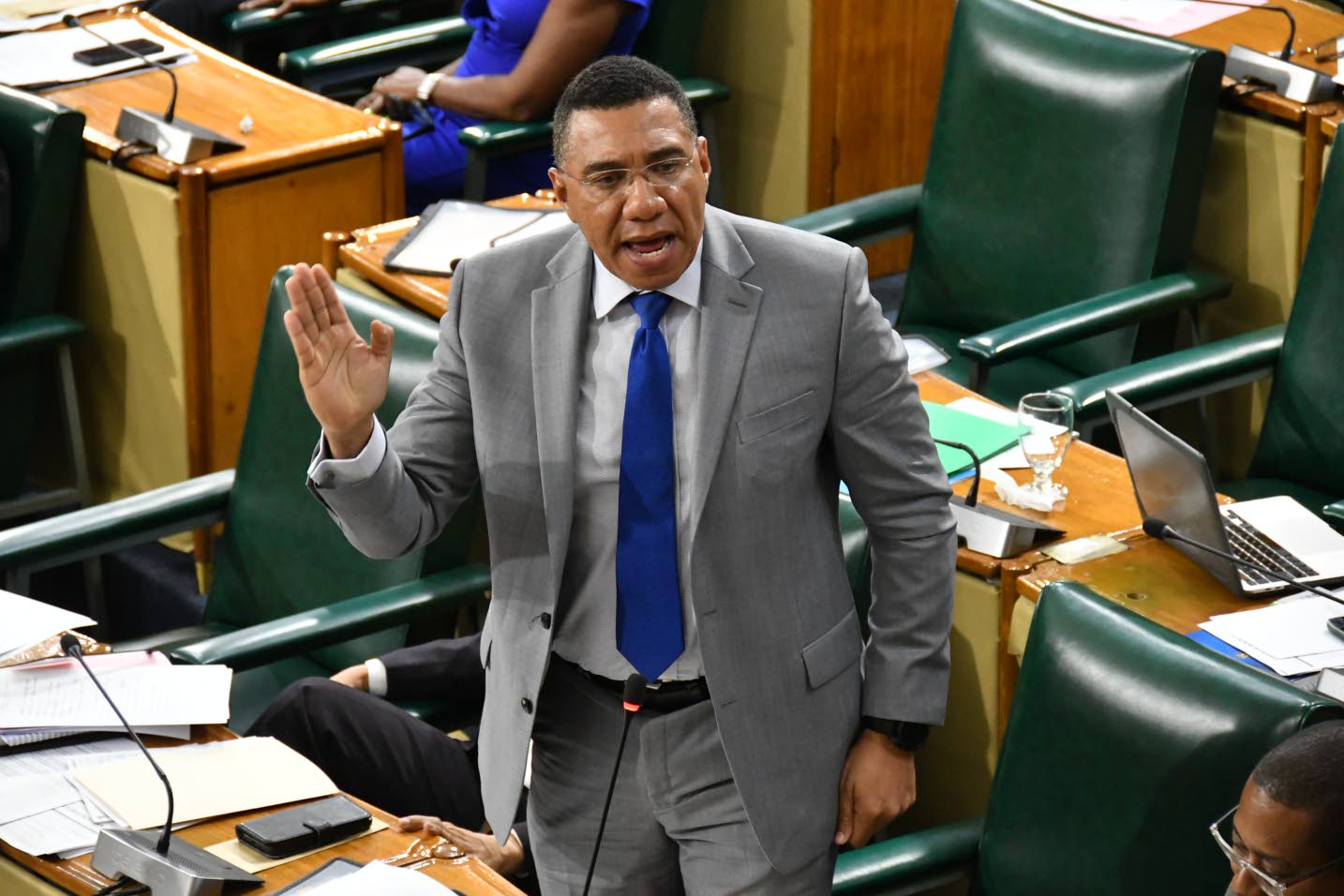
Prime Minister Dr Andrew Holness addresses the House of Representatives recently. (Photo: Garfield Robinson)
Folks aren’t fools. Folks are not stupid. We know that elected and selected representatives are not Jesus Christ. We don’t expect political leaders to wave a magic wand and solve all our problems.
Understand this: A majority of people, no matter how unlettered, know when they are being given a ‘6 for a 9’. Folks — whether they have a university degree or dropped out of school at long division — know when their elected and selected leaders are simply ‘flossing’ (showing off) instead of addressing long-standing needs in a timely and practical manner. A majority know when leaders have been sucked in by the temptation to behave like “frighten-Friday” and “never-see-come-see”.
Performative politics is very entertaining. Roman history, particularly the gladiatorial battles in the colosseums, has cemented that. Despite the many lessons of history, some still foolishly believe that the ‘mob’ — as the Roman elite called the common people — is so absent-minded that it will always fall prey to “bread and circuses”. They are wrong! Folks know when life is simply not improving materially or aspirationally.
UPHILL TASK
Credible polls in Britain had been showing for months that a majority of Britons had concluded that Starmer’s policies were not helping them improve their lives materially or aspirationally.
Keir Starmer inherited a very tough batting wicket. When he took office in July 2024 the UK’s public sector net debt stood at approximately £2.71 trillion, which was equivalent to around 99 per cent of gross domestic product (GDP). Sounds familiar?
The British economy was growing at a glacial pace. The Economist of June 22, 2026 noted that, “When Keir Starmer took power as UK prime minister in July 2024, the United Kingdom was navigating the heavy aftermath of prolonged Conservative rule, struggling with post-Brexit economic stagnation, declining public services, and the cost-of-living crisis.”
Starmer said he could and would “fix things”. The ongoing global oil crisis did not help Starmer, nor did the strained relations with US President Donald Trump. Notwithstanding, a majority held him to his word that he could and would “fix Britain”.
Don’t miss the lesson for us here at home. Again, even in times of crippling crisis, people do not suspend their physiological and related needs for long. Many of us are already ignoring the fact that Hurricane Melissa devastated our island eight months ago. Human nature is the same globally.
HEIR APPARENT
Andrew “Andy” Burnham, the Member of Parliament (MP) for Makerfield since June 2026, is almost certain to replace Starmer. He was mayor of Greater Manchester from 2017 to 2026. Burnham is affectionately called the King of the North. He has been credited with spearheading an economic and social revival of Greater Manchester.
Recently I watched and listened as Burnham set out what he described as his “10-year mission to raise people’s living standards”. He said his plan “seeks to give Britain some breathing space”. He said he wanted every Briton to “imagine good growth in every postcode and hope in every heart”. He promised not to “take risks with public finances”, and said he intended to “make politics work for every Briton”. Burnham promised to tackle rising inflation. He said he had listened to people in Makerfield crying out for “a bit extra now to help with rising costs”. He also promised to try to lower high and rising energy costs. He said the building of many more affordable homes was at the very top of his agenda. Sounds familiar?
With the exception of some sentences, Burnham’s speech sounded very similar to the one Starmer delivered in July 2024. I hope this is not a precedent. I desperately want Britain to escape its economic rut. I have relatives there. They, like many other Britons, are facing hard times. Britain’s economic buoyancy is advantageous for Jamaica, as Britain is one of our major trading partners.
The electorate knows when they are being given a “6 for a 9”.
SHOW ME THE MONEY!
When politicians make promises, big or small, I always remind people that they should insist on being shown the money. Burnham did not say whether he intended to raise taxes to fund his 10-year plan. He did not say if he intended to borrow more. So where will the money come from? You cannot love without money. This is true in Britain, Jamaica, and globally.
Politics is a meat-grinder. Some experts say the bond market is the real prime minister of the UK. The ‘Bond Vigilantes’, some experts say, are worse than Shylock in Shakespeare’s The Merchant of Venice. Their ubiquity, doubtless, is the reason that Burnham was quick to say he will not fiddle with the fiscal rules and go off on any spending spree.
Here are two important lessons we must not miss: Twenty-four months ago, Starmer won one of the biggest parliamentary majorities in the UK in many generations. Last month a teary-eyed Starmer resigned. Starmer’s 411 seats out of the 650 in the British Parliament turned out to be a mirage. Only 33.7 per cent voted for Labour. Labour was able to form a majority Government with just over a third of the votes cast. Apathy, some experts say, was the real winner in the 2024 general election.
The antidote for mass apathy is results that a majority can see and feel. Crippling debt and plunging national productivity are the kill shots to any economy. Recently, Prime Minister Dr Andrew Holness said: “There is a fundamental difference between borrowing that builds and borrowing that burdens.” He is spot on!
Garfield Higgins is an educator and journalist. Send comments to the Jamaica Observer or higgins160@yahoo.com.
Garfield Higgins


