



More than convictions
IC says preventing corruption, changing behaviour are equally important measures of success
The Integrity Commission (IC) has rejected the notion that its effectiveness should be judged solely by the number of convictions it secures, with Director of Investigation Kevon Stephenson arguing that preventing corruption and changing public behaviour are equally important measures of success.
His comments came during Tuesday’s press conference to discuss the Commission’s annual report. Responding to questions about the perception that corruption cases rarely result in convictions, Stephenson insisted that focusing exclusively on guilty verdicts ignores the broader role the anti-corruption watchdog plays in safeguarding public resources, strengthening governance and deterring wrongdoing before it occurs.
He argued that many of the Commission’s achievements never make it to the courtroom because they involve identifying weaknesses in government systems, preventing breaches of procurement rules and encouraging public bodies to correct deficiencies before they escalate into criminal offences.
“There is a certain prevention component of investigative work, through contract monitoring and monitoring of prescribed licences, to ensure that we prevent irregularities and breaches of law. In that case, where the Commission conducts its work and reaps results whether through preventing breaches that may have happened had it not been for our intervention, then I think that’s a good result for the prevention of corruption,” Stephenson said.
He said another important measure of the Commission’s effectiveness is the extent to which public bodies implement recommendations made during contract monitoring exercises, noting that these interventions often prevent more serious breaches from occurring.
“In terms of the number of recommendations we make to public bodies in the contract monitoring process and the number of changes that they have made, that is laid out in the appendices to the report where from time to time we make recommendations during the monitoring process – and public bodies take on board those recommendations. If they had not, perhaps we would have had breaches of the procurement process or other more serious offences. So that’s a result,” he said.
His comments come as the Commission’s 2025/26 annual report outlined significant activity beyond prosecutions. During the financial year, the agency monitored 893 construction contracts, 585 non-construction contracts and 557 licence and permit opportunities, while recording a 100 per cent compliance rate for Quarterly Contract Awards Reports. The Commission also monitored more than 2,000 government contracts valued at approximately $208.6 billion and US$792 million. It also completed 112 investigation reports.
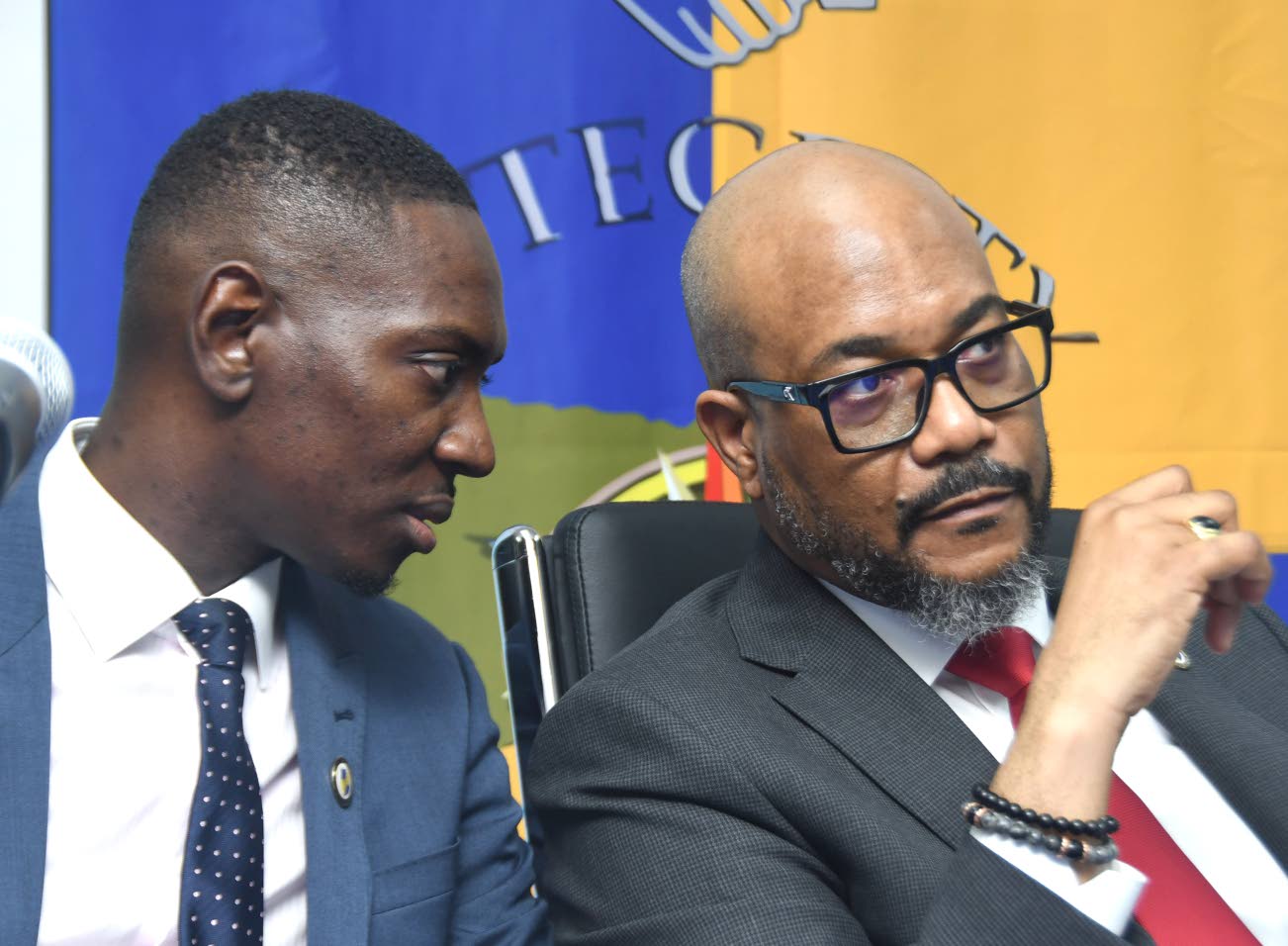
Director of investigation at the Integrity Commission Kevon Stephenson (left) speaks with Executive Director Craig Beresford during Tuesday’s press conference to discuss the agency’s annual report. (Photo: Naphtali Junior)
While acknowledging that prosecutions remain an important part of the Commission’s work, Stephenson argued that anti-corruption efforts should ultimately be aimed at changing behaviour across society rather than simply increasing the number of people brought before the courts.
“I don’t think that that is the best measure or the only measure, because when we are regulating ethical conduct in society, not all conduct is really regulated by law. Therefore, if we sit here and think that it is only when a person breaches the law and then is charged and prosecuted and convicted, and say that is a good result to prevent corruption, then we would be operating at a lower level,” he added.
He said the Commission’s broader objective is to foster lasting cultural change by promoting integrity and accountability throughout the public sector.
“What our work should really do is help to bring about social change in society. A range of measures will have to be in place. We have to investigate offences, prosecute persons for those offences, and it is not in all cases that you prosecute people and you have a not guilty verdict that we don’t have a good result,” Stephenson added.
The annual report nevertheless shows that the Commission continued to secure convictions during the period under review. It states that 22 prosecution matters were concluded, resulting in 21 convictions, while 35 financial investigation matters were recommended for prosecution and several others remained before the courts or under review.
Stephenson stressed, however, that the fight against corruption cannot rest with the IC alone, arguing that lasting progress will require collaboration across both the public and private sectors.


