



Caricom targets more women in energy
CARICOM is developing a regional strategy to increase women’s participation in the energy sector as member states transition to renewable energy.
Regional discussions are also underway to integrate gender mainstreaming into the Community’s energy programmes, policies and projects.
“The document is being finalised; work is still ongoing with that particular strategy, but in the meantime we are trying to integrate gender equity in our programmes,” said Sandra Britton, programme manager for energy at the Caricom Secretariat, during the Caricom Energy Webinar on Wednesday.
According to Caricom, the broader gender equity strategy prioritises women’s empowerment and equal access to opportunities, including education. As Caricom rolls out more gender-inclusive energy programmes, Britton said the Secretariat also plans to undertake stakeholder consultations and host a regional workshop with member states to guide implementation.
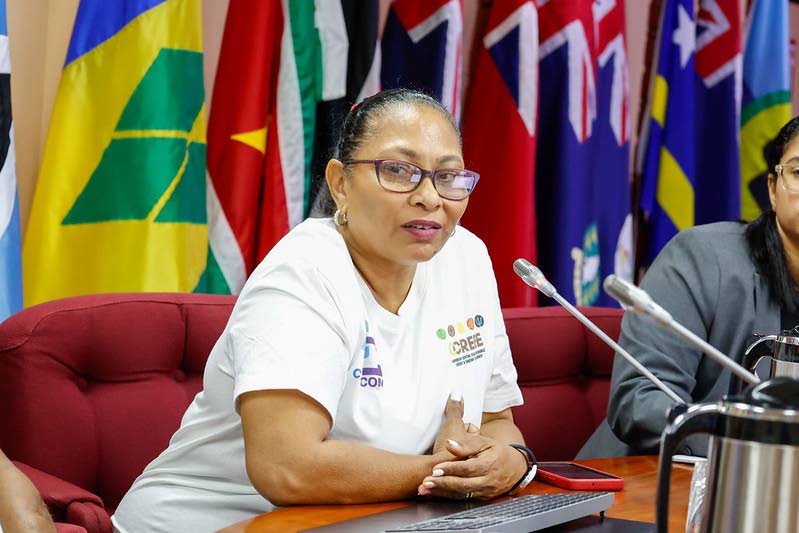
Sandra Britton, programme manager for energy at the Caricom Secretariat .
“We’re now at the stage where, as we move forward, we will have broad stakeholder consultations and then move to the workshop,” she said.
No timeline was provided for completing the strategy or implementing the broader initiative. Embedding gender considerations into energy planning will be essential to ensure the region’s transition to renewable energy does not reinforce existing inequalities, Gloria Alvarenga, a representative of the Latin American Energy Organization (OLADE), argued.
“Women remain under-represented in technical, engineering, operations and leadership positions across the energy sector while they are disproportionately affected by energy poverty,” she said.
She cited OLADE data showing that limited access to education, finance and professional opportunities continues to restrict women’s participation in developing countries. The organisation urged governments, utility companies, private firms and training institutions to expand women’s access to science, technology, engineering and mathematics (STEM) education, apprenticeships, certification programmes and reskilling opportunities, saying these measures would help reduce barriers to entering the sector. However, according to OLADE, translating gender mainstreaming into policy requires governments to first establish baseline data on women’s participation in the energy workforce before designing policies that incorporate gender objectives, indicators, budgets and accountability mechanisms into renewable energy strategies and other energy programmes.

CARICOM and regional stakeholders are exploring ways to increase women’s participation in the energy sector through gender-inclusive policies and programmes..
“Gender mainstreaming means integrating gender considerations into every stage of the policy cycle: Diagnosis, planning, budgeting, implementation, monitoring, evaluation and accountability, and it is not isolated in a programme for women,” Alvarenga said.
She noted that failing to deliberately incorporate gender equality into energy planning could allow existing inequalities to persist, with new jobs remaining inaccessible to women, emerging technologies being designed without considering different users, and public investments failing to reach the communities that need them most.
OLADE’s approach is built on three principles: gender equality, better energy policies and regional cooperation. It also focuses on strengthening gender-disaggregated data, supporting gender-responsive policies and increasing women’s participation in technical and leadership roles.
“A transition that is only technological will be incomplete. A transition that is also inclusive can generate stronger institutions,” she said.


