



‘Record everything’
Tufton urges health ministry officials to document every step of $6-b facility rebuild programme
Health Minister Dr Christopher Tufton has urged officials working on the ministry’s $6.04-billion Health Hurricane Response Programme (HHRP) to meticulously document every decision and expenditure.
According to Tufton, he wants no discrepancies to tarnish the project when the Auditor General’s Department inevitably comes to scrutinise the rebuilding project.
Speaking on Thursday at a working breakfast with Members of Parliament from the five western parishes affected by the October 2025 Hurricane Melissa, who heard an update on the HHRP, Tufton said that while the Ministry of Health and Wellness intends to move quickly to restore and modernise damaged health facilities, speed must not come at the expense of transparency or accountability.
The HHRP is a Government-funded initiative aimed at restoring, retrofitting and expanding health services disrupted by Hurricane Melissa. Backed by approximately $6.04 billion over three fiscal years beginning in 2026/27, the programme will rehabilitate and modernise the Savanna-la-Mar Public General Hospital and 101 health centres and across Hanover, Westmoreland, St James, Trelawny and St Elizabeth.
It also seeks to introduce the ministry’s Primary Health Care Reform by reclassifying selected facilities into community, district, and comprehensive health centres, bringing more services closer to where people live.
Against that backdrop, Tufton made it clear that the programme’s legacy should not be overshadowed by avoidable procurement or governance concerns.
“For us, what is important is the completion of the project with standards. They have been instructed to record everything, to catalogue every step because, as night follows day, the auditor general will audit. And I’m saying this to all of us here because sometimes we have particular requests that sometimes may be reasonable, sometimes may not be too reasonable: I don’t want, in another year or two, we table something in Parliament that says the hurricane response programme is plagued with all sorts of whatever,” Tufton said.
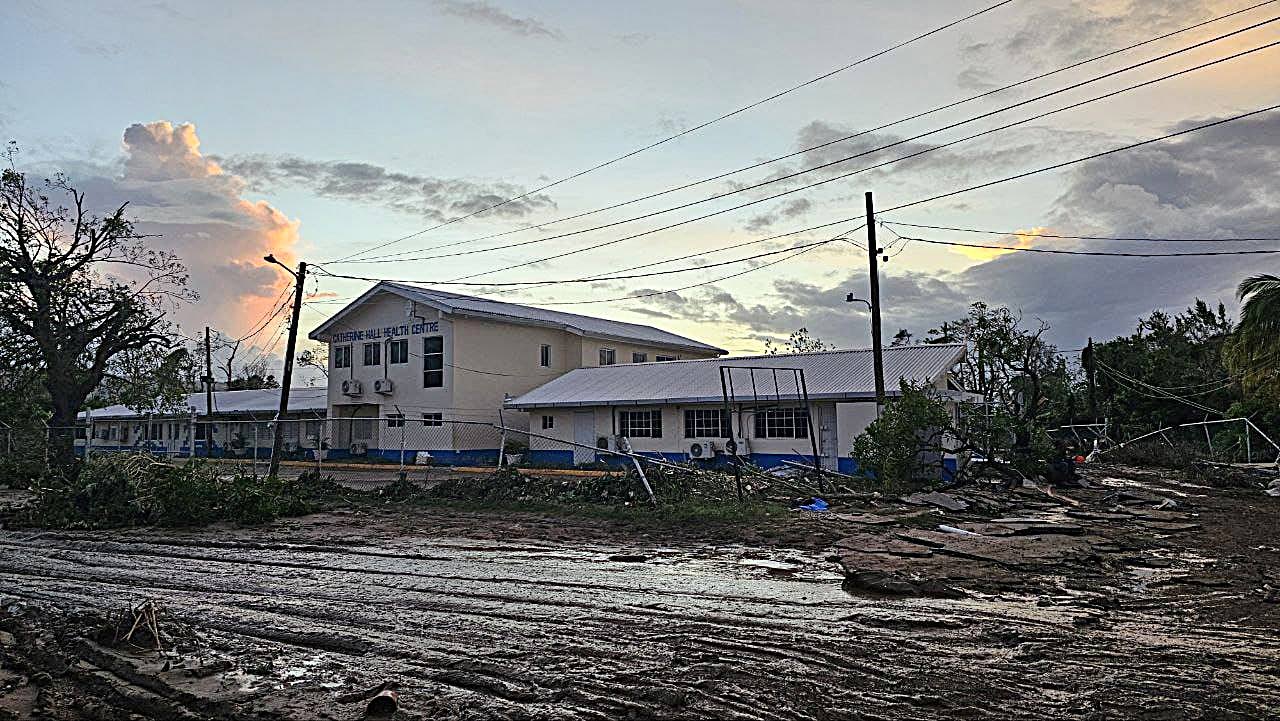
Sewage waste and mud outside the Catherine Hall Health Centre in St James after Hurricane Melissa, with the inside of the building also damaged. It is among the 101 health facilities to be repaired under a $6-billion programme.
He urged programme managers to keep comprehensive records so they will be able to satisfy any future review by oversight bodies.
“So the team has specific instructions: Document everything. And make sure when the auditor general comes you just hand them the box with all the files, because they will come — and I’m not criticising them, that’s their job — but document everything and just hand it to them. And the same for the IC [Integrity Commission] or whoever else who may want to come.
“So it means that if they tell you something can’t work, you may say, ‘Okay, explain it,’ and they’re instructed to explain but we’re working quickly, which is all the more reason why we have to follow the rules,” he expressed.
The minister also acknowledged that some of the biggest hurdles facing the programme have little to do with construction itself.
Among them is unresolved land ownership issues affecting dozens of health facilities earmarked for upgrading, a problem he said must be addressed before public money can be invested in those locations.
“We have to deal with approvals, mayors — [and] that’s a big issue because, believe it, some of these health centres are on lands that we have no title for and or they are leased, some long-term lease,” Tufton said, explaining why local authorities and agencies would play a critical role in keeping the programme on schedule.
He stressed that while the Government wants to accelerate the rebuilding programme, it cannot ignore legal and regulatory requirements surrounding public expenditure.


