



Sitting duck
Tourism stakeholders anxious about pending GCT increase
ATTENTION will turn this Wednesday to a crucial meeting between the finance ministry and anxious tourism leaders fearing that a General Consumption Tax (GCT) increase being proposed for the sector will badly hurt its viability for the immediate future.
Nervously awaiting the outcome of the discussions also are sectors like domestic agriculture and manufacturing — broken down into produce, poultry, dairy, juices, sauces, water, electricity, packaging, furniture, uniforms, amenities, and transport and services, for which tourism is the anchor customer.
The tourism industry and its spin-off entities have been fretful in recent years over its future profitability after a series of financial shocks, mostly stemming from natural weather events, left the sector reeling.
Sector leaders interviewed by the Jamaica Observer for this story said Hurricane Melissa caused more than US$8 billion in physical damage, pointing out that rebuilding room stock, restoring attractions, and repairing the infrastructure that moves visitors around the island is not a one-season exercise. Much of that work is still under way.
Industry-wide, it was accepted that the Andrew Holness Administration was bound to ask the sector to help carry the burden of funding the expansive post-Hurricane Melissa recovery, as has always been the approach by governments after major disasters.
But when Finance Minister Fayval Williams tabled revenue measures in this year’s budget, she shook the tourism sector by announcing that the 10 per cent GCT, that had softened the blows suffered by tourism activities would move to the standard 15 per cent, effective next year April.
Williams said the one-year notice would give the tourism sector itself more time to recover from Melissa. What the finance minister’s calculations did not factor in, however, was the flow of earnings from the sector.

SMITH…tourism is an export industry, so our competition is overseas, and we can’t just pass on any increase
Notably, most rates were already negotiated and inked with overseas partners like tour operators. Jamaica’s tourist entities were, therefore, being asked to pass off a 50 per cent rate increase where other sophisticated tourism markets are fighting for the same global tourism traveller.
Passing on GCT increases would, at best, be impossible without doing further critical damage to the sector and leaving it naked and exposed to its overseas competitors, the leaders concurred.
“For the most part, hotel room sales are contracted often 18 months to two years in advance with tour operators and wholesalers in source markets,” said new Jamaica Hotel and Tourist Association (JHTA) President O’Brien Heron when queried by the Observer.
“It means that a contract signed with a tour operator or wholesaler in 2026 involves a significant share of the room nights that will be sold in the 2027 season [and beyond] at the current 2026 room rates, inclusive of GCT.
“…Those contracts cannot be reopened just because Jamaica’s tax rate changed, which means that the local hotel or attraction will have to absorb the difference between the old and new GCT rate through to the end of the current contract period,” he added.
Moreover, industry leaders insist recovery is not the only pressure that has intensified since the measure was announced. Energy costs have soared, exacerbated by war in the Middle East that has pushed up global oil prices from roughly US$60 a barrel in December 2025 to near US$100 by March 2026.
Jamaica generates much of its electricity from imported fuel, so that increase passes almost directly into the cost of running a hotel.
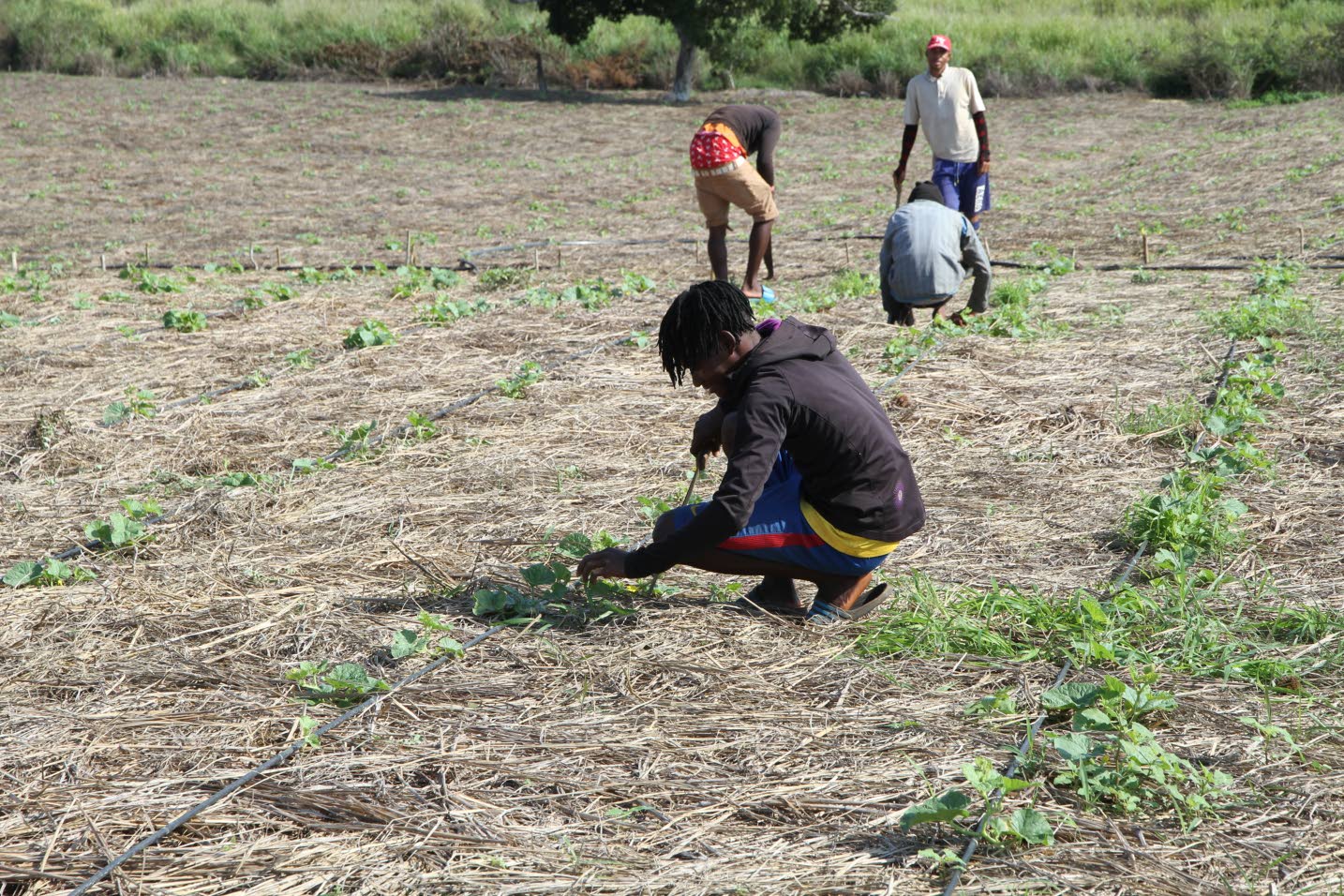
Nervously awaiting the outcome of the discussions also are sectors like domestic agriculture and manufacturing.
“It lands on an industry that was already paying among the highest electricity rates in the hemisphere,” added the JHTA head. “Business electricity in Jamaica runs well above the global average — a structural disadvantage that has nothing to do with how well any individual property is managed.
“For a resort, electricity is not overhead at the margin. Air conditioning, refrigeration, laundry and water production run 24 hours a day, every day, whether the room is occupied or not,” he explained.
Heron roundly disagreed with government number crunchers’ description that it was “a five-percentage-point increase”, reiterating that it was a 50 per cent GCT increase — from 10 to 15 per cent.
“What is at stake here is the economic fabric of tourism, and tourism is the engine that drives Jamaica’s economy,” he said. “When you compress this sector you do not compress one industry. You compress the farmer who supplies it, the manufacturer who packages for it, the transport operator who moves its guests, and the worker whose household depends on it.”
Speaking for the small hotels, JHTA past President Evelyn Smith stressed the struggles facing the sector after being hit by significant disasters like the COVID-19 pandemic, hurricanes Beryl and Melissa; a northerly that threw up angry waves that badly damaged some Negril beachfront properties; and the recent water problem that “forced us to pay huge sums of money to have water trucked to the properties”.
“During these disastrous events, some properties had to shut down altogether; others remained open but retained staff at tremendous sacrifice,” said Smith.
“Negril is well known as having the largest collection of small hotels. We have kept the life of Negril going during these many shocks, especially after Melissa, the worst hurricane to hit Jamaica. We kept our doors open even as cash depleted.”

HERON…for a resort…air conditioning, refrigeration, laundry and water production run 24 hours a day, every day, whether the room is occupied or not
Smith said she strongly disagreed with the Government that the industry has matured.
“Tourism is an export industry, so our competition is overseas, and we can’t just pass on any increase. Our rates are already set. Our revenues are already very thin, and now we are being asked to absorb further increases. Something is going to have to give.
“This significant increase will hit what we have to do in order to simply remain alive,” she reasoned.
The JHTA’s present leadership is also worried about the dim prospects facing the allied sectors, such as ground transportation and attractions, said Nadine Spence, the 4th vice-president.
“While we fully appreciate the Government’s responsibility to generate revenue to fund national development, timing is critical. The transportation, attractions, and allied sectors are still recovering from Hurricane Melissa and a challenging tourism environment,” Spence pointed out.
“A 50 per cent increase in the GCT applied to hotel accommodation risks weakening Jamaica’s competitiveness at a time when every visitor matters. We depend directly on hotel occupancy, and any decline in arrivals or visitor spending flows immediately through our sector, affecting jobs, investment, and small businesses across the island,” she argued.

WILLIAMS…the one-year notice would give the tourism sector itself more time to recover from Hurricane Melissa
“If higher taxes reduce arrivals or visitor spending, transportation and attractions businesses immediately feel the impact. A tax on hotels inevitably becomes a tax on the wider tourism value chain.
“Furthermore, this tax proposal comes at the worst possible time,” she suggested. “An industry facing this level of compounding strain requires temporary relief, incentives, and structural support to rebuild, not an aggressive tax hike.
“Taxing local businesses into submission during a recovery period will only push more players out of the formal market and exacerbate the very revenue shortfall the Government is trying to solve.
“If Jamaica wants a sustainable, high-yielding tourism sector… we need policies that nurture Jamaican-owned ground transport and attraction businesses, enabling them to build domestic wealth that stays right here in the economy.
“An increase in GCT at this critical time is not good for a sector on the rebound, especially when arrivals are down 30 to 40 per cent… Lower pricing will increase volumes which will increase traffic and that means additional revenue,” said Spence.
Martin Zsifkovicks, co-chair of the association’s linkages and agriculture committees, cautioned about the indirect harm threatening agriculture.
“The GCT increase will not automatically damage agriculture fruits, vegetables, as most agricultural inputs remain GCT-free, which is fundamentally important. However, the mechanism runs through hotel profitability rather than the tax code directly,” he suggested.

SPENCE…a 50 per cent increase in the GCT applied to hotel accommodation risks weakening Jamaica’s competitiveness
“When hotels come under margin pressure, procurement is historically one of the first places operators look to cut, precisely because it’s a variable cost that can be scaled up or down quickly, unlike staffing contracts, utilities, or debt service. We have already seen how directly that plays out for farmers: During COVID, when hotel demand collapsed, Government had to step in with a buy-back scheme because produce already planted for the hotel trade had nowhere to go.”
Zsifkovicks agreed that the timing of the increase was bad, saying that close to 5,000 rooms remain off stream since Hurricane Melissa hit in October 2025, and hurricane recovery of this scale typically takes years, not months.
“That means the industry is already absorbing pressure on revenue and cash flow before the GCT increase even takes effect. Layering a tax increase on top of a sector that hasn’t yet returned to full inventory only adds to that strain, and procurement is likely to be one of the first places it shows up.
“A GCT-driven margin squeeze is a different kind of shock than a pandemic shutdown, but the transmission line is the same — pressure on hotel revenue shows up quickly in what and how much hotels are willing to commit to buying from local farmers. That’s the risk worth watching, even though the produce itself isn’t being taxed,” he said.
President Heron also warned that absorbing a tax increase does not simply reduce profit but reduces the cash available for everything that sits below the operating line, like debt service, refurbishment, and reinvestment.
“Most properties in this market are carrying storm-related capital expenditure and, in many cases, related borrowing. Compress operating earnings and the first casualties are not investor dividends. They are the deferred room refresh, the delayed energy-efficiency retrofit, the postponed hire.
“An industry that defers reinvestment does not announce a crisis. It simply becomes gradually less competitive, and the consequences arrive later, when they are far more expensive to reverse,” charged Heron.
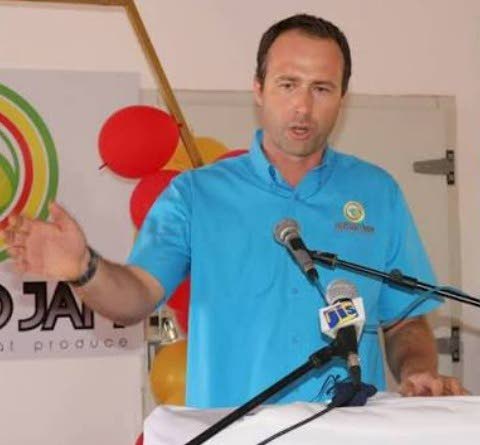
ZSIFKOVICKS…pressure on hotel revenue shows up quickly in what and how much hotels are willing to commit to buying from local farmers
He said that when hotel margins compress, procurement is one of the first places operators look to trim costs. And the path of least resistance begins with buying harder. That means suppliers will feel the squeeze through both rate and volume pressures. Not out of any lack of national commitment, but because a buyer under margin pressure buys on price.
“This is where the policy tension becomes difficult to ignore. The Government’s own Tourism 3.0 and Local First agenda commit to prioritising Jamaican farmers, artisans, manufacturers, and micro-entrepreneurs as first suppliers to hotels and attractions. That is a genuinely good policy, and the industry supports it.
“… There is also a principle worth stating plainly. Under Jamaica’s own GCT Act, exports are zero-rated. Tourism is an export industry — it earns foreign exchange and it is consumed primarily by non-residents. By that logic, the tax code, fairly applied across all exporters, tourism services should also be zero-rated.
“Successive government administrations have repeatedly accepted this fact and, while some adjustments have been made to the GCT rate differential, the principle supporting tourism having a lower rate than the national rate is well documented and, up ’til now, was assumed a settled matter,” he added.
Heron said that what the industry is asking for is to be in a position to show the Government the disastrous implications expected to tourism businesses by the proposed change.
Heron confirmed that the JHTA would be meeting with the finance minister this week and that work is under way to put independent evidence in front of Government.
“Tourism’s bottom lines to watch is not only about the hotel’s. It is also the farmer’s, the manufacturer’s, the worker’s, and the country’s. That is precisely why the timing, and the terms of this increase are worth getting right — together,” he said.


