



No social media ban
…but most J’cans want Gov’t guard rails
In what is said to be “one of the most comprehensive national assessments ever undertaken” on social media use by minors in Jamaica, the majority of citizens surveyed have baulked at a total ban but say Government must lead the way in implementing policy with strong parental involvement when it comes to enforcement.
“The results show overwhelming public support for some level of Government action,” said Health and Wellness Minister Dr Christopher Tufton.
He was delivering the main address, Tuesday, during a press conference to release findings of the National Study on Social Media Use and the Protection of Children.
The event was held at the Courtyard by Mariott Hotel in St Andrew.
According to Tufton, nine out of every 10 respondents, or 90.2 per cent, support Government regulation of minors’ social media use, while 2.9 per cent expressed opposition. In addition, he said, nearly 84 per cent believe Jamaica should establish a clear national policy framework governing minors’ use of social media.
Tufton said from reading the study he formed the opinion that the subject has been “a long-standing concern, but not talked about as much”.
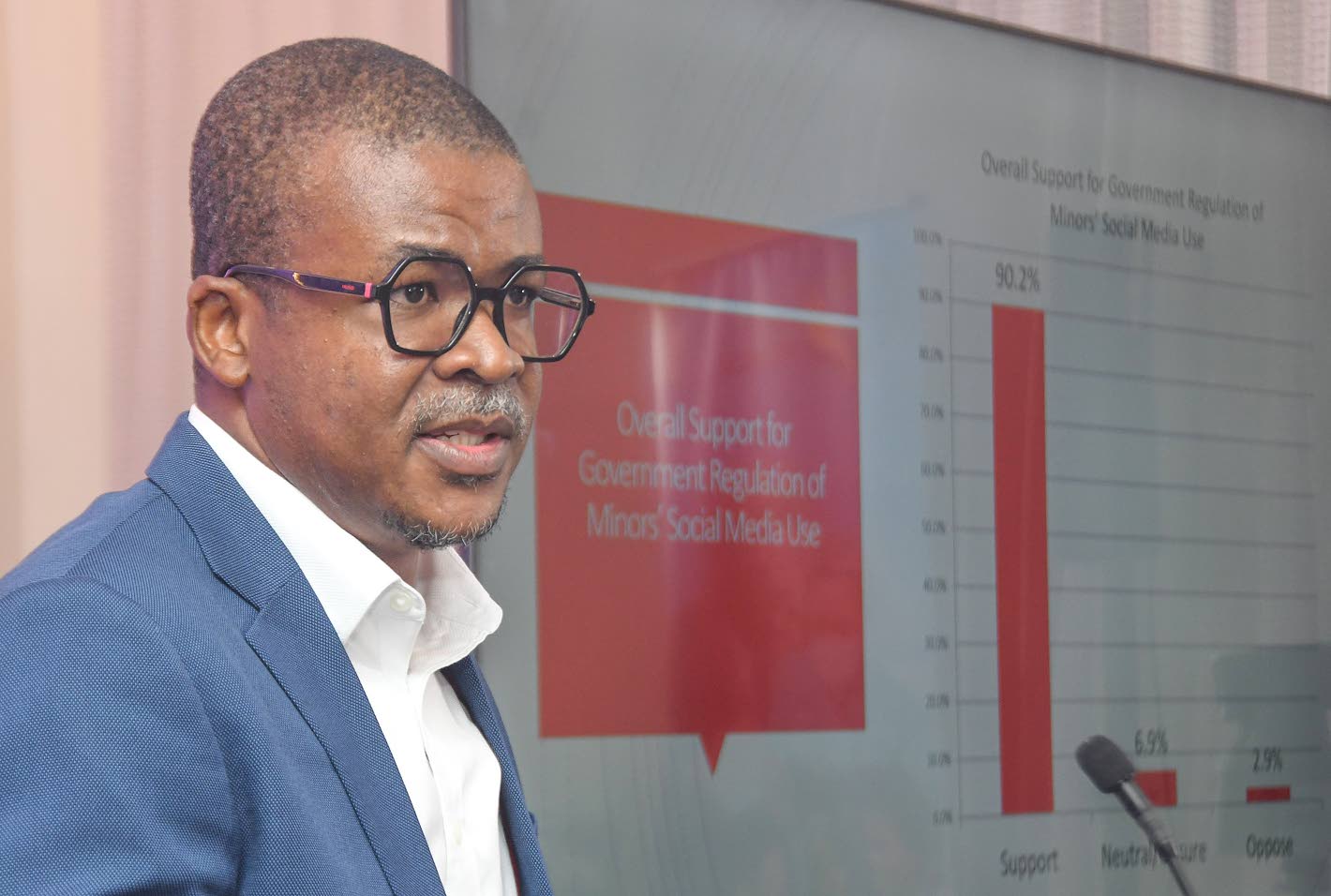
Dr Stephen Johnson, lead researcher on the National Study on Social Media Use and the Protection of Children, unveiled on Tuesday at the Courtyard by Mariott Hotel in St Andrew, shares the findings during a press conference called by the Ministry of Health, where he is a consultant. (Photo: Naphtali Junior)
“I was surprised when I saw the results. A strong message: The Jamaican people recognise that this is an issue requiring national attention, and they expect thoughtful leadership on the issue. But perhaps the most significant finding is not simply that Jamaicans support some levels of Government action; it is that they believe this responsibility must be shared, and I was very heartened at that,” the minister stated.
Citing the report, he said only 12.7 per cent of respondents believe Government should lead this effort alone.
“Again, that’s very good to know, because it means people will want to engage,” Tufton said, while adding that 40.5 per cent of respondents believe parents/guardians should play the leading role, while another 39 per cent favoured shared responsibility among parents, schools, Government, communities, and other stakeholders.
“The finding is especially important, because it reminds us of something we already know: No Government policy can replace active parenting, and that’s very important to note. No legislation can replace guidance within the home. No technology platform can replace the influence of families, teachers, and communities. Protecting children online, therefore, must be a national partnership, and that’s a very big theme. A takeaway from this: A national partnership,” said the minister.
He noted that the survey also revealed that Jamaicans favour balance rather than extremes, and the preferred approach was not simply stronger legal restrictions.
While acknowledging the positives brought by social media the health minister emphasised that the results of emerging research from 2025-2026 for Jamaica “confirms a strong link between social media use and increased anxiety, depression, and digital addiction, particularly among young persons and content creators”.
He said youth under 24 spend an average of six hours daily on social media, compared to five hours for adults and four hours for seniors.
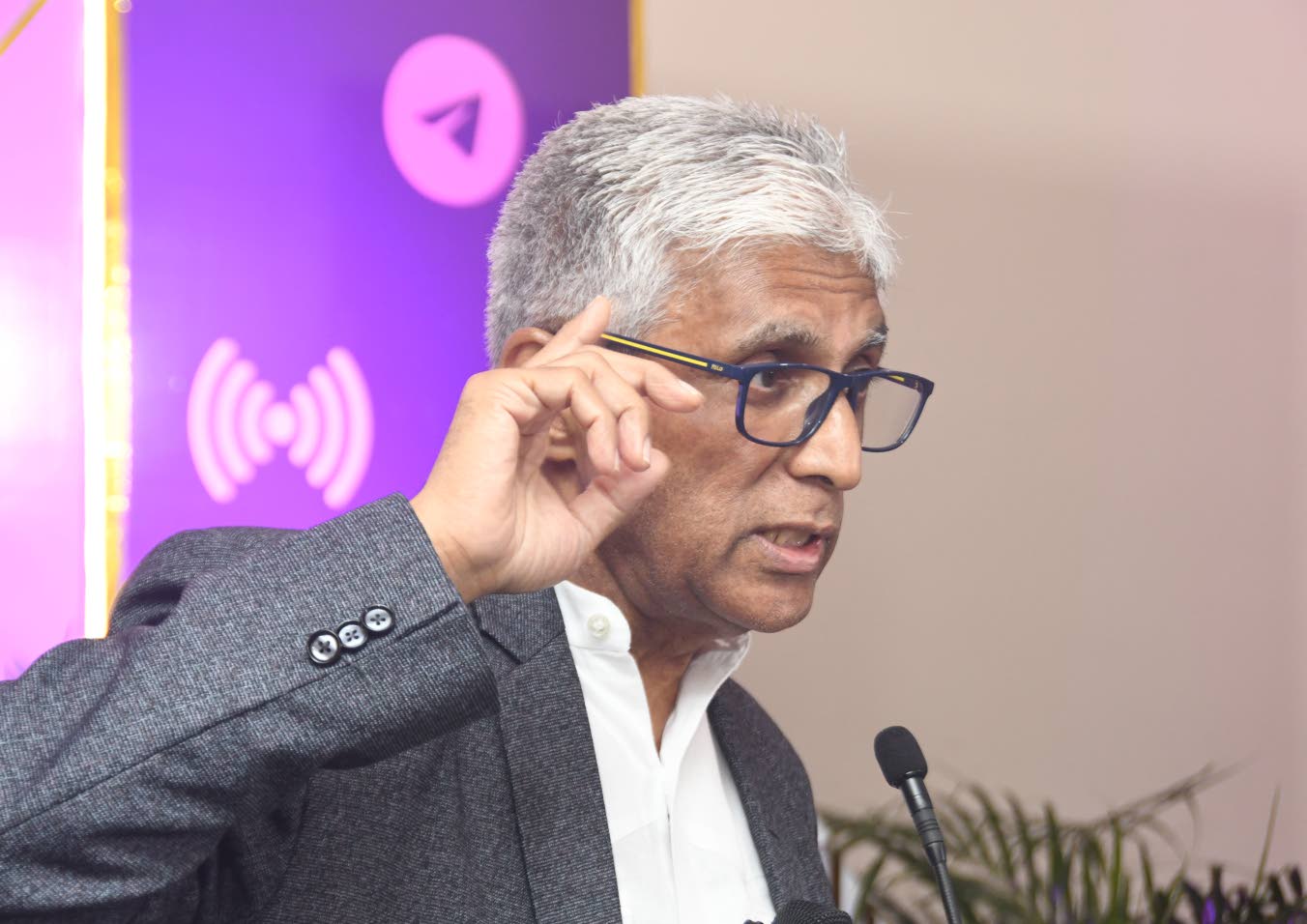
Dr Ganash Shetty, acting director, adolescent mental health in the Ministry of Health, speaks during Tuesday’s media briefing to present results of the National Study on Social Media Use and the Protection of Children. (Photo: Naphtali Junior)
Tufton stressed that the study is “intended for public consumption and discourse in the first instance, not any decision”, while at the same time assuring that there was no intention to “just wholesale adopt what entails elsewhere” as far as regulations are concerned.
Delving into the study during the event, Dr Stephen Johnson, lead researcher and fellow at The University of the West Indies and a consultant with the Ministry of Health, said the use of social media by minors has become a public health issue.
“We have data from the National Council on Drug Abuse [NCDA] indicating that 70 per cent of our minors sleep less than eight hours on an average school night. In terms of body image, [there is] low self-esteem; [we see] digital addiction from excessive screen time [of] three hours or more; having 68 per cent of our population being addicted. [There are issues of] online safety, cyberbullying, grooming, and being exposed to harmful content. Now, of course, there’s a need for Government not necessarily to be preventative, but to be proactive,” he said.
The sample of 1,027 individuals surveyed included Gen Zers, millennials, Gen X, and Boomers educated at the primary, vocational, and tertiary levels.
Dr Johnson emphasised that while the overwhelming majority, over 80 per cent of those interviewed, supported “a clear policy framework for minors’ social media use… the appetite for an outright ban it’s not really here… Persons are saying, while you’re doing this, be mindful that minors have rights,” the lead researcher disclosed.
Dr Ganash Shetty, acting director, adolescent mental health in the Ministry of Health, who pointed out that the algorithms behind social media platforms are created by behavioural specialists, spoke directly to youngsters in attendance.


