



CASE biotech research sowing seeds for Jamaica’s future
THE quiet work taking place inside the Tissue Culture Laboratory at the College of Agriculture, Science and Education (CASE)-OFANA Biotechnology Centre is poised to make a significant impact far beyond the laboratory’s walls.
The researchers have successfully developed banana and plantain varieties that are resistant to Tropical Race 4 (TR4) disease and tolerant to Sigatoka, a breakthrough that could help safeguard one of Jamaica’s most important agricultural industries.
The improved planting materials have already been distributed to Jamaica Producers (JP) and the Banana Board for research and genetic conservation, with the plants now bearing fruit, providing encouraging evidence of the project’s potential.
For biotechnologist at the tissue culture facility La Toya Roberts, the research is driven by a simple goal — solving the challenges confronting farmers.
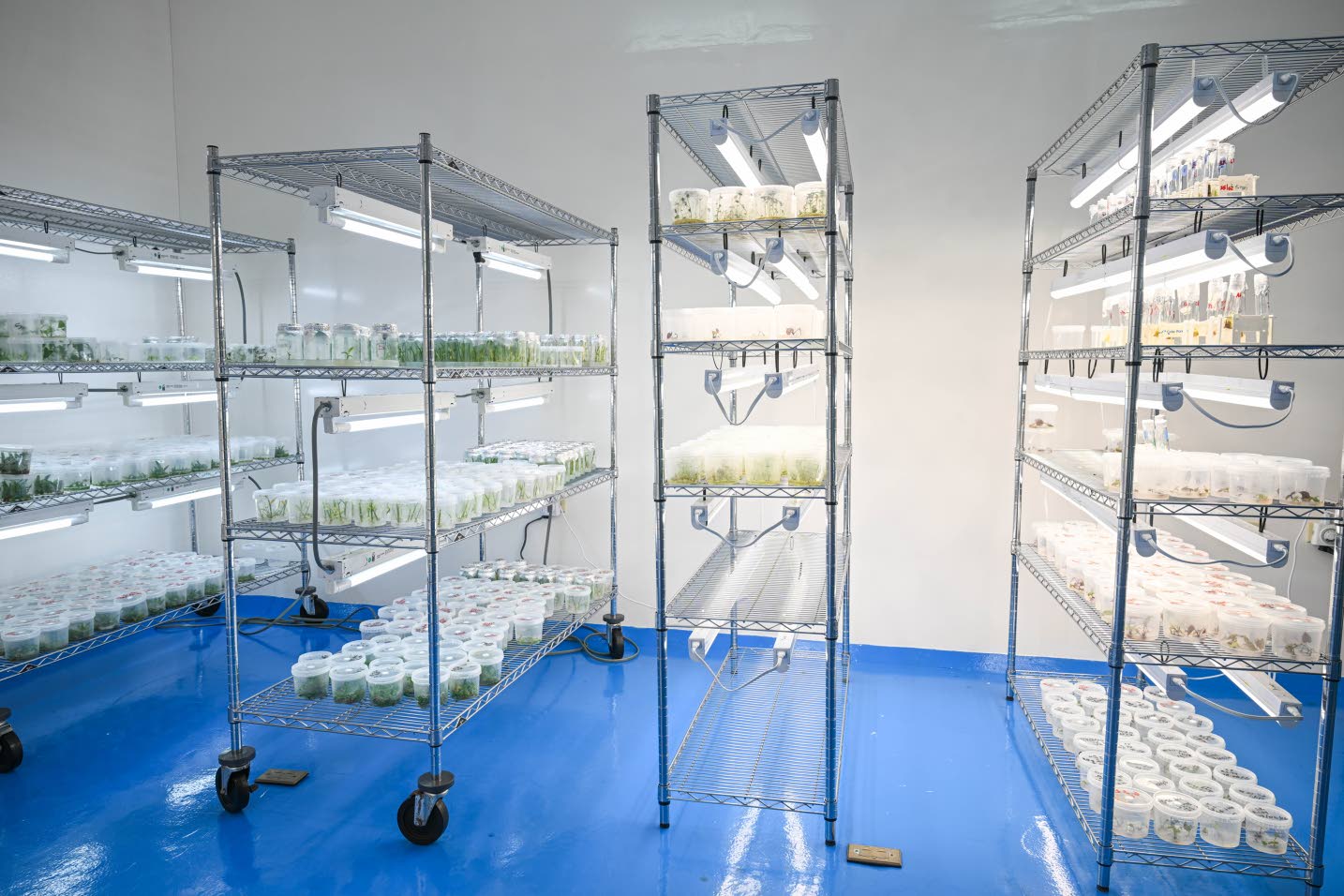
The Tissue Culture Laboratory at the College of Agriculture, Science and Education (CASE)-OFANA Biotechnology Centre where researchers have successfully developed banana and plantain varieties that are resistant to Tropical Race 4 disease and tolerant to Sigatoka, a breakthrough that could help protect one of Jamaica’s most important agricultural industries.
“We are getting into a time where agriculture is changing. We have climate change [and] we have diseases that are affecting the material that the farmers are using,” she told JIS News.
“As scientists, our role in society is to solve challenges,” she added, noting that providing farmers with disease-resistant planting material will strengthen food sustainability in Jamaica over the long term.
Among the varieties introduced are the Formosana banana and the FHIA 4 plantain, both selected for their resistance to TR4 and tolerance to Sigatoka.
The TR4 is a highly destructive soil-borne fungus that prevents banana plants from absorbing water and nutrients, capable of devastating entire plantations. Although the disease has not been detected in Jamaica, Roberts said the team is preparing well in advance.
“We’re trying to be 10 steps ahead… with the hope that if this disease gets here, we would definitely have some varieties that are resistant,” she said.
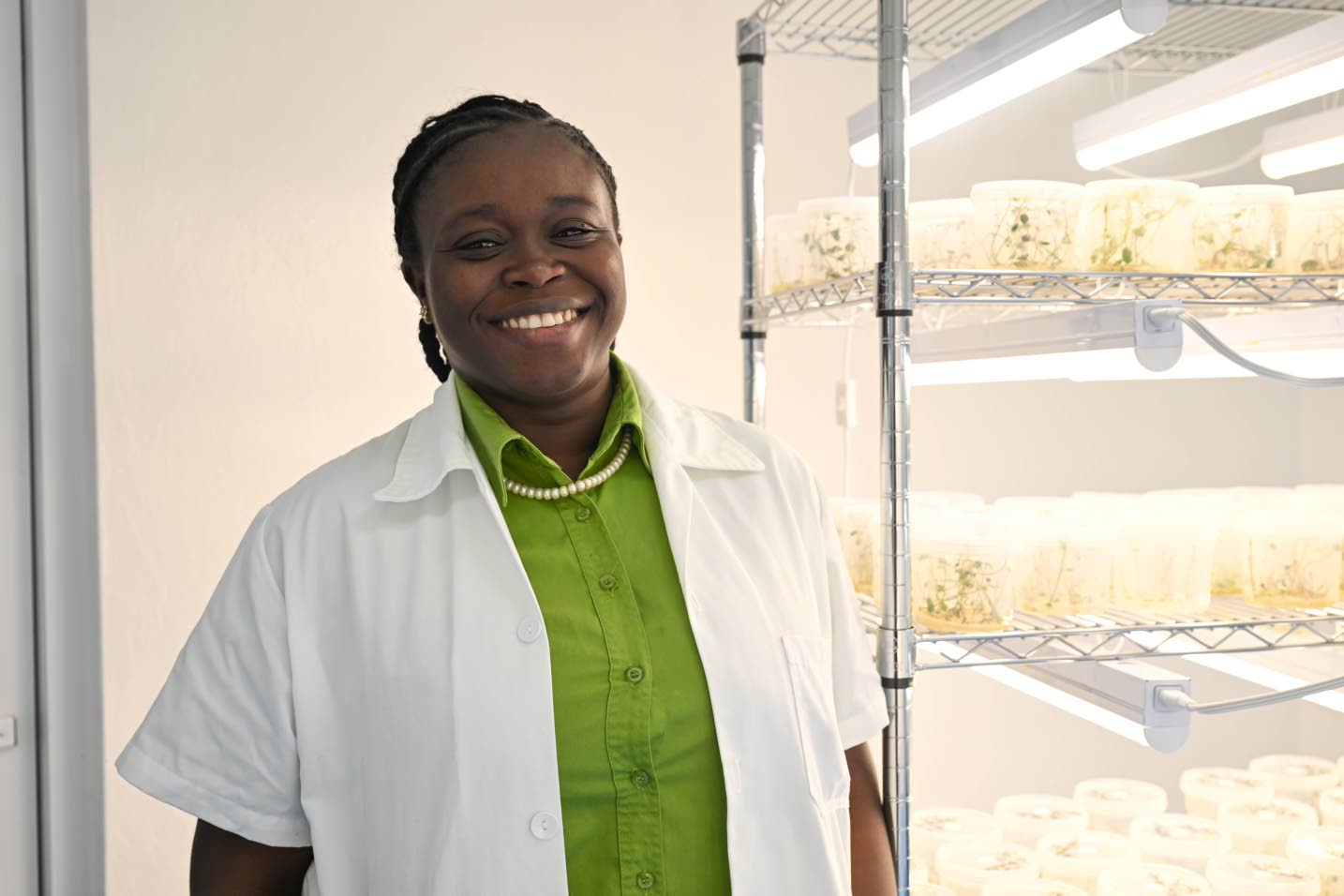
Biotechnologist at the Tissue Culture Facility at the College of Agriculture, Science and Education (CASE)-OFANA Biotechnology Centre La Toya Roberts explains that the research being undertaken at the facility is driven by a simple goal — solving the challenges confronting farmers.
The laboratory’s work extends beyond bananas, as researchers are also developing clean, disease-free planting material for crops such as yam and ginger, which continue to face significant disease challenges.
“We are hoping to provide our farmers with clean seed planting material that is disease-tolerant and disease-free,” Roberts said, noting that healthier planting material also reduces farmers’ dependence on chemical treatments.
The innovation is also creating opportunities for young professionals entering the agricultural sector.
Lab technician Michska Douglas, who joined the biotechnology centre after completing her internship, admitted that tissue culture was not originally the career path she envisioned. Today, however, she is convinced of its transformative potential.
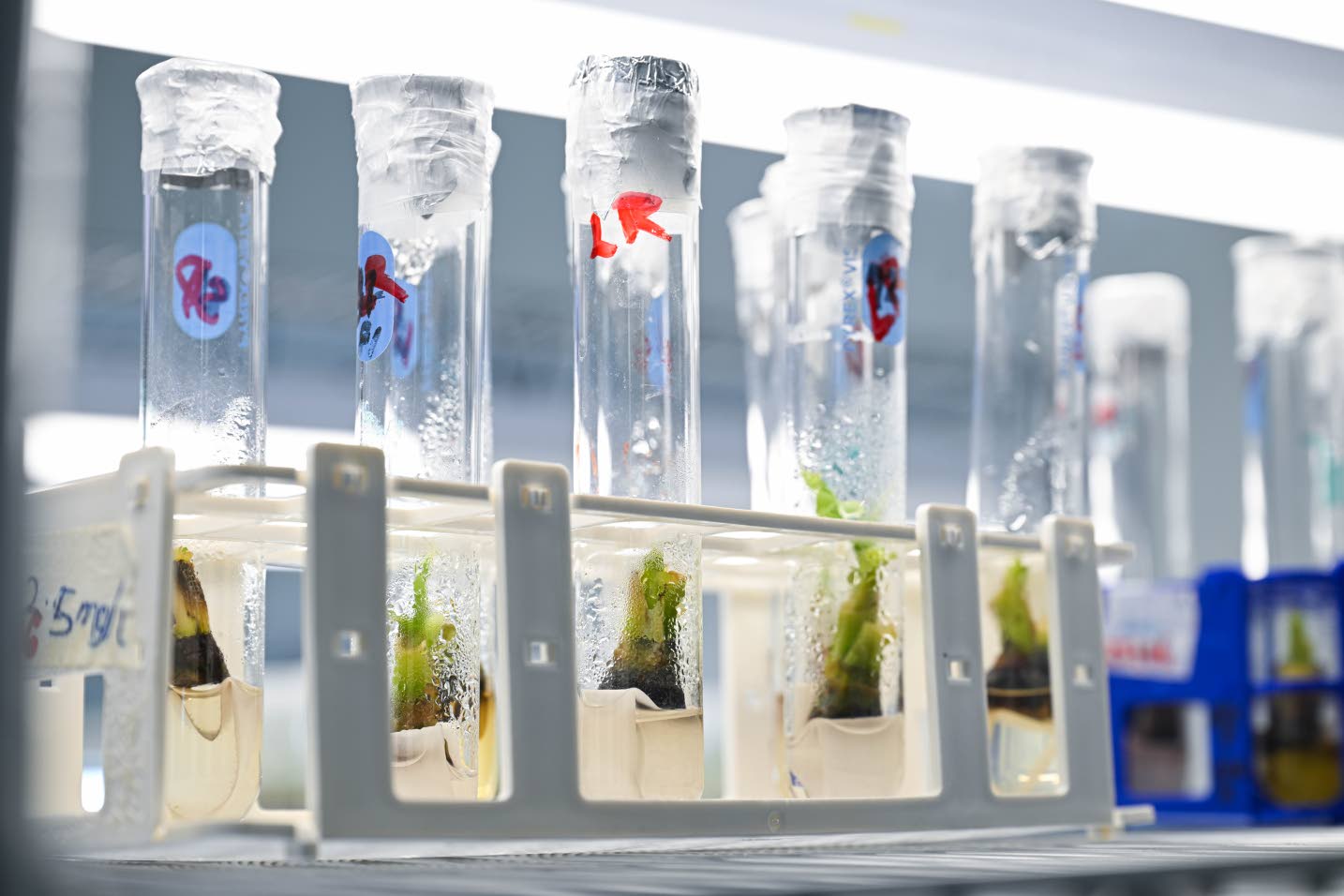
Plant material on display at the Tissue Culture Laboratory at the CASE-OFANA Biotechnology Centre at the College of Agriculture, Science and Education.
“It is the future of agriculture,” Douglas said, explaining that tissue culture enables the production of healthy planting material, despite challenges posed by climate change, rising temperatures and unpredictable rainfall.
She noted that the facility maintains a germplasm bank where valuable plant varieties are preserved until they are needed.
“In the event of a hurricane, the idea of this lab is that we can support farmers with material,” she explained.
The biotechnology centre also employs five CASE students, providing them with practical experience while helping to build Jamaica’s next generation of agricultural scientists.
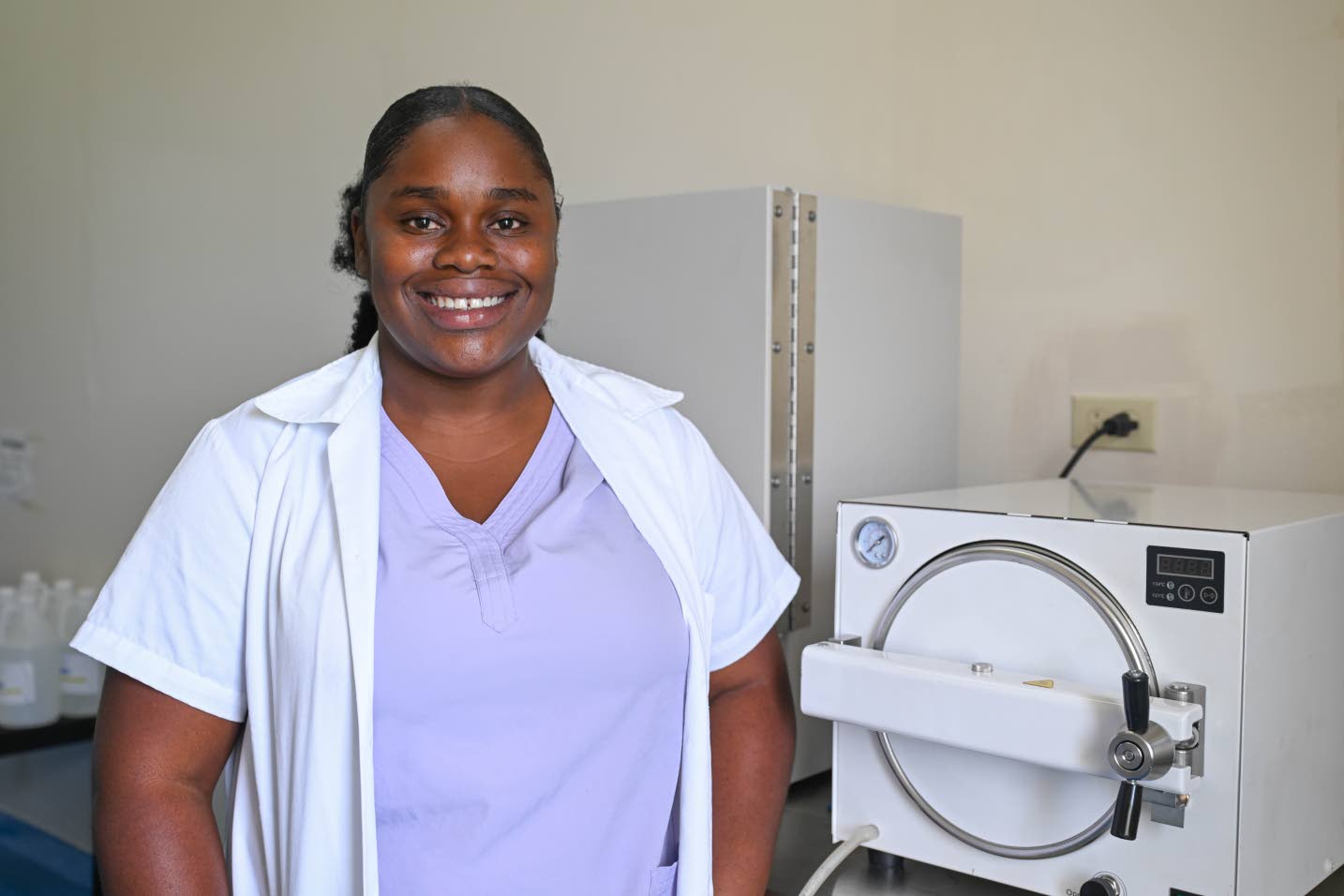
Lab Technician at the College of Agriculture, Science and Education (CASE)-OFANA Biotechnology Centre, Michska Douglas, says tissue culture has transformative potential for agriculture by enabling the production of healthy, disease-free plants under varying environmental conditions.
Beyond food crops, the team is expanding into the ornamental plant industry, focusing on anthuriums and orchids.
“We recognise that there is a need, and tissue culture allows us the opportunity to mass propagate these ornamentals, which in turn can be a source of income for the facility,” Douglas said.
She also sought to demystify tissue culture, encouraging farmers and members of the public to explore the technology.
“In a nutshell, tissue culture is propagation of plants in a sterile environment. You don’t have to be a scientist; you don’t have to have a big fancy lab. Once you understand certain principles and can provide a controlled environment, you can do it at home,” she stated.
Looking ahead, the biotechnology centre plans to expand production through pilot projects and partnerships with commercial farmers.
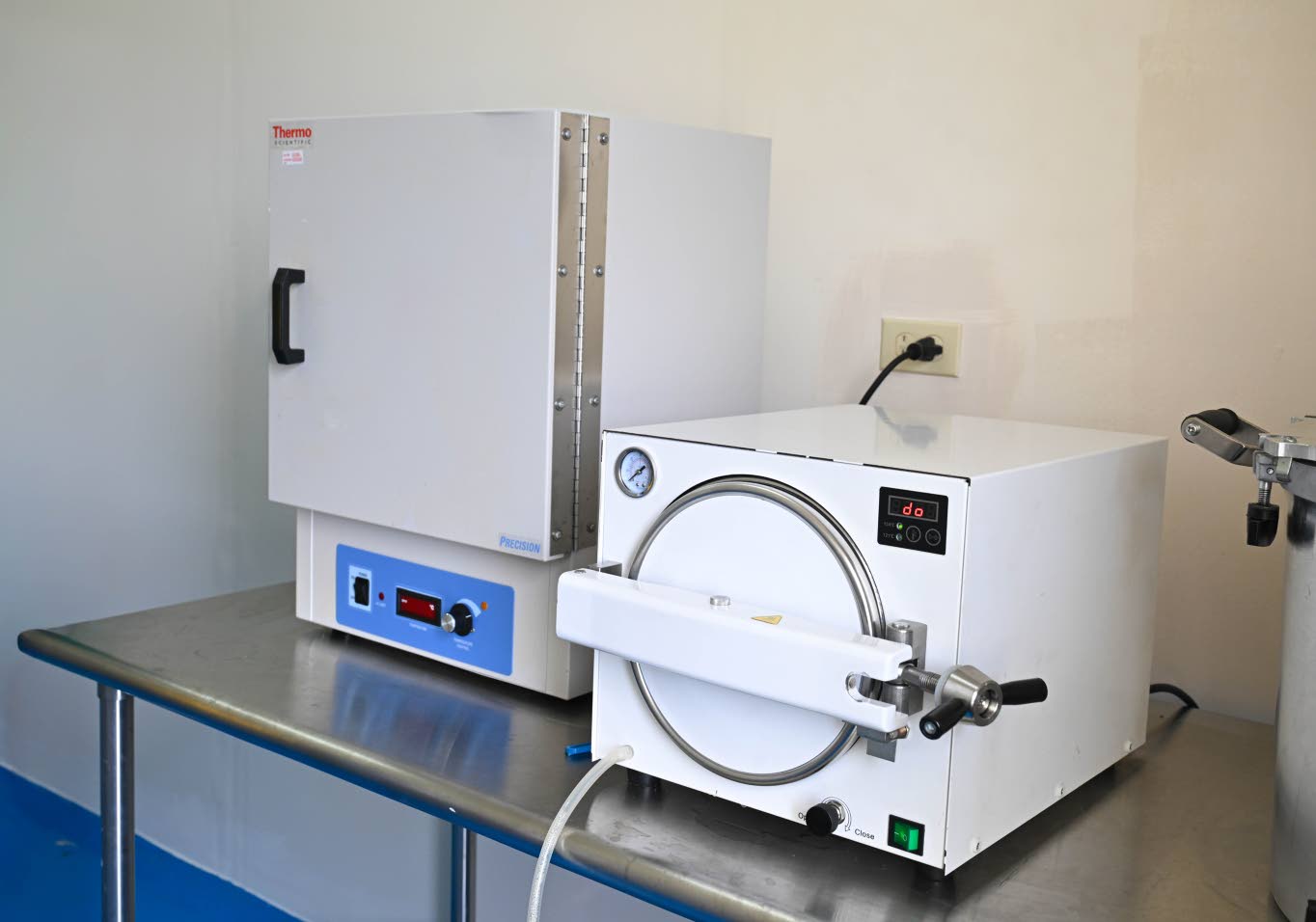
An autoclave machine at the Tissue Culture Laboratory at the CASE-OFANA Biotechnology Centre on the grounds of the College of Agriculture, Science and Education (CASE). The specialised pressure chamber is used to sterilise equipment and materials used in tissue culture research.
Delivering a message to policymakers, agricultural agencies and farmers, Roberts stressed that continued collaboration and investment in agricultural research are essential to securing the country’s food future.
“I just want the ministers, the ministries, and the farmers to understand that our roles are different. We are not competitors. Together, we are working for the benefit of Jamaica, the economy and the agricultural sector. Our shared goal is the same — food sustainability and a better Jamaica,” she stated.
Members of the public will also have an opportunity to learn more about the research and its latest developments by visiting the CASE display booth at the 72nd Denbigh Agricultural, Industrial and Food Show, scheduled for July 31 to August 2 in Clarendon, where the institution will showcase its work in agricultural biotechnology and innovation.
— JIS News


