



‘I don’t want to go home’
Some Hurricane Melissa victims stay away from repaired houses
“My chest just feels tight every time I see the house. I can’t go back, no matter how they fix it up,” a woman in her late 40s tells the Jamaica Observer’s Real Estate on the Rock last week as she nervously picks at a loose thread on her skirt.
She has asked not to be identified by name, afraid she will be judged for her reluctance to leave her sister’s couch and return to her two-bedroom house. It has been nine months of slow repairs to recover from last October’s Hurricane Melissa but the house has a new roof, the walls have been freshly painted, and while there are still some finishing touches to be added, her house is habitable.
“I may try to rent it out after I finish,” the mortgagor mulls, biting her lip.
She has seen signs that her sister, who is in her early 50s and has a husband and teenager at home, needs her space, but cannot bring herself to go back home.
“Nobody has been rude to me or anything but it’s just little things sometimes,” she said, her voice trailing off, unwilling to complain and appear ungrateful.
Partitioned from the kitchen by a curtain, the family’s modest living room has become her bedroom, and she shares a bathroom with her 17-year-old niece. She spoke of vague plans to find a place to rent once she has income from renting out her repaired house, so her sister and family can get back their space.
According to director of education at the Jamaica Psychological Society Dr Pearnel Bell, the worst thing the woman’s sister could do is push her to leave before she is ready. The behaviour the hurricane victim is displaying, the clinical psychologist said, is not unusual.
“After a disaster like a hurricane, earthquake, floods, and so on, from a psychological perspective the issue now isn’t the physical condition of the house but rather what the house now represents emotionally,” Dr Bell, who has authored Life Mosaics: Writings on Life and Things We Ought to Know, told the Sunday Observer.
“That person doesn’t want to go back because there is trauma, conditioning, fear that’s happening. That house represents, for them, danger, loss, powerlessness, uncertainty. That’s the symbolism of the house — whether the roof is on it or not — because they have lost psychological safety from that house. That’s the house where they experienced the greatest fear that led to acute stress, and they may also be experiencing post-traumatic stress,” Dr Bell explained.
She said telltale signs include hyper vigilance when back at the location where the trauma occurred.
“If they go back, they’re going to be constantly looking out for rain, wind, and having their nervous system remaining in what we call survival mode, always looking out for danger,” said Dr Bell.
There are many other triggers, she said.
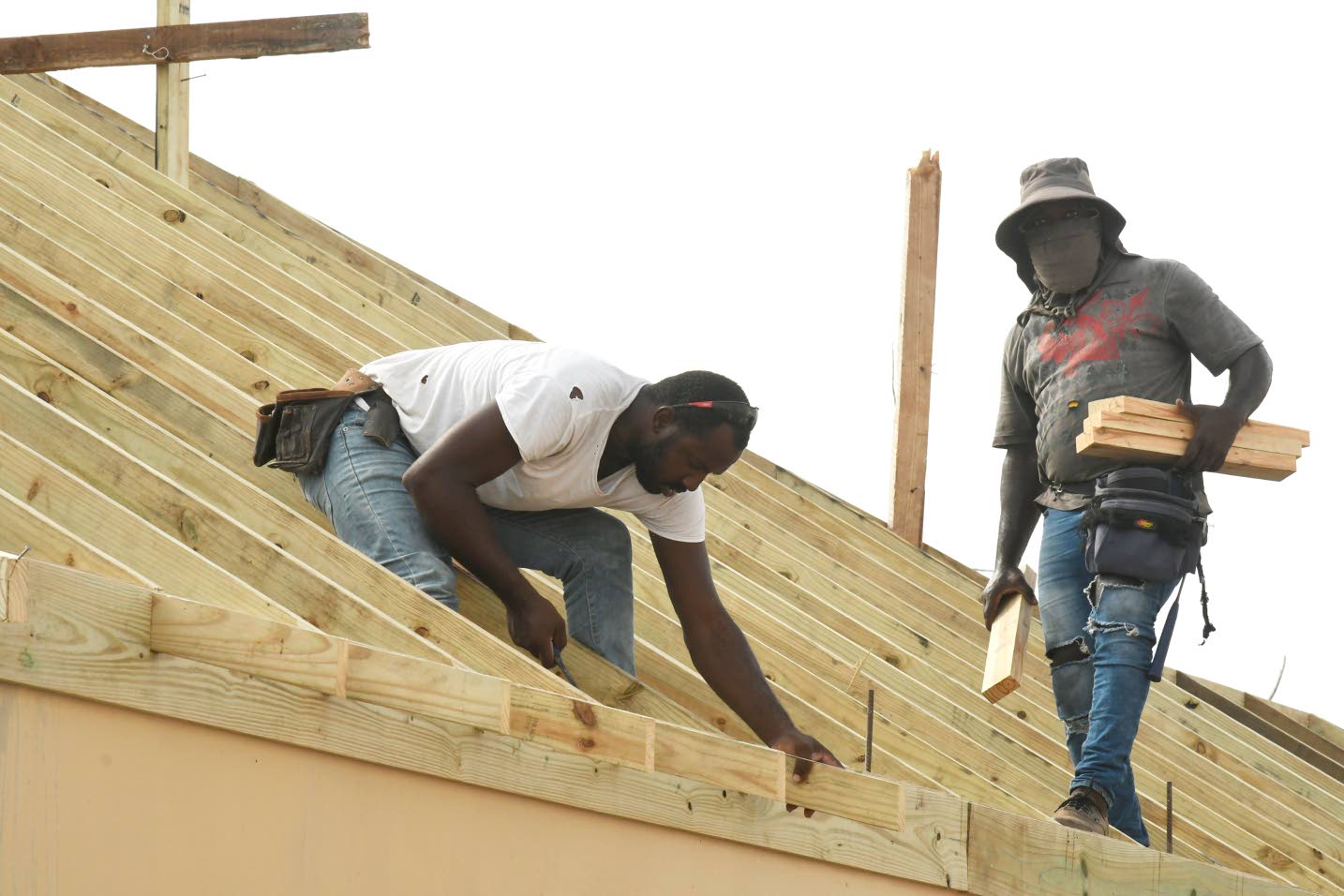
Workmen doing repairs in Black River, St Elizabeth, after Hurricane Melissa. (Photo: Karl McLarty)
“The traumatic memories are there, too. Rain, smell of dampness, if the roof is not fully back on or the house is not fully repaired — all of those can create flashbacks and result in panic attack for these persons so we have to understand that this is what could be going on. They feel vulnerable; like since it happened once, it can happen again. They may also be grieving over the loss of their things, and don’t want to have anything to do with that space again,” she added.
Read on for more from the interview.
What advice do you have for individuals who are reluctant to go back home, even after their houses are now repaired enough for them to do so? And what would you say to the friends or relatives who have put them up but now long to have their lives go back to normal?
Dr Pearnel Bell (DPB): You need to take it from the perspective of what is happening to the persons who don’t want to leave, because if we don’t understand that, then people will begin to make assumptions that they are avoiding their responsibilities.
In some cases they may be suffering from post-traumatic stress, they could be having flashbacks, nightmares, distressing memories. Not wanting to return home is the avoidance piece of post-traumatic stress. Nobody wants to go back to somewhere that emotionally represents trauma for them.
As for the persons who are now wanting them [hurricane victims] to leave their house, who want their space, they want to feel like they are living again because having people in your home is restrictive — you may have to be managing them and managing them in their trauma state. So the persons want them out, and they [the hurricane victims] don’t want to be out because their home represents too much psychological and emotional trauma for them.
BELL… after a disaster like a hurricane, earthquake, floods, and so on, from a psychological perspective the issue now isn’t the physical condition of the house but rather what the house now represents emotionally.
It’s a delicate matter, how do you tactfully get them back into their own home?
DPB: Many of those persons [displaced by the hurricane] would need to be assessed to see the level of trauma that they’re experiencing, that’s one thing. They would also have to get psychotherapy, maybe cognitive behaviour therapy. That’s going to help them to reframe their thinking and come into the reality of the present and not in the past — because their reality is one of the trauma. We also need somebody to go in, in situations like those, and educate the relative or the friend about post-traumatic stress and psychological trauma that they may be going through. That’s number one.
Number two, help the person [friend/relative] to recognise that forcing them out could create a recapitulation of the trauma. I know they want to get them out but it could then create a lack of control so that they become even more dependent on them.
The third thing is they should gradually help the person to reintegrate in the home by maybe accompanying them to the house, walk around in there a little, show them all the things that have been done, and having a safety protocol. An emergency plan will let them know exactly what they’re going to do in case anything happens. They have their ‘go bags’, they are creating emergency kits, and learning how to get out of a situation quickly.
Gradually take those steps until they sleep over there one night, or somebody sleeps in the house with them until they are able to get back their sense of safety and sense of control in the space that is now so emotional for them.


