



Summer survival
Taxi operators count the cost of the school break
Andrew stood beneath the open trunk of his seven-seater taxi, sipping from a bag juice as he waited for his turn to load passengers at the downtown Kingston taxi stand.
It was mid-afternoon, the sun was relentless, and he was third in a line of about 10 taxis stretching along the roadside. For the past half-hour, little had changed.
The wait, he said, has become routine since schools closed for the summer.
“Business slow down bad,” Andrew told the Jamaica Observer, estimating that it now takes between 30 and 45 minutes to fill his taxi before making the trip to Papine, St Andrew.
The seasonal lull is one that plays out across Jamaica’s public transport sector each year. But for route taxi operators serving the Papine corridor, the annual school break marks one of the slowest periods of the year. With students from The University of the West Indies (The UWI) at Mona, the University of Technology (UTech) and several nearby primary and high schools no longer making their daily commute, passenger numbers have fallen sharply.
Although both universities continue to offer summer classes, operators say the campuses are far quieter than during the regular academic year. The slowdown has left many drivers spending more time waiting than driving.
Andrew, who does not own the taxi he operates, said every dollar earned on the road must first cover fuel, food and the weekly payment to the vehicle owner before he can take anything home.
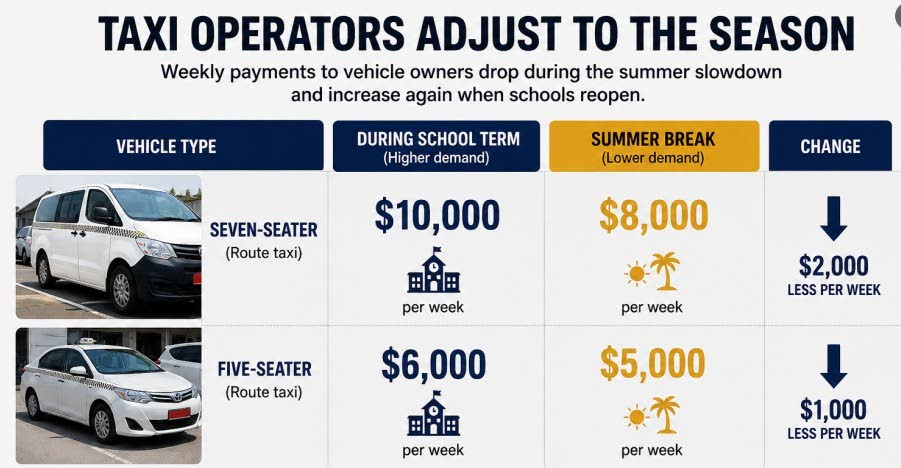
A taxi owner operating on the Papine route told the Sunday Finance that drivers are generally expected to pay about $8,000 a week during the summer months for use of a vehicle. Once schools reopen and passenger volumes increase, that figure typically rises to around $10,000. For smaller five-seater vehicles, the weekly payment typically falls from about $6,000 during the school term to $5,000 over the summer, reflecting the seasonal slowdown in business.
Andrew said his situation is slightly different because the vehicle belongs to his cousin, allowing some flexibility when business becomes particularly slow.
“I can reason with him because we’re family,” he said. “He understands when things not moving.”
Not every operator, however, simply waits for business to pick up.
Malcolm, who plies the Spanish Town to Cross Roads route, said experience has taught him how to adjust his workday to match the seasonal decline in passengers.
He begins work from as early as 5:00 am, targeting workers heading into Kingston before the morning rush subsides.
“There aren’t as many school- children on the road, but parents still have to carry them to do medicals, back-to-school shopping and run errands,” he told the Jamaica Observer. “After the morning rush you still get a little business up until about 10:00 or midday.”
Once that traffic dies down, Malcolm leaves the road altogether.
By around 1:00 pm, when business slows to what he described as “a snail’s pace”, he takes a two-hour break to have lunch, rest and avoid the worst of the afternoon heat before returning around 3:00 pm for the evening commute.
Some days, he said, charter jobs interrupt that routine.
Private hires pay significantly more than ordinary route work and can make the difference between a poor day and a profitable one.
“They paying for the service, so the air conditioning stays on,” he said.
For ordinary route taxi operations, however, conserving fuel is a daily calculation.
Drivers often switch on the air conditioning only while passengers are boarding to keep the vehicle comfortable as it fills. Once the taxi begins moving, the windows come down, allowing the breeze to cool the cabin while reducing fuel consumption.
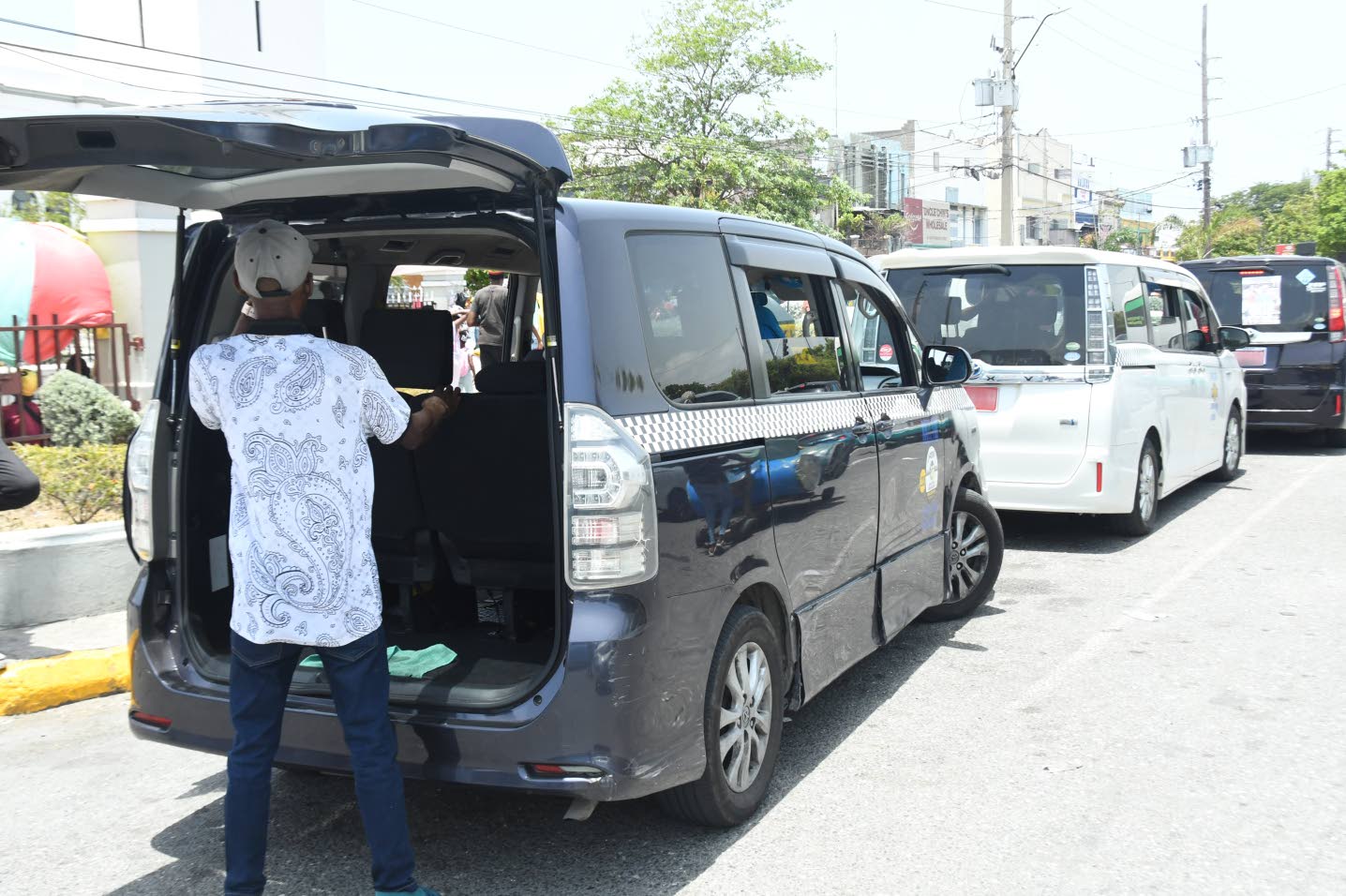
Andrew, a route taxi operator on the Papine to downtown Kingston route, takes a break under the shade of his open trunk while waiting for passengers. He says the annual school break has significantly slowed business, with longer waits between trips becoming the norm until students return in September.
Saving for the slow season
For Omar, who has spent more than a decade in the taxi business, surviving the slower months comes down to planning ahead.
Having started out as a driver before purchasing his own vehicle, he now owns two public passenger vehicles, driving one himself while contracting out the other.
The business, he said, has enabled him to support himself and his family over the years, but only because he learnt early that the steady stream of daily cash can create a false sense of security.
“Taxi is a quick cash business because you’re collecting money all day, but if you’re not smart with it, you can spend years in the business and have nothing to show for it,” he said.
According to Omar, experienced operators know they have to make the most of the busy periods because the slow seasons always return.
“When something like Boys’ and Girls’ Championships is on, people are moving all over and you make good money. Then summer comes and things get really, really slow,” he said.
“You have to put away money for back-to-school expenses, birthdays, medical bills and anything else that can come up because you’re not working a nine-to-five where you know exactly what you’re earning every month.”
While many people see taxi operation as a business built on quick cash, Omar said long-term success depends just as much on discipline.
“Some drivers see the money coming in every day and spend it just as fast, but maths and common sense are part of this business too. You can’t run from that,” he said.
The number of active public passenger vehicle (PPV) operators and drivers in Jamaica was unconfirmed up to press time, but the Transport Authority says it issues more than 20,000 road licences annually as part of the country’s regulated public transport system. While the seasonal lull is most pronounced on routes serving schools and universities, operators say the ripple effects extend to drivers serving commercial districts and communities where families reduce their travel during the summer months.


