



Chains broken, but minds in shackles
As Jamaica paused to observe Emancipation Day and celebrate another anniversary of Independence, our nation was invited to do more than wave flags, sing patriotic songs, and remember the heroes of our past. These national milestones should also compel us to ask a searching question: Are we truly free?
The answer is more complex than many of us would like to admit.
The chains that once bound our ancestors have long since been broken. The slave ships are gone. The auction blocks have disappeared. The plantation system has ended. Yet while physical bondage has been abolished, many of us continue to live with minds and behaviour that resemble those of a people still imprisoned.
This is the paradox of modern Jamaica: We celebrate freedom while often living in bondage.
The abolition of slavery in 1834 and full Emancipation on August 1, 1838 marked one of the most significant moments in Jamaican history. For over 200 years, enslaved Africans endured unimaginable cruelty. Families were separated, human dignity was denied, education was restricted, identity was deliberately stripped away, and enslaved men and women were treated not as people created in God’s image, but as property to be bought, sold, punished, and discarded.
Yet even under such oppression, the human spirit refused to die. Our forebears resisted slavery through prayer, courage, rebellion, education, and an unwavering belief that freedom was worth every sacrifice. The Christmas Rebellion of 1831, led by the Baptist deacon and National Hero Samuel Sharpe, demonstrated that spiritual conviction could become the catalyst for social transformation. Sharpe believed that every human being possessed God-given dignity, and although he paid with his life, his courage accelerated the movement towards Emancipation.
Decades later, another national hero, Paul Bogle, stood against injustice during the Morant Bay Rebellion of 1865. His actions reminded the colonial establishment that political freedom without justice is incomplete. These men, and countless unnamed Jamaicans, challenged systems that sought to keep people physically and mentally enslaved.
Then came August 6, 1962. Jamaica became an independent nation, free to determine its own political destiny. It was a defining moment of national pride. Our flag was raised among the nations of the world, symbolising hope, opportunity, and self-determination.
Yet independence did not automatically produce transformation. Political freedom does not necessarily create emotional freedom. Economic opportunity does not always eliminate poverty of thought. The removal of chains does not always remove the mentality forged by generations of oppression.
Perhaps this explains why, more than six decades after Independence, our nation still wrestles with violence, corruption, tribalism, indiscipline, and social fragmentation. Too often we measure success by material possessions while neglecting character. We celebrate achievement but sometimes excuse dishonesty. We demand accountability from others while refusing to examine ourselves.
The greatest prison in Jamaica today may not be made of concrete and steel. It may be the prison of the mind. Long before psychologists spoke about generational trauma, the
Bible recognised that people could be physically liberated while remaining inwardly captive.
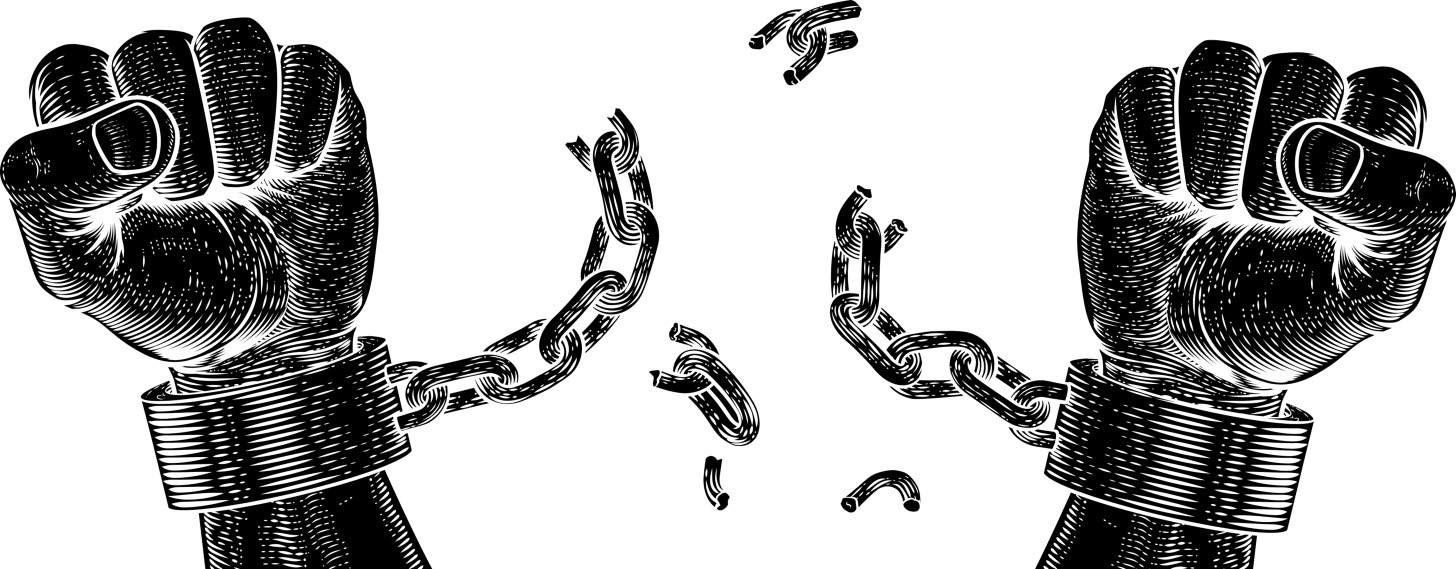
The removal of chains does not always remove the mentality forged by generations of oppression.
The children of Israel experienced one of history’s greatest miracles when God delivered them from Egyptian slavery. Through Moses, they crossed the Red Sea and left Pharaoh’s chains behind. But although Egypt was behind them, Egypt remained within many of them. Whenever hardship came, they longed to return to the familiarity of slavery rather than embrace the uncertainty of freedom. They had left Egypt geographically, but Egypt had not left them psychologically.
How often is this true of us?
Many Jamaicans still carry invisible chains — fear, hopelessness, inferiority, dependency, bitterness, unforgiveness, and the belief that success belongs only to someone else. These are not the chains of iron worn by our ancestors, but the shackles of the mind.
The late National Hero Marcus Garvey understood this reality when he challenged people of African descent to pursue mental emancipation. His message remains profoundly relevant: A people cannot build a prosperous nation while thinking like captives. National development begins with transformed minds.
The Apostle Paul echoed this truth centuries earlier when he wrote in Romans 12:2: “Do not be conformed to this world, but be transformed by the renewing of your mind.” The transformation of a nation begins with the transformation of its people. Education matters; economic growth matters; good governance matters; but none of these can substitute for moral renewal.
The words of Jesus Christ speak directly to every generation: “Therefore, if the Son makes you free, you shall be free indeed.” (John 8:36) Notice that Jesus did not merely promise freedom from external oppression. He spoke about freedom that reaches the deepest parts of the human heart: freedom from sin, freedom from hatred, freedom from greed, freedom from prejudice, freedom from addiction, and freedom from destructive thinking. This is the freedom that no government can legislate and no constitution can guarantee. It is the freedom that changes individuals, families, communities, and ultimately nations.
If Jamaica is to fulfil its God-given potential, our Emancipation must become more than a historical event. It must become a daily commitment to reject every mentality that keeps us bound. Parents must teach values as intentionally as they teach ambition. Schools must produce not only successful students but responsible citizens. Churches must move beyond emotional gatherings to genuine discipleship that transforms lives. Public leaders must demonstrate integrity rather than merely speak about it. Every Jamaican must reject the belief that corruption is normal, violence is inevitable, or dishonesty is simply the way things are.
The future of Jamaica will not be determined solely by foreign investment, economic policy, or technological advancement. It will be determined by the character of its people. History has already recorded the breaking of our physical chains. The question now is whether this generation will allow God to break the invisible chains that still bind our hearts and minds.
In commemorating Emancipation and celebrating Independence, we must honour our ancestors not merely with ceremonies, but with transformed lives. Let us refuse to pass on bitterness, defeatism, violence, and hopelessness to the next generation. Let us instead pass on faith, integrity, discipline, compassion, responsibility, and hope.
Our ancestors fought courageously for the freedom of our bodies. The responsibility for the freedom of our minds now rests with us. Only then will Jamaica become not merely an independent nation, but a truly liberated people. For the word of God still declares with timeless authority: “Therefore, if the Son makes you free, you shall be free indeed.” (John 8:36)
ryanreddie33@gmail.com


