



JSEZA eyes bigger slice of China trade
JAMAICA is looking at ways to turn its rapidly growing import trade with China into more business at home, targeting everything from automotive components and energy storage equipment to air conditioning systems, electronics and light machinery, for possible assembly and other value-added work on the island.
With imports from China almost doubling in four years to US$878.6 million in 2025, the Jamaica Special Economic Zone Authority (JSEZA) says the size of that trade is exposing opportunities for Jamaica to capture some of the value now going overseas.
But the plan is not to try to make everything Jamaica imports.
Instead, JSEZA told the Jamaica Observer that the stronger opportunities may lie in bringing components and other inputs into the country and using Jamaican labour, technical skills and services for parts of the production process before goods are sold locally or exported.
“The stronger opportunities are those where Jamaica can combine domestic demand with regional export potential, logistics advantages, available skills, and competitive production economics,” the authority said.
“This is where Jamaica’s global value chain role becomes important: The country does not need to undertake every stage of production, but can competitively target specific segments such as component assembly, final configuration, testing, packaging, fulfilment, repair, maintenance, and regional distribution.”
Asked by the Business Observer whether goods now being imported could instead be manufactured or assembled locally, JSEZA disclosed that one company operating under the special economic zone (SEZ) regime is already assembling motorbikes in Jamaica using inputs sourced from China, serving both the local and regional markets.
Another is producing completed circuit boards used in medical appliances, thermal transfer printers, encoders, and biometric readers for export.
JSEZA did not identify either company.
“These examples are important because they demonstrate the type of model Jamaica can expand: Import specialised inputs and components, add Jamaican labour, technology, engineering and production capability, and export a higher-value finished product,” the authority said.
Imports from China climbed from US$463.8 million in 2021 to US$878.6 million last year — an increase of almost US$415 million in four years. China’s share of Jamaica’s total imports moved from 7.8 per cent to 11.7 per cent over the period.
Machinery and transport equipment accounted for US$416.2 million of Jamaica’s imports from China last year, while another US$271.3 million fell under manufactured goods classified chiefly by material. Together, the two categories represented more than three-quarters of the China import bill.
Motor vehicle tyres, parts for air conditioning machines, and lithium-ion and other electric accumulators were among the leading individual products imported over the five-year period, according to the Statistical Institute of Jamaica (Statin).
Asked where it sees scope to take some of that trade further, JSEZA pointed to several areas that overlap with products Jamaica is already buying heavily from overseas.
“JSEZA therefore sees scope to expand this model into areas such as electronics, renewable energy and energy storage equipment, selected automotive and mobility components, appliances and HVAC systems, light machinery and other products where Jamaica currently imports significant volumes,” the authority said.
“The objective would not simply be to replace imports but to identify opportunities where Chinese, Asian and other supply-chain capability can be combined with Jamaican labour, infrastructure, logistics and market access to create greater local value addition and support exports to regional and international markets,” it continued.
JSEZA cautioned, however, that a large import bill alone does not make a case for producing the same goods here.
“A large import bill can reveal areas of sustained demand, but the decision to manufacture or assemble locally must be based on commercial feasibility, scale, logistics, standards, input availability and export potential,” it said.
Automotive potential
The authority pointed to Jamaica’s existing vehicle distribution business and said there is room to expand into parts and components distribution, remanufacturing, fleet conversion, specialised body assembly, servicing and technical support.
The move towards electric and technology-enabled vehicles could open further business around charging equipment, diagnostics, and maintenance.
Agro-processing is another area being eyed, particularly where Jamaica produces raw materials but imports the finished product. JSEZA identified processed and packaged foods, sauces and condiments, beverages, frozen and dehydrated produce, animal feed and packaging among the possibilities.
It also sees potential in value-added logistics, including consolidation, cold chain, packaging, labelling and light processing rather than storage alone.
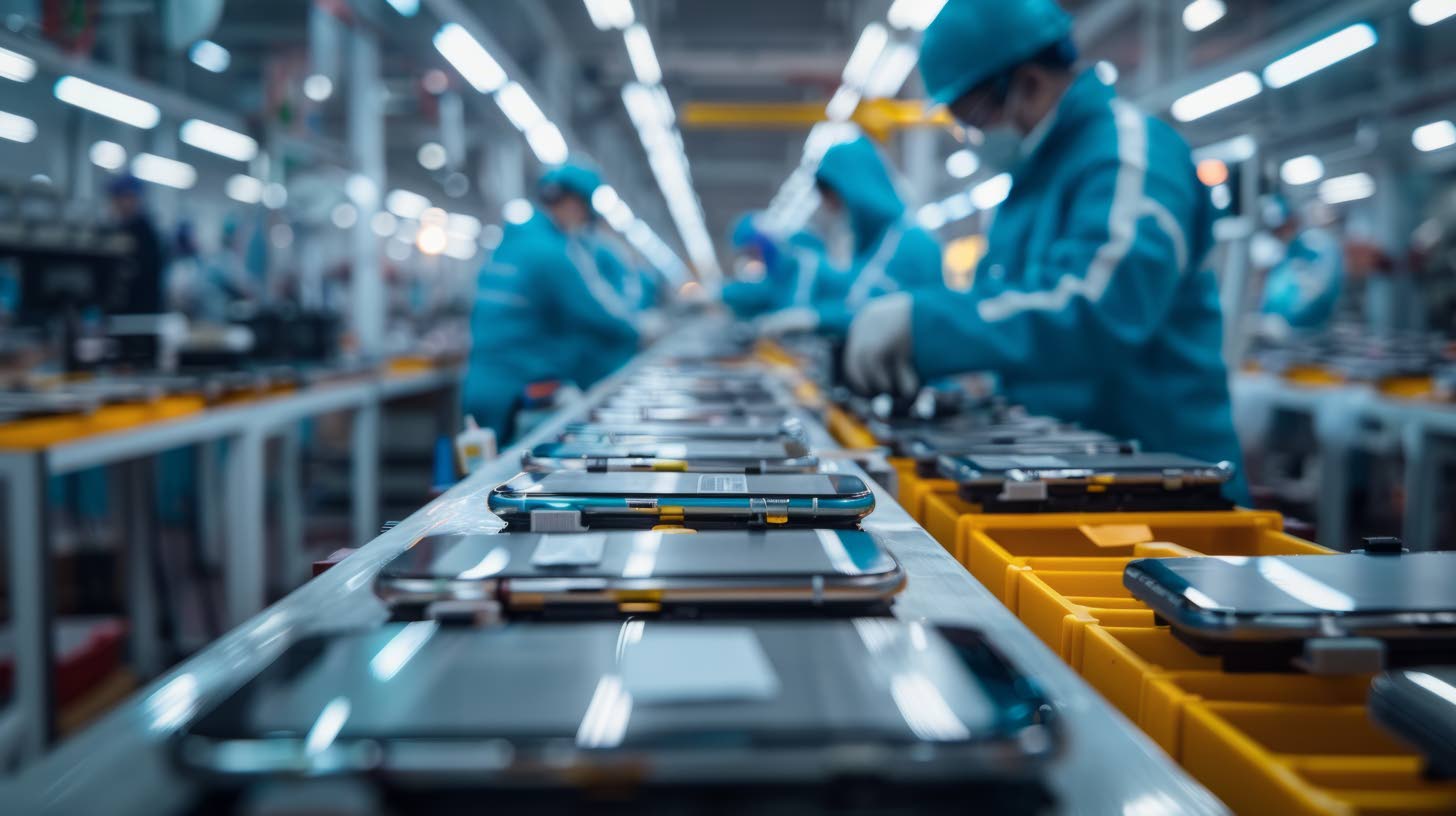
The Jamaica Special Economic Zone Authority says Jamaica can import specialised inputs and components, add Jamaican labour, technology, engineering and production capability, and export a higher-value finished product.
The State agency, which is headed by Kelli-Dawn Hamilton, said more detailed work is now under way to determine which activities Jamaica should pursue and where they could be located.
“The authority has commenced work on Jamaica’s Special Economic Zone Master Plan, with IDOM engaged as consultants,” JSEZA said. “That exercise will establish which locations are positioned for which sectors, what infrastructure each requires, and in what sequence development should proceed.”
“The objective [is] to identify the specific products and value-chain activities that can be undertaken competitively in Jamaica, attract the right investors, and build the supporting infrastructure to serve our export markets.”
On the prospect of attracting Chinese manufacturers to establish production or assembly operations here, JSEZA said Jamaica can make a strong case.
“Jamaica can present a credible proposition to Chinese and other international manufacturers, particularly for assembly, finishing, testing, packaging, configuration and regional distribution activities,” the authority told the Business Observer.
“The country’s location, port and logistics infrastructure, English-speaking workforce, proximity to major markets, and SEZ framework can support a nearshore manufacturing proposition.”
JSEZA said some businesses already operating within the SEZ system are involved in the import, export, and distribution of consumer merchandise, appliances, household goods, spare parts, motorcycles, and motor vehicles sourced from China and other international markets.
While those operations remain largely centred on importation and distribution, the authority believes their existing sourcing relationships could support local assembly, product configuration, testing, finishing, repair and servicing where the economics make sense.
Businessman and manufacturer Metry Seaga has been making a similar case for Jamaica to retain more value from imported goods without attempting to manufacture everything from scratch.
“Bring rice, package it here, label it here. Use the packaging and the labelling from here. Use the labour that’s here to store it, to do the value-added,” Seaga told the Business Observer.
“It may not be that we’re manufacturing, complete manufacturing, but you may be doing semi-manufacturing, or screwdriver industry, or some form of value add. I don’t care what it is, you know, just add some value here.”
Hurdles remain
JSEZA acknowledged that Jamaica will not be competitive in every type of manufacturing.
The State agency reasoned that investors considering where to establish production look at market size, energy requirements, raw material costs, specialised skills, industrial space, logistics, certification, financing, and the speed and predictability of regulatory approvals.
“For energy-intensive or very large-scale commodity manufacturing, Jamaica must compete with jurisdictions that may have larger domestic markets or lower cost inputs,” JSEZA said.
“Jamaica’s strongest proposition is therefore in activities where proximity to nearshore markets, shorter supply chains, speed to customer, logistics connectivity, skilled labour, and higher-value assembly or manufacturing can offset scale disadvantages.”
Still, companies operating within SEZs would not necessarily have to export everything they produce.
JSEZA told the Business Observer that the percentage restriction on domestic sales which existed under the former free zone regime has been removed.
An SEZ manufacturer may sell goods into Jamaica on a business-to-business or wholesale basis. Once those goods enter the domestic customs territory, however, they are treated as imports and become subject to applicable customs duties, General Consumption Tax, other border charges, and relevant permits or licences.
JSEZA said taking the idea further will require product-level analysis, targeted engagement with investors, properly serviced industrial space, competitive energy solutions, workforce development, stronger local suppliers, and more efficient border and regulatory processes.
“The objective should be to move selected products from a model of importing finished goods to one that incorporates local assembly, processing, packaging, testing, distribution, supplier participation and, where feasible, manufacturing,” the authority said.
“The long-term goal should be not simply to reduce imports, but to increase Jamaica’s participation in regional and global value chains, and convert more trade activity into investment, jobs, technology transfer, local supplier development, logistics services and exports,” JSEZA said.


