



The beach is ours and so is the responsibility to get access right
Few
public questions in Jamaica carry as much emotional salt as beach access. The sea is geography, memory, livelihood, recreation and identity. When a Jamaican encounters a gate where a familiar path once ran, the offence feels larger than inconvenience. It feels like dispossession. That feeling is real, and any government that treats it as mere agitation will misunderstand both the issue and the country.
Yet the slogan “The beaches belong to the people”, powerful though it is, does not by itself solve the legal, physical and operational questions beneath it. Which beach? What route reaches it? Who owns the land between the road and the foreshore? Who protects swimmers, removes garbage, provides toilets, controls vending, preserves fishing access and repairs storm damage? A right that cannot be reached, used safely or maintained is only half a right.
Jamaica therefore needs to move past a shouting match between “public birthright” and “private property”. Both phrases contain legitimate claims; neither is a complete policy. The proper national settlement is guaranteed access joined to managed use: practical and permanent access to a strong public network, protection of customary and livelihood corridors, clear rules for development, and management standards that safeguard people, the environment and investment.
The present controversy did not arrive with one hotel, one activist group or one Administration. It is the accumulated result of colonial law, fragmented land ownership, decades of coastal development, disappearing pathways, weak public beach maintenance and official statistics that often measure different things.
Successive Governments have announced programmes and policies, but citizens still cannot see one authoritative map explaining what is public, what is free, what is licensed, what is blocked, and what is being fixed.
The starting point is the Beach Control Act of 1956. Section 3 places rights in the foreshore and the floor of the sea under State control, subject to rights acquired or preserved under the Act. The law protects certain pre-existing fishing rights and gives adjoining owners and occupiers specified domestic-use privileges, but it does not grant every citizen a universal right to cross any privately-owned upland parcel to reach every stretch of coast.
That distinction is frequently lost in the public debate. The foreshore is not the same thing as the road, path, car park, hotel lobby, or privately-owned land that may stand between a citizen and the water. A declaration that the sea belongs to all is of little practical value where the only usable route has been fenced, built over, allowed to disappear or never legally secured.
The law is also a product of its time. It pre-dates Independence and speaks through a control-and-licensing architecture that is poorly matched to modern expectations of citizenship, transparent planning, climate resilience and equitable tourism. Calling it colonial does not automatically settle every legal dispute, but leaving its deepest ambiguities untouched after 70 years is no longer defensible.
Jamaica’s Prescription Act adds another layer. Long and uninterrupted use can, in defined circumstances, support claims to an easement or right of way. That is why evidence of customary paths, fishing routes, and community use matters. But prescription is fact-specific, often contested and expensive to establish in court. It is an inadequate national access system if every community must first raise money, retain counsel and litigate its history.
The ongoing cases associated with Mammee Bay, Little Dunn’s River, Blue Lagoon, Bob Marley Beach and Flanker/Providence Beach have brought those grievances into sharper focus. The activists deserve credit for forcing the country to confront an issue long deferred. Their insistence that access is bound up with dignity and livelihood should not be dismissed simply because some of their legal or policy demands may be broader than the present law supports.
Government, for its part, has acknowledged the problem. National Environment and Planning Agency’s (NEPA’s) policy work stretching back years identified blocked or unavailable access points and contemplated inventories, easements, acquisition and designated routes. More recent Government statements have promised a Beach Access and Management Policy, legislative modernisation, an expanded network and upgrades to public beaches. These are important commitments; the public is entitled now to dates, definitions, money, and delivery.
The dispute over official numbers illustrates the trust deficit. One person counts bathing beaches, another counts licensed facilities, another free entrances, another sandy coastline, and another any place from which the sea can theoretically be seen. Government may say that scores of beaches are available, while a citizen arrives to find no sign, no parking, no safe path, no sanitary convenience and no certainty about opening hours. Both descriptions can be technically framed and practically incompatible.
The answer is a single national coastal-access baseline. Within six months, NEPA, the National Land Agency (NLA), the Urban Development Corporation (UDC), the Fisheries Division and municipal authorities should publish a GIS inventory of bathing beaches, fishing beaches, traditional accessways, ownership, licence status, fees, facilities and obstructions. The data should use common definitions and be open to public correction before becoming the official map.
Mapping, however, cannot become another study that elegantly describes a locked gate. Government should simultaneously identify 10 to 15 high-demand or high-conflict locations for immediate action. Where lawful access exists, enforce it. Where an established route is disputed, hold closure in abeyance where legally possible while the claim is reviewed. Where no practical route survives, negotiate a temporary arrangement, easement or acquisition.
Here the agitation must also accept a difficult truth: access is not synonymous with unmanaged entry. A beach used by hundreds or thousands of people requires toilets, changing areas, waste collection, lifeguards, security, water-quality monitoring, disability access, parking or transport arrangements, and rules for commerce. These are not excuses invented by hotels. They are the infrastructure of safe and dignified public enjoyment.
The Jamaica Hotel and Tourist Association has argued for managed access, citing sanitation, harassment, illegal vending, crime, erosion, and inadequate facilities at poorly managed sites. That position should not be treated as proof that the industry seeks exclusion. It should be tested against a clear standard: management rules must be reasonable, transparent, non-discriminatory and designed to enable access — not to make it illusory.
Nor should “free” be made to carry more weight than it can bear. Jamaica should guarantee a meaningful network of beaches with no entrance fee. But enhanced beach parks may reasonably charge transparent, cost-related fees for parking, lockers, chairs, showers, organised excursions or other optional services. The line must be bright: nobody should have to rent a chair or buy a package simply to reach the water at a designated free-access beach.
Government must publish every fee at every public facility and state what it funds. Concessions should be competitively awarded, audited and limited by service standards. A fee without accountability becomes exclusion by another name; a free beach without maintenance can become exclusion by neglect. The public interest lies between those failures.
There is another truth almost entirely absent from the loudest version of this debate. Many of the broad, white-sand resort beaches now presented in photographs as if they were untouched inheritances did not exist in their current form when the adjoining properties were acquired. Developers have dredged, nourished, engineered, stabilised, landscaped and continually maintained sections of coastline to make them suitable for bathing and sun recreation.
In numerous major resort projects, the attractive beach is not simply “found”; it is part natural asset and part expensive hospitality infrastructure. Industry participants report that creating or substantially rehabilitating such a beach can require investment well above US$5 million, before the recurring cost of replenishment, erosion control, sanitation, security, and marine management. Because no comprehensive public dataset verifies that figure across all resorts, it should be understood as an industry estimate, not a universal audited fact.
That qualification matters, but so does the underlying point. Public policy should not pretend that every resort frontage is an unimproved public facility enclosed overnight by a gate. In some places the investor created much of the usable amenity and continues to bear its operating and environmental costs. The public claim to meaningful coastal access does not automatically become a claim to unrestricted use of privately financed hotel facilities.
Private enterprise is not a trespasser in Jamaica’s development story. Investors take risk, borrow capital, employ Jamaicans, purchase local goods and pay taxes and statutory charges. They are entitled to security, predictable approvals, peaceful enjoyment of their property and a fair opportunity to earn a return. A country that casually changes the bargain after investment will eventually pay through a higher cost of capital, fewer projects and weaker employment.
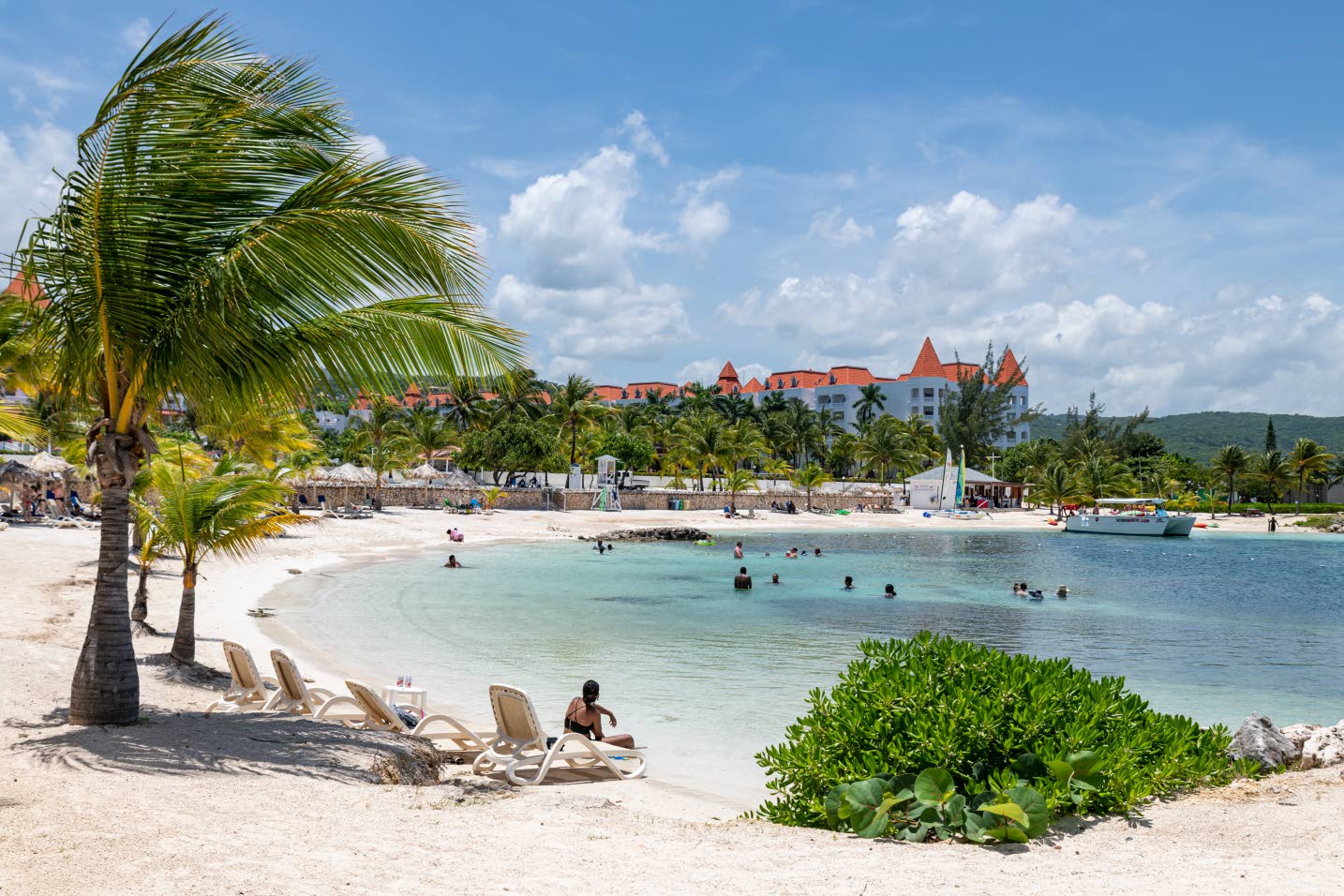
Jamaica needs to move past a shouting match between “public birthright” and “private property”. Both phrases contain legitimate claims; neither is a complete policy.
But investor certainty cannot mean community uncertainty. Where a new coastal project would extinguish the only practical public or traditional route, the approval should require preservation of that route or a permanent and equally useful replacement. The national planning test should be simple: no net loss of lawful public or traditional access.
This is not a demand that a hotel open its pools, restaurants, lounges, changing rooms or secured guest areas to general traffic. It is a demand that development approvals solve access at the design stage through surveyed corridors, easements, setbacks, parking or shuttle arrangements, fisherfolk routes, and enforceable operating conditions. Good planning prevents tomorrow’s protest.
Existing developments require more care. Government cannot responsibly announce universal access across private land without examining titles, licences, easements, planning permissions, security design, and legitimate expectations. It can, however, audit compliance, enforce existing conditions, negotiate corridors, acquire strategic strips where necessary and compensate property owners where the Constitution and law require it.
The public discourse should especially distinguish natural foreshore, man-made or materially enhanced beaches, hotel guest facilities, public bathing beaches, fishing beaches and ecologically sensitive coast. One rule cannot sensibly govern all of them. Turtle-nesting areas, wetlands and vulnerable reefs may need seasonal limits or carrying capacities. Fishing beaches need landing, storage, and livelihood protections different from those of recreational parks.
Climate change makes this differentiation urgent. Shorelines move. Storm surge, erosion, sea-level rise, and hurricanes can erase accessways and expensive beach improvements alike. Any modern law must connect access with coastal-zone management and resilience. A corridor drawn without reference to future shoreline behaviour may exist on paper and disappear beneath the sea.
Parliament should therefore amend the Beach Control Act and related planning rules within the next six to 24 months. The amendments should establish express access rights at designated areas, provide for the registration and protection of public easements and traditional routes, protect fishing access, define reasonable management controls, and require due process before a recognised accessway is closed or materially altered.
Over the following two to five years, Jamaica should consolidate these reforms within modern coastal legislation that integrates access, environmental protection, development control, and climate resilience. But the country need not wait for an entirely new bureaucracy before cleaning a bathroom, employing a lifeguard or putting up a sign.
A practical institutional shortcut already exists. The National Solid Waste Management Authority (NSWMA) operates through four regional companies; Metropolitan Parks and Markets (MPM), Western Parks and Markets, Southern Parks and Markets, and North Eastern Parks and Markets. Their present work includes public cleansing and the maintenance of selected parks, verges and public spaces. With a carefully drafted amendment, resources and specialised standards, that platform could manage a national public-beach system.
The proposal should not be misunderstood as handing all 60 public beaches to MPM alone; MPM does not cover all 14 parishes. The better model is an expanded NSWMA mandate delivered through all four regional companies, with NEPA retaining environmental regulation, the NLA securing land interests, municipalities supporting local management, and the UDC or Tourism Enhancement Fund (TEF) financing priority capital works.
A dedicated Beach Parks Directorate within that existing structure could establish common opening hours, cleanliness standards, lifeguard protocols, accessibility requirements, signage, vending rules, public liability arrangements and transparent fee schedules. It could also contract community organisations or private operators against measurable standards. This is faster and potentially less costly than legislating a wholly new authority with a new board, headquarters, and administrative overhead.
Institutional convenience must not outrun competence. NSWMA’s core statutory mandate concerns solid waste, and beach management requires marine science, water safety, hospitality operations, coastal engineering, and community relations. Any amendment must therefore be accompanied by a ring-fenced budget, specialist recruitment, performance agreements, and clear boundaries among agencies. A renamed function without capacity would merely relocate failure.
Funding can be blended without compromising free basic access. A Beach Access and Management Fund could combine budget support, TEF allocations, transparent developer contributions, concession income, parking and optional-service fees. The fund should publish annual audited accounts by site, so communities can see what was collected, what was spent, and whether standards were met.
Communities must have more than an invitation to a Kingston consultation. Each coastal parish should establish a beach-access forum involving residents, fisherfolk, tourism operators, environmental NGOs, vendors, transport providers, municipalities and youth organisations. These forums should help validate the map, identify priority routes, agree local rules and monitor delivery.
Co-management can turn access from conflict into enterprise. Regulated vending zones, licensed excursions, craft markets, food concessions, equipment rental, and community maintenance contracts can retain more tourism value locally. But informality cannot be romanticised when it produces intimidation, dumping, unsafe food handling, or harassment. Livelihood rights and user protection must advance together.
The first 100 days should be visible. Cabinet should appoint a small cross-government delivery unit; issue interim guidance on disputed routes; announce the national definitions; begin the GIS audit; name the first priority sites; publish current fees and opening conditions; and identify the agency accountable for every action. A public tracker should show green, amber or red, not another sequence of speeches.
By the end of year one Jamaicans should be able to see several reopened or regularised accessways, upgraded toilets and changing facilities, trained lifeguards at priority beaches, consistent signage and the first version of the national map. Parliament should have a draft amendment before it, and development approvals should already be applying the no-net-loss access test.
By year two the country should have a registered network of protected corridors, minimum operating standards, parish forums, published scorecards and multi-year management contracts. Strategic land strips should be under negotiation or acquisition where no other route is possible. The free-access network should be geographically meaningful, not concentrated in a few showcase locations.
Between years two and five every major coastal community and resort corridor should have reasonable access to a quality public beach appropriate to local use. The system should distinguish free community beaches, enhanced beach parks, fishing beaches and conservation-sensitive sites. Access compliance should become part of tourism-investment and destination-quality standards.
Accountability must be annual and comparative. Government should report the number of lawful access points, blocked routes resolved, facilities meeting standards, fees charged, water-safety incidents, investment completed, livelihood agreements signed and developments compliant. Independent periodic review should test whether access has improved in lived reality, not merely in official arithmetic.
Civil society also has a strategic choice. International media attention can force overdue action, and activists are entitled to seek it. But a continuous message that Jamaica has wholesale surrendered its coastline can flatten legal complexity, overlook progress, unsettle investment and injure the same tourism economy on which many coastal communities depend. Advocacy is strongest when it is exact.
The better use of public pressure now is to demand the map, timetable, milestones, amendments, budgets, and scorecards and then sit at the table to help design them. Government must not ask campaigners for silence in exchange for vague assurances. Equally, campaigners should not treat every management condition, environmental limit, or recognition of private investment as betrayal.
This is an all-hands-on-deck problem, but Government must captain the vessel. It alone can align law, land registration, planning approvals, public finance and enforcement across 14 parishes. It should lead in full visibility, with communities and investors inside the process, and state plainly that the settlement will take two to five years while delivering concrete gains along the way.
Jamaica does not have to choose between citizens and visitors, fisherfolk and hoteliers, access and order, or heritage and investment. It must choose competence over slogans and partnership over permanent confrontation. The beach is ours in more than one sense: it is our inheritance, our workplace, our product, our ecosystem and our responsibility. The national task is to guarantee access without destroying the value — public and private — that makes access worth having.


