



The Airbnb maths
Realtor urges investors to look beyond bookings and count the full cost
BUY an apartment. Furnish it. Put it on Airbnb and let the bookings help pay the mortgage.
It is an increasingly familiar investment plan among Jamaicans looking to get into the property market, particularly with new apartment developments going up across Kingston and St Andrew, St Catherine, and St Ann.
But making the numbers work is becoming harder as more units compete for bookings and owners face costs that can easily be overlooked.
Realtor Andrew Duncan says he sees it regularly. Buyers come into the market looking for an investment property, often with Airbnb in mind, but the managing director of Realty One Group Titans and two-time top-performing agent says many are not digging deeply enough into what it will actually cost to own and operate the unit.
“A lot of people think it’s just automatic. You come and you buy the apartment and you nice it up and you put it out there on Airbnb and it’s just booming,” Duncan said. “It’s not necessarily factual. It’s not really happening like that, to be honest with you.”
Part of the problem, he said, is the amount of competition. Over the last four to five years, Duncan said he has seen a significant increase in the number of units available in Kingston and St Ann, leaving Airbnb operators competing not only with each other but with hotels, guest houses, and other accommodation providers.
For some hosts, that has meant lowering their nightly rates to secure bookings.
A check by the Jamaica Observer last weekend showed just how much choice prospective guests now have. A search on Airbnb for accommodation in Kingston for two people from September 5 to September 12 returned more than 1,000 homes, with the prices or the first properties displayed varying widely.
Among 50 listings reviewed, the cost of a seven-night stay ranged from $56,908 to $181,628, with a median price of about $127,600.
At least 10 displayed either a weekly discount or a reduced price. For example, one New Kingston apartment had moved from $79,620 to $70,046 for the seven nights, while another one-bedroom apartment was being offered for $142,320, down from $169,074.
Several of the discounted properties were listed as guest favourites, while another carrying a weekly discount had a 5.0 rating, although from only five reviews.
The prices seen in the Sunday Finance check were also broadly in line with market data from short-term rental analytics firm AirDNA. Its latest data for Kingston put the average daily rate at US$109, or about J$17,222, which would work out to roughly J$120,500 for a seven-night stay.
AirDNA reported an average occupancy rate of 55 per cent over the 12 months to August, meaning that just over half of the nights properties were available were actually booked. The average active short-term rental in Kingston earned US$20,800 in revenue over the period.
The figures, however, are based on gross revenue before host expenses.
Then there is the cost of owning the property.
Duncan used the example of a one-bedroom apartment in a prime Kingston location, which he estimates would sell for about $36 million.
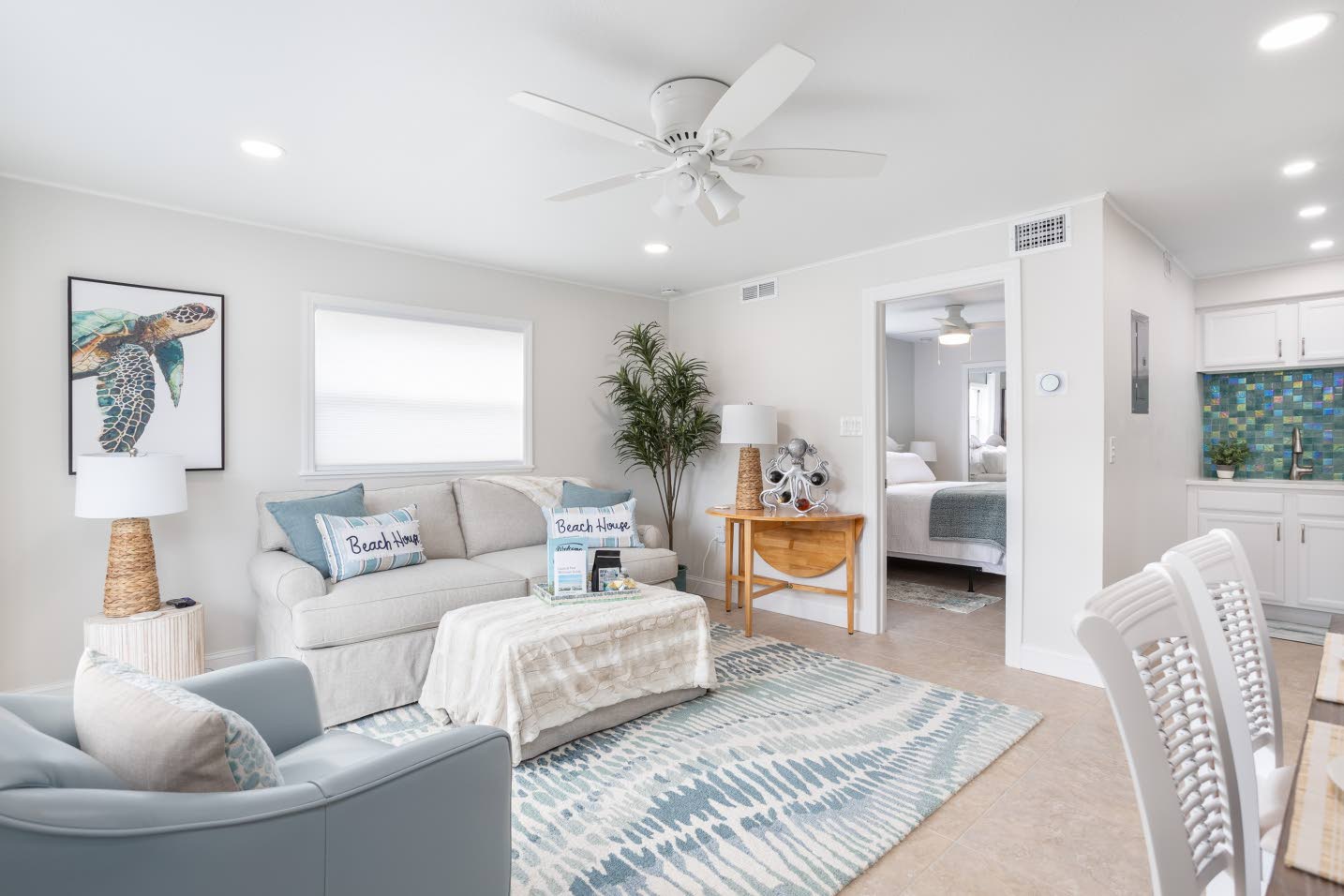
While short-term rentals can generate additional income for property owners, rising competition and recurring expenses mean investors have to look beyond nightly rates when calculating potential returns.
A buyer putting down 10 per cent would need $3.6 million for the deposit. He estimates another five per cent, or about $1.8 million, for closing costs and at least $1 million to furnish the unit.
That puts the initial outlay at more than $6 million before the apartment begins earning anything.
Financing the remaining $32.4 million could leave the buyer with a 33-year mortgage payment of about $220,000 each month. Add monthly maintenance of about $15,000, along with property insurance and taxes, and the costs continue to climb.
“You also most likely will have to be paying your light, your water, your Internet. Your light will be about $50,000 on average per month because guests aren’t going to come on vacation and say ‘let me conserve…’, your water bill will be about $10,000 and your Internet about $10,000. That’s an additional $70,000 monthly that you have to take into consideration,” he told Sunday Finance.
“People are only thinking about the mortgage. I hear that all the time, but when you add those costs, you quickly get to $305,000 in monthly expenses,” he added.
How often the property is occupied then becomes critical. Based on conversations with clients and professional Airbnb operators, Duncan estimated that an established Superhost (an official title given to top-rated hosts who provide excellent hospitality and reliable service) could secure bookings for around 20 to 25 days a month. Other operators may get closer to 10 to 15 days.
He pointed to a property he currently has listed for sale in Drax Hall, St Ann, which is operated by a Superhost and is booked so frequently that finding an opportunity to show it to prospective buyers can sometimes be difficult.
But reaching that level takes time. Hosts have to build reviews and meet other requirements to gain Superhost status, and Duncan believes established operators have an advantage when travellers are searching among an increasingly large pool of properties.
At a nightly rate of US$150 or $24,000 in local currency, 10 booked nights would generate roughly $240,000 in monthly revenue for the average Airbnb host. Twenty nights would double that to $480,000 for a Superhost, using Duncan’s maths.
But gross revenue is not profit.
Aside from the electricity and water bill, there is still cleaning and laundry to pay. Duncan estimates they could cost around $8,000 each time a new guest turns over, depending on the arrangements made by the host.
Some operators pass the cleaning charge on to guests, but other expenses continue, whether the apartment is occupied or not.
“So at the end of the month, you might end up with a surplus of about $90,000, and that’s for a Superhost,” Duncan said, when you take into account mortgage costs of roughly $220,000 and recurring fixed and variable expenses of roughly $170,000 per month.
For newer entrants, the calculation can look very different.
Sydoney, a new Kingston Airbnb host who purchased her one-bedroom apartment specifically as an investment property, has been working through that calculation in real time.
She went live only a few months ago and said one of the first lessons was that the business was not as profitable as she had assumed going in. As a new host, she initially offered promotions to build reviews and visibility, but quickly found that the length of each stay mattered just as much as the number of bookings.
Her preference now is for longer stays.

DUNCAN…it is working for some people; it is just not working for most. People get carried away with revenue because they don’t list all their expenses.
A two-night booking, she explained, can require the same cleaning and preparation as a much longer stay. Sydoney pays about $6,500 to turn over the apartment and incurs additional laundry costs, making frequent short stays more expensive to manage.
“I think if I have longer stays as opposed to the quick turnaround, two-night stays, it would cost me less to maintain,” she said.
Her first month did not produce a profit, but by the second month she said the operation had moved into the black by about $60,000 after expenses. She said the income was enough to cover the mortgage, electricity, Internet, water, streaming subscriptions, supplies, cleaning, and monthly maintenance of $25,000.
Importantly though, location has helped Sydoney. Her 650-square-foot one-bedroom apartment is in Kingston 6, close to the US Embassy and other commercial areas, and she believes that has widened the pool of potential guests beyond holiday travellers to include business visitors, expatriates, and Jamaicans living overseas.
Even so, she is still refining the model.
“It is possible to be profitable in this business,” she said. “But I think it’s just a matter of being more strategic and hope for longer stays…”
There is also the cost of the work itself. Duncan argues that owners who manage their properties should attach a value to their own time rather than treating their labour as free.
His advice to buyers is not to abandon Airbnb, but to approach it as they would any other business.
“People have to be more prudent in doing proper due diligence and if they are really doing it for what they say they are doing and it’s an investment, they have to be more mathematical with their approach to it,” he said.
Duncan reasoned that buying real estate and owning a profitable real estate investment are not necessarily the same thing.
An apartment may still appreciate in value. It can provide somewhere for the owner to stay, while Airbnb income can help offset some expenses when it is not being used. But buyers relying on short-term rental income to carry most of the cost of a highly leveraged property have much less room for error.
The growing supply of units adds another consideration.
“When supply is more than demand, naturally, it forces price to go down,” Duncan said.
But that does not mean the Airbnb model is failing across the board.
Duncan said it continues to work for some operators, particularly those who have built a strong presence on the platform or have properties that allow them to accommodate several guests or operate multiple rooms.
“It is working for some people; it is just not working for most. People get carried away with revenue because they don’t list all their expenses,” he said.


