



How Dis Mek? – Jamaica Blue Mountain Coffee
WHETHER you have it instant, in a frappé, mocha, latte, or just plain black, coffee is a staple for many Jamaicans, but the deep brown beans we know and love start out very differently.
Managing director of Mavis Bank Coffee Factory Dr Norman Grant recently shared with the Jamaica Observer the process to create what is, for many people around the world, their favourite beverage.
“Coffee came to Jamaica by our then Governor Sir Nicholas Laws. He brought three coffee plants,
Arabica Typica, to the Blue Mountains in Temple Hall in West Rural St Andrew, and coffee was planted there,” Grant explained.
Since then, speciality or gourmet coffee known as Jamaica Blue Mountain Coffee has been grown in specified regions in the Blue Mountain range across St Thomas, St Andrew, and Portland at an altitude of between 2,000 and 5,000 feet.
Discovered in Ethiopia in 1614, coffee starts out as a sapling, grown from seeds in a nursery for six to nine months before plants are moved to coffee ‘plantations’. After being planted, coffee trees need another two to three years before they will produce fruit.
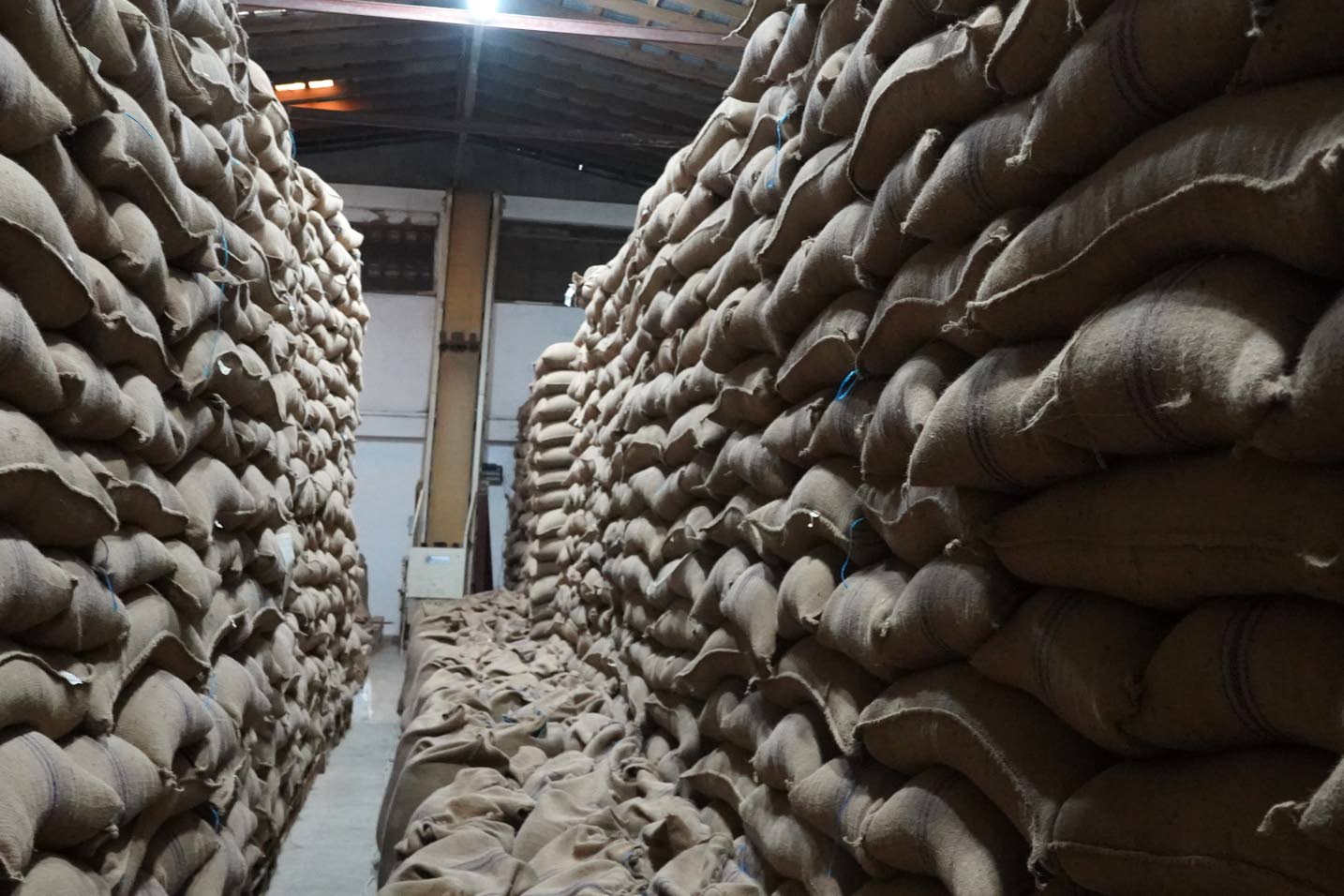
Sacks of dried and hulled coffee beans being aged in a storeroom at the Mavis Bank Coffee Factory. Photo: Gavin Jones
When that fruit grows, it’s in the form of a small green bud that turns into a bright red berry, called cherry berries or coffee cherries.
“What we do once the coffee is ripe, the farmers reap, and we have our trucks that go out to collect it from agents that receive it from the farmers. These agents are called our selectors,” Grant explained.
The coffee is then taken to the factory, remeasured and poured into large containers of water to separate the good ones from the bad.
Bad coffee, which has been bitten by birds, or worms, or the ones that are decayed, will float, while good coffee with heavy intact beans will sink to the bottom of the container.
The good coffee is then upended into large vats that pulp the fruit, separating the flesh from the beans.
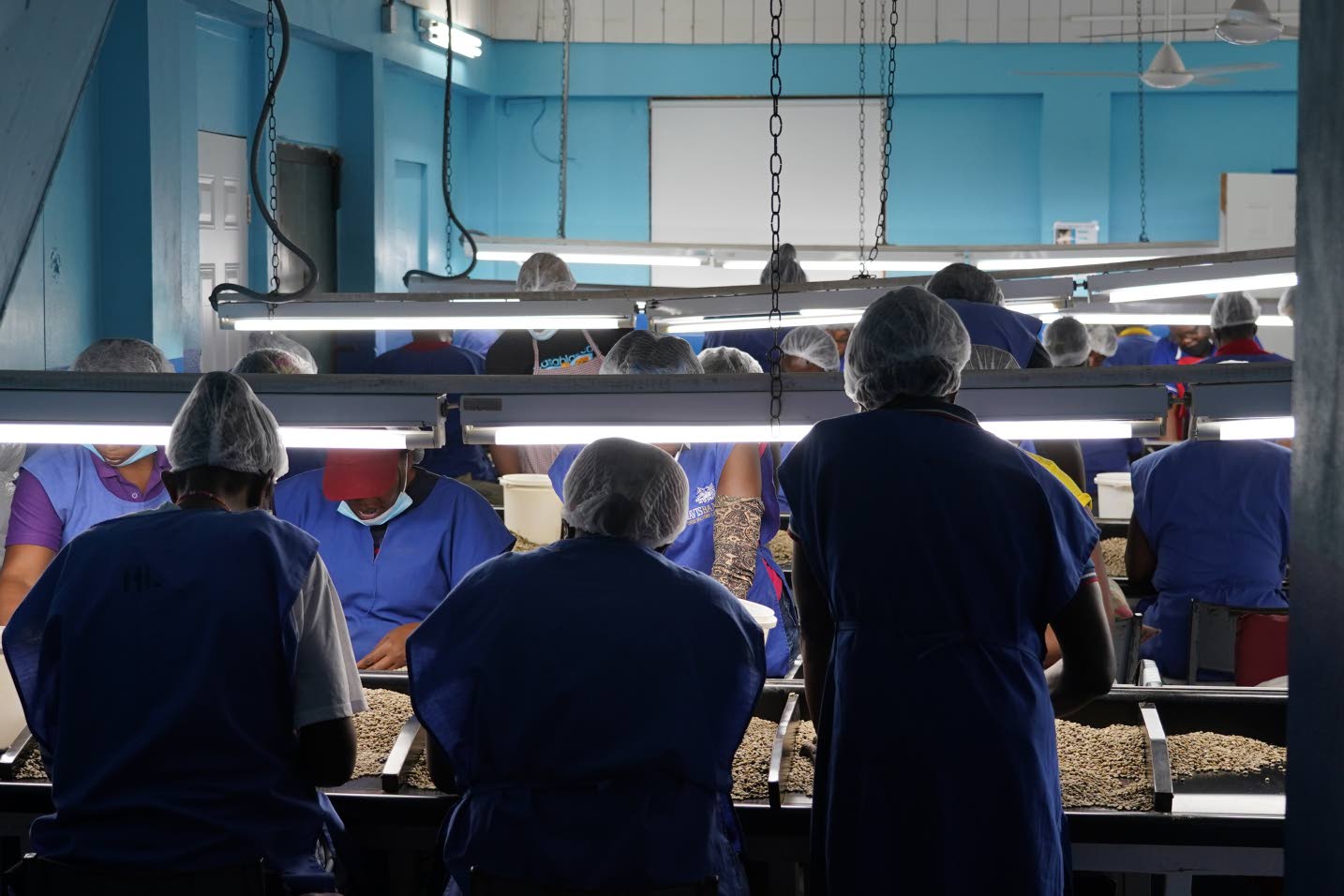
Workers at the Mavis Bank Coffee Factory sorting beans based on their grade.Photo: Gavin Jones
“There’s a machine that washes and takes off the sugary substance, which is called the mucilage, and then we get what is called wet parchment,” said Grant.
That is dried on patios, or asphalt barbecues that are strictly controlled, no outside shoes or visitors are allowed to step on or walk across the surface.
Drying on the barbecue removes about 30 per cent of the water from the beans.
“We complete the drying process with a mechanical dryer to get what we call cured parchment, having only between 10 per cent to 12.5 per cent moisture,” said Grant.
The cured or dry parchment is then collected in sacks, and stored in warehouses where it will age for between 12 and 40 weeks.

.
“Once properly rested, we go to the hulling stage, and there’s a huller that takes off the brown section and then polishes the beans,” Grant explained.
The next stage must be done by human beings, sorting the beans one by one into different grades.
“The beans are listed as grade ones, twos, threes, and pea berries, which are oval-shaped beans. We also have select, which is a rerun of all the different grades,” Grant further explained.
Throughout this process sample beans are routinely taken to a testing lab on the property where they are roasted in small batches and tested for irregularities or impurities.

.
Once none have been found, the coffee beans move to the roasting stage where the Blue Mountain coffee gets its traditional dark brown colour and rich flavour.
This is done inside a specially built machine which roasts the beans before spitting them out onto a rotating cooler before they are ground and packaged.
Once packaged, the last step is for employees to use a sewing machine to secure the coffee in traditional brown bags before it is exported, or put onto the local market.
“It’s a small, tight operation, but we roast about close to two million pounds of coffee through this plant per annum,” Grant revealed.
The Mavis Bank Coffee Factory produces, Wallenford, Jablum and True Brew brands. Other Jamaica Blue Mountain Coffee producers include Old Tavern Estate, Clifton Mount Estate, which supplies Café Blue, and Clydesdale.

How Dis Mek logox
The popularity of the coffee and the fact that the majority of it is exported to Jamaica’s largest coffee market, Japan, has spawned imitations.
All genuine brands bear the Jamaica Blue Mountain Coffee trademarked seal issued by the Jamaica Agricultural Commodities Regulatory Authority.
For Grant, who is also a certified Q Grader licensed to assess speciality coffee, Jamaica Blue Mountain Coffee is more than a speciality; it is without comparison.
“When you taste it, you get this awesome after-taste that lingers, that says you just had the best coffee in the world. Jamaica Blue Mountain Coffee, made by over 5,000 Blue Mountain coffee farmers. Ah so we mek it!” declared Grant.
Think your product could feature on How Dis Mek? Contact (876) 570 3163, jolmalcolmd@gmail.com or editorial@jamaicaobserver.com


