



Expect ‘a little bit of discomfort’
Knockalva Technical’s principal warns staff, parents as repairs continue
RAMBLE, Hanover — Staff and students of Knockalva Technical High School here in this parish should not be surprised when they show up to school this morning and see that there is still work left to do to fix damage inflicted by last year’s Hurricane Melissa. During orientation last Tuesday, Principal Gregory Brown gave members of his team and parents a heads up that they will likely experience “a little bit of discomfort”.
He anticipates that when classes resume for the 800 students enrolled, this will delay work planned for some labs, bathroom facilities and re-installation of air-conditioning units.
“Some of those conversations are being had with the parents, that you’re going to experience… a little bit of displacement here and there. But it is far better than the children staying out. They have stayed out too long in our view. The parents and the staff, we are on board together to find a way to make the best use of the space we have to have all the children come [today] as we work to get back to some normalcy,” Brown told the
Jamaica Observer during a visit to the school last week.
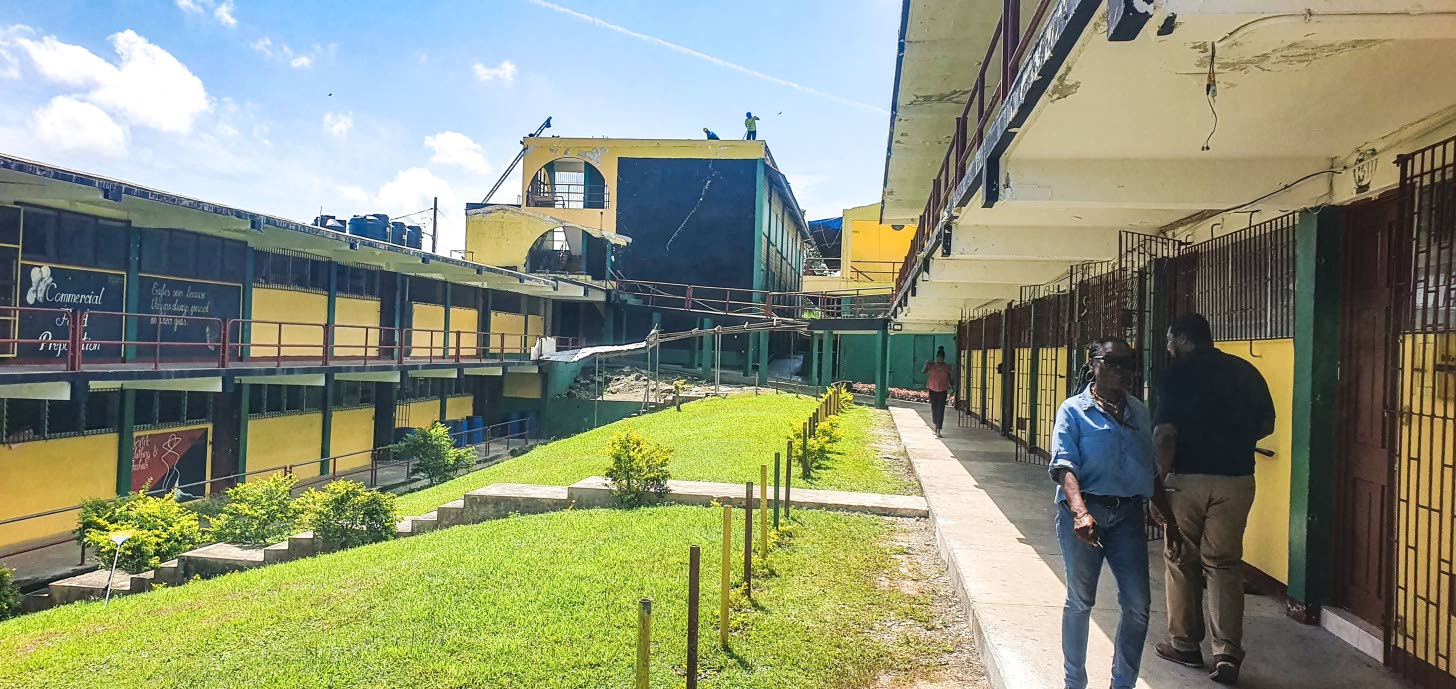
Workmen seen working on the roof of a three-storey block in the background on Wednesday.Anthony Lewis
He said that after four missed deadlines, repairs finally began on August 6 and there were mileposts along the way to help move the work along.
“We would have set deadlines for individual sections that they were doing, the different areas. So far, they have met the deadline for covering the roof, for resealing them…They have met the deadline for covering the canteen. I’m hoping they were sourcing material to cover the auditorium. If those things are in place, I think they’ll meet the deadline as well,” he said, his voice full of optimism.
“Overall though, I get the impression that we should be about 80 per cent complete by mid-October or roundabout there,” the educator added.
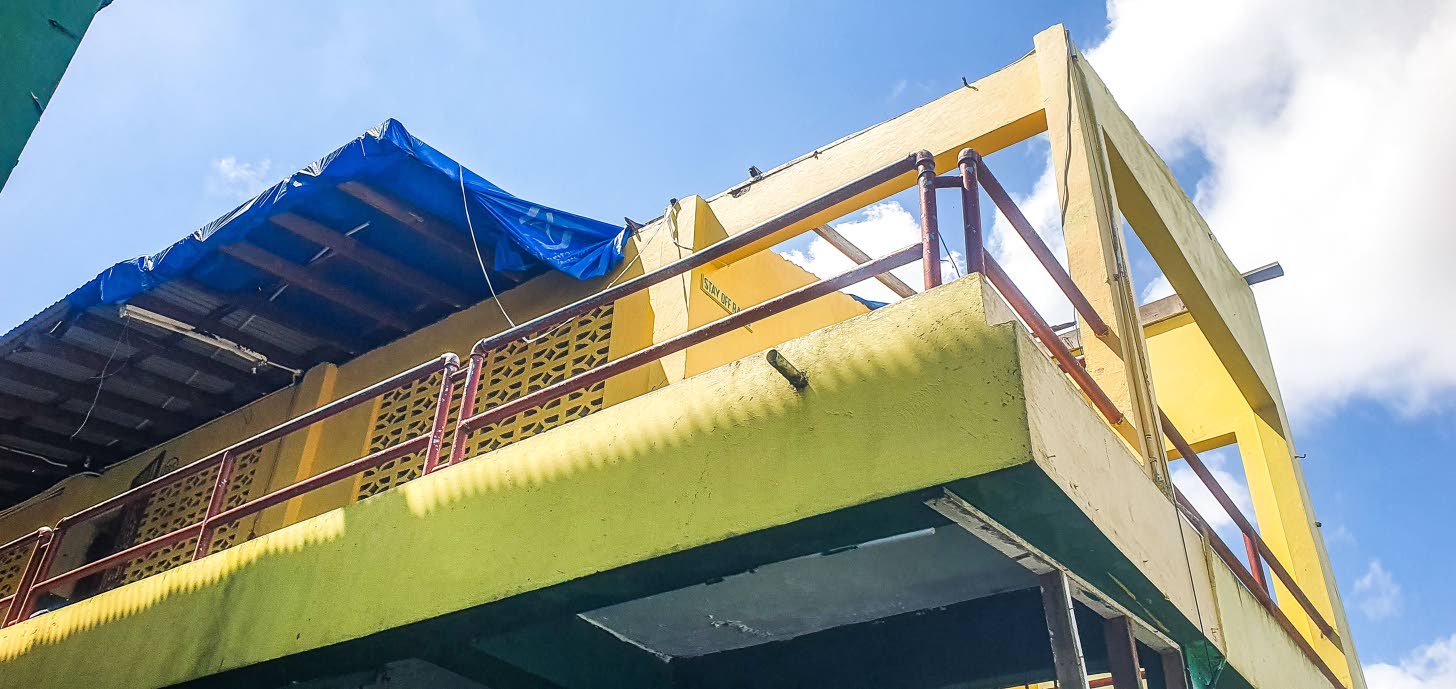
A roofless two-storey block with tarpaulin on a section of it, on Wednesday Anthony Lewis
He explained that the remaining 20 per cent of work — such as cupboard replacement and AC installation — are things that will not have a significant impact on the school’s daily operations.
“Overall, the board and myself, we are kind of pleased at the rate at which they are going. It’s night and day, and the premix trucks are there. They come regularly,” stated Brown, who had high praise for the Ministry of Education and its agency, the National Education Trust (NET).
However, while the ongoing repair work is not a major worry, he is concerned about lingering challenges with staff housing and a shortage of water.
Knockalva Technical High is supplied by piped water from the National Water Commission’s (NWC) facility in Chester Castle. While the region sits in a watershed area, the school normally receives water once or twice a week. Brown noted that drought conditions have further reduced supplies.
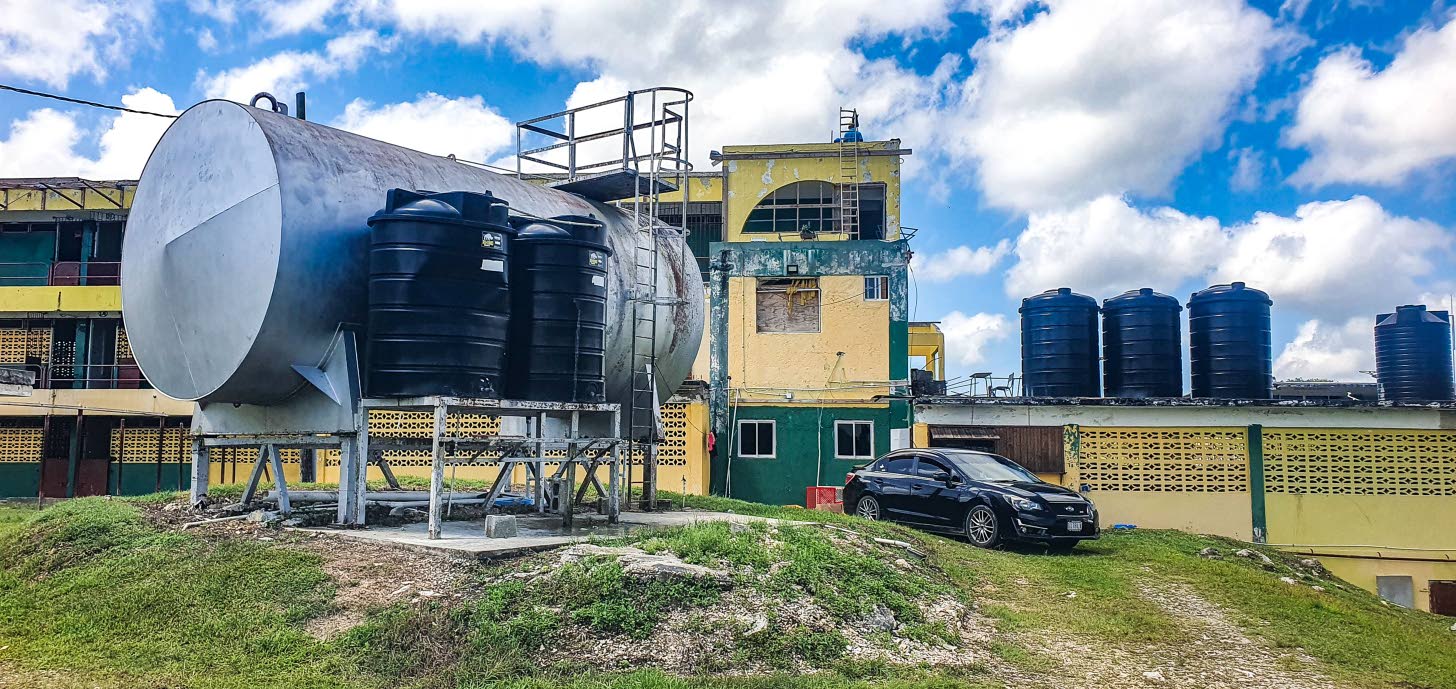
A few of the many metal and black water tanks located on the school’s property Anthony Lewis
“An area that is of even greater concern… is water. It’s really something that is now popping up and we are giving it serious attention,” he said.
Before last year’s Category 5 storm damaged vital equipment, the school used to do rain water harvesting.
“Our science department would treat the water [by using] training that they had with NWC. But even though we’re having rains now, the harvesting facility was damaged and since they have worked on the roof, it takes a little while to get back that up,” stated Brown.
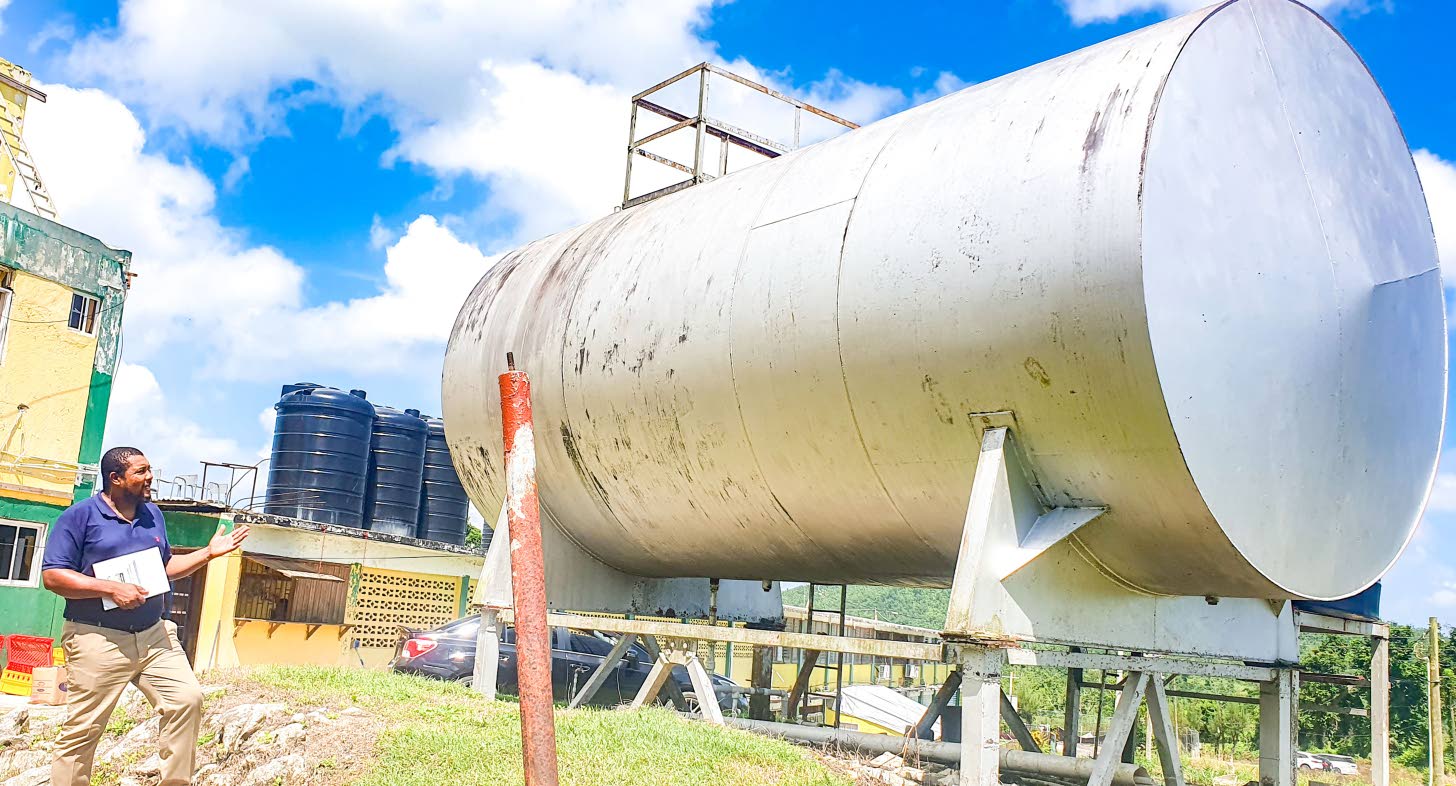
Knockalva Technical High’s Principal, Gregory Brown, showing the metal water tank that received 10,400 gallons of the domestic product from a truck on Tuesday. Anthony Lewis
Before the storm, the school’s water harvesting system included 25 metal and black tanks. That number has been reduced to 15 tanks which need up to 5,000 gallons daily to operate effectively. Last Tuesday, the school received 10,400 gallons of trucked water that was expected to last them four days.
“The water now is just as critical a thing as full completion [of the repairs]. It’s concerning to us because it’s expensive to get the water in. [Water trucked by] the Government and NWC alone cannot provide the amount of water that we need because they have to go to the police station, they have to go to other schools, they have to go to so many other places. So we too, through our private contractor, have to stop the gap that exists. We are doing so but I don’t know how long we can do that because it’s an expensive venture,” said a worried Brown.
He also has to grapple with fallout from the damage Hurricane Melissa did to the school cottage. Now, teachers who would have stayed there are forced to commute roughly 40 miles daily.
“It’s not easy to get accommodation in the area because most of the houses and the persons who used to provide these accommodations to our staff members are suffering [hurricane] damage as well. It forces our teachers to travel. I have 15 that were living on plant [the cottage] having to travel from as far as Santa Cruz [in St Elizabeth],” explained Brown.
But even with almost a year of challenges, his teachers have put in the work and that was reflected in students’ performance.
“I can’t commend the teachers enough because this year, the exam passes are 50 per cent better than the year before. Some of the teachers who are travelling from as far as Santa Cruz are getting 100 per cent passes in the CSEC [Caribbean Secondary Education Certificate] exams. The effort and the commitment are beyond all contestation,” Brown said proudly.


