



EL NIÑO AT PLAY!
Sports medicine expert urges caution against extreme heat exposure in schoolboy football
WITH the schoolboy football season underway for the next three months, sports medicine specialist Dr Winston Dawes is urging relevant stakeholders to exercise extreme caution to prevent serious issues among players as it relates to the El Niño phenomenon.
The under-19 competition kicked off on Saturday with the opening games of the ISSA daCosta Cup first round, with the Manning Cup set to begin on Wednesday.
However, the players will have to deal with the higher-than-usual temperatures caused by El Niño, a complex weather pattern that results from variations in winds and sea surface temperatures.

WELLINGTON… we’ll have a policy of not playing double-headers where the teams have to be playing at 1 o’clock in the afternoonPhoto: Joseph Wellington
Although it has affected the island over the summer months with temperatures approaching near 40 degrees Celsius, the Meteorological Service of Jamaica says the worst effects could last through to November. After seeing this week’s temperature map, senior meteorologist Romayne Robinson said outdoor activities such as physical education classes should “end before 10 or not take place at all”.
Dawes says dehydration and heat stroke are two of the main threats the players will face, especially with the fields constantly absorbing heat. However, he told the Jamaica Observer that these risks can be reduced by hydrating long in advance.
William Knibb Memorial High’s Odaime Morris (left) tries to elude Morant Bay High’s Fabian Stone during the ISSA daCosta Cup match at William Knibb Memorial on October 15, 2025. (Photo: Paul Reid)
“You have to start from the evening before, whereby you drink tons of water and electrolytes; have glucose; have a carbohydrate-rich meal, simple carbohydrates; then throughout the morning you would drink tons of fluid so that you enter the match fully hydrated,” Dawes said.
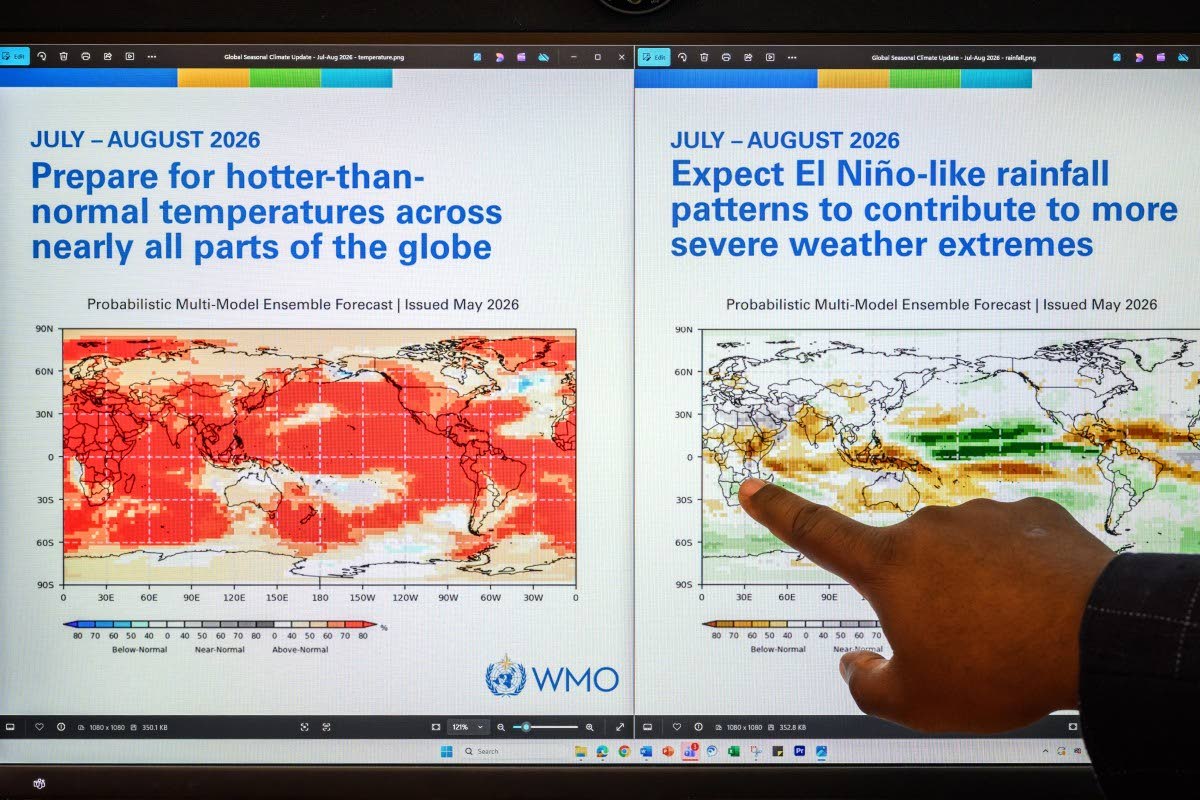
Head of climate prediction services at the World Meteorological Organization, Wilfran Moufouma-Okia points on graphs showing an 80 per cent chance of the warming El Nino phenomenon developing between June and August, increasing the risk of extreme weather events.Photo: AFP
ISSA President Keith Wellington says they have put measures in place to ensure the students are taken care of.
“The competition rules speak to these mitigating factors and what are some of the things we expect. Obviously we’ll have a policy of not playing double-headers where the teams have to be playing at 1 o’clock in the afternoon,” he said.
“We are going to be mindful of the issue of safeguarding of our student athletes. Even from a management perspective, we have said this year that each team must have a safeguarding officer — that is somebody who is not a coach, who is not a part of the technical staff, maybe just a teacher who has no interest at all in football but has interest in the duty of care for our students. So yes, we are mindful of the El Niño effect but [at the same time we are] just generally ensuring that our students are taken care of.”
Football’s world governing body, FIFA, introduced mandatory hydration breaks during this summer’s World Cup to combat the heat in the United States, Mexico and Canada, though it was criticised due to its commercial aspect.
The ISSA Competitions Committee revealed that hydration breaks will be implemented but won’t be mandatory. Instead, their occurrence will depend on the specific conditions on match day.
Dawes, though, says players must be given the chance to hydrate at any given point during the game.
“Even if you don’t have the formal break, they should allow the players to be able to come to the sidelines and drink something. Whether it’s for a throw-in or a kick, they could allow 15 seconds for people to drink,” he said.

“The coaches are going to have to monitor the kids, speak to them about everything, and that if the referees, coaches or medical personnel see something happening, they should have the right to assess the player and also call for rehydration. It means that the adults who are responsible for organising the game have got to be on the alert for anything untoward.”
Dawes, who also served as president of the Jamaica Football Federation, says referees should also exercise some leniency as hydration breaks should not be viewed as a time-wasting tactic.
“It’s not time-wasting to have people come and take a quick drink,” he said. “Time-wasting is something different; we have people who take one minute for a throw-in or a goal kick or kicking away the ball — that’s time-wasting. What you want to do is protect the players from overexertion, which creates problems.”


