



‘Not feeling very happy about this’
* Behind schedule, Darliston Primary absorbs students from 2 closed schools * JTA concerned about pace of repairs out west
DARLISTON, Westmoreland — Nickeisha McLarty-Smikle was dismayed at what she saw when she took her fourth grader to Darliston Primary on Monday. Work was still ongoing on the temporary wooden structures that were supposed to fill the gap left by Hurricane Melissa-ravaged classrooms while reinforcements were being made to the slab roofs of the main buildings.
“I am not feeling very happy about this on a September morning for back-to-school. I know we had a devastating hurricane [last October] which damaged most of the western part, especially here in Eastern Westmoreland… I would have thought that they would have done this during the summer so that on a September morning the students would be comfortable and ready for back-to-school,” McLarty-Smikle told the Jamaica Observer at the school.
She appealed to the Government to have the issue resolved quickly.
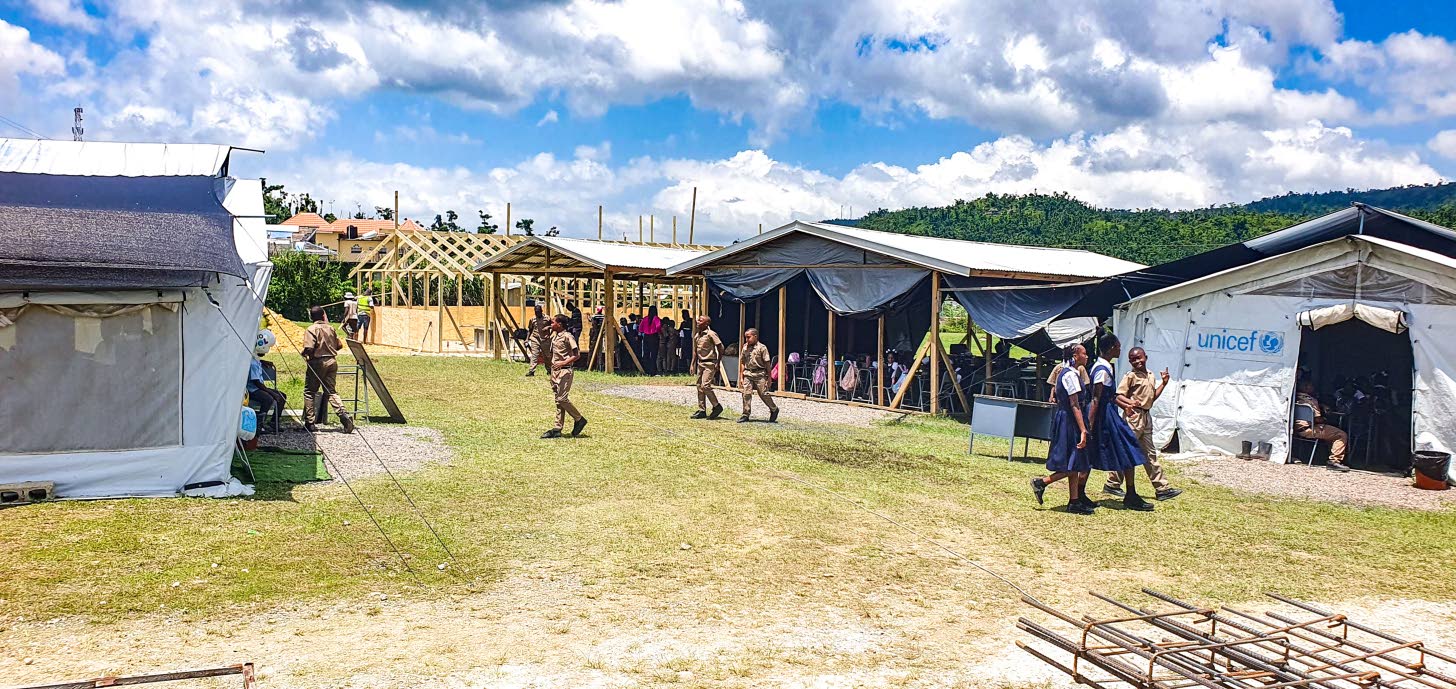
Temporary board and tent structures at Darliston Primary School in Westmoreland on Monday
Darliston Primary is just one of several schools across several parishes that were badly damaged by the Category 5 storm but it also has the added element of having to absorb students from Cairn Curran and Chantilly primary schools, which were closed by the Ministry of Education in August.
The challenging conditions drew sharp criticism from Jamaica Teachers’ Association (JTA) President LaSonja Harrison, who visited Westmoreland and St James on Monday.
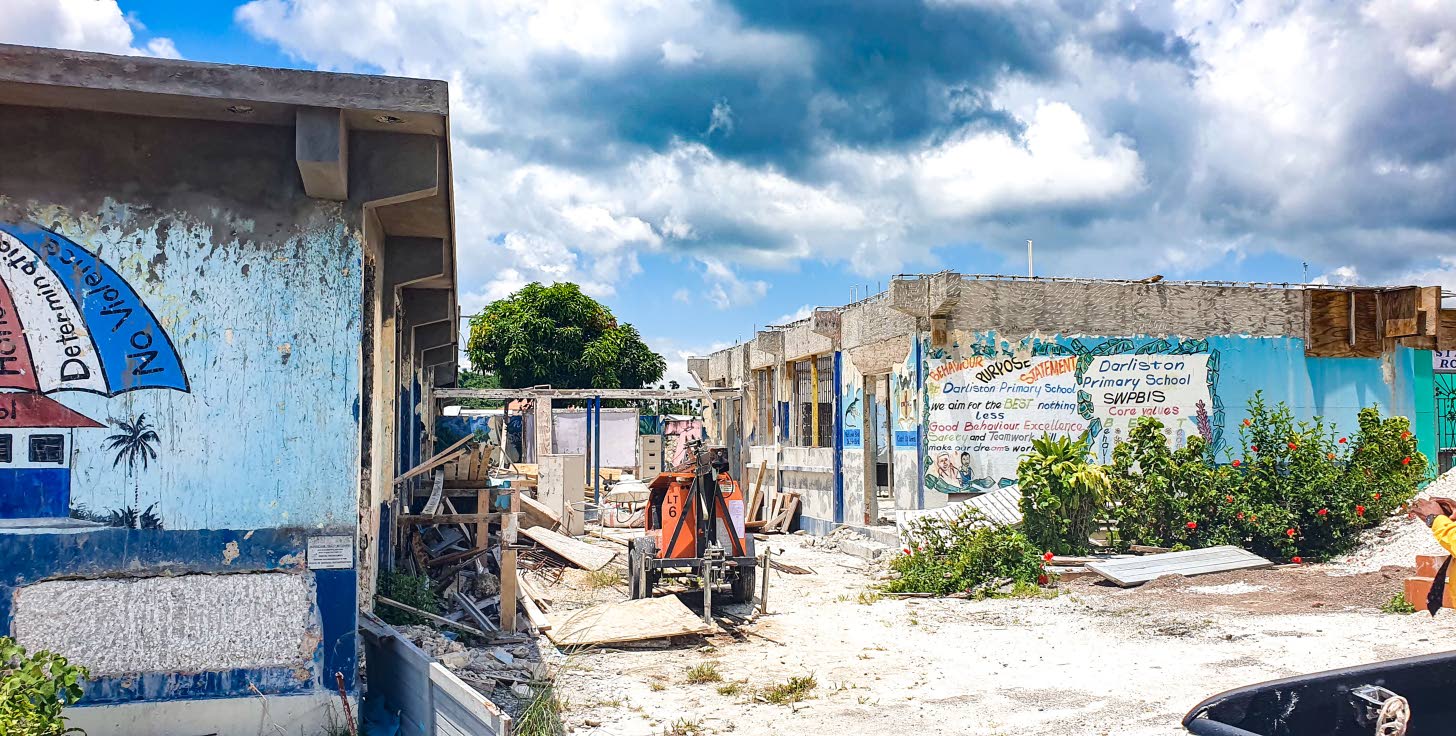
An unfinished concrete building under repair (right) at Darlington Primary School in Westmoreland on Monday
Harrison questioned the logic of consolidating schools without fast-tracking infrastructure updates, leaving children to learn in cramped, unlit structures and intense heat beneath tents while active construction continued nearby. She described the situation as “troubling”.
“When the children are out playing and stuff, the area is still not safe… The tents are without lighting, and the tents are hot. I am saying what we don’t want for ourselves, we should not give to Jamaica’s children… Is this what we want for the children of this nation?” questioned the JTA president.
Education Minister Senator Dr Dana Morris Dixon has repeatedly expressed strong disappointment with the slow pace of rehabilitation work at several public schools damaged by the hurricane. Despite massive financial allocation, recovery remained sluggish, prompting unannounced inspection tours and subsequent calls for stricter contractor oversight.
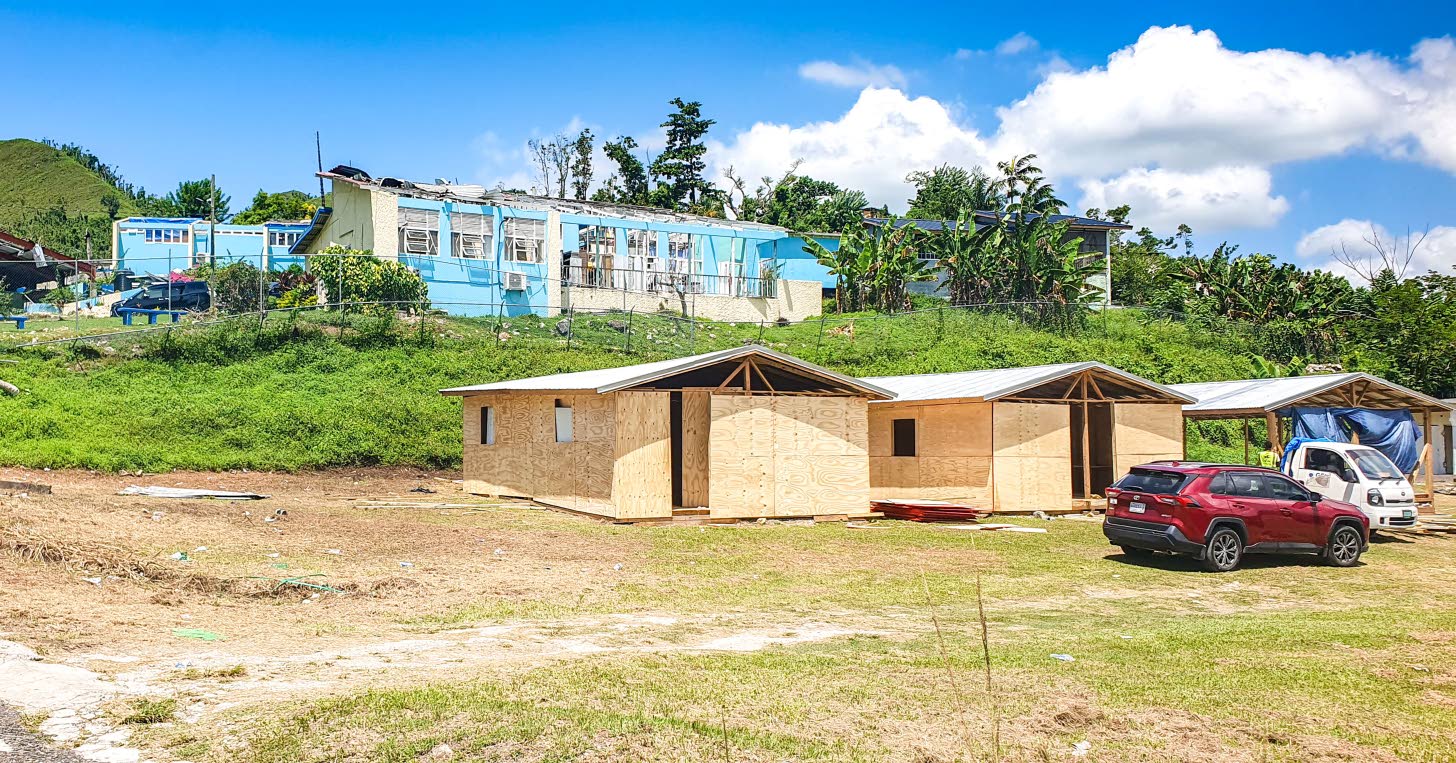
Board structures under construction on a playing field at Seaford Town Primary School in Westmoreland. The school has been forced to share crammed space with the nearby infant school. In the background is the damaged Seafood Town Boniface Vocational Training Centre.
To accelerate the process, Harrison on Monday proposed enlisting the Jamaica Defence Force and seeking technical assistance from regional and international partners. She referenced the Jamaica Public Service Company’s (JPS) utilisation of external linesmen for power restoration after the storm.
“I am not second-guessing, at all, that there may be a challenge with enough contractors, or just maybe who the Government has on its list of contractors as well. There may be a challenge, and hence my call for the army to help provide the skill sets, as well as for us to solicit help from our regional and international partners that have the skill sets needed to come in and to help with the rebuilding of our schools,” argued Harrison.
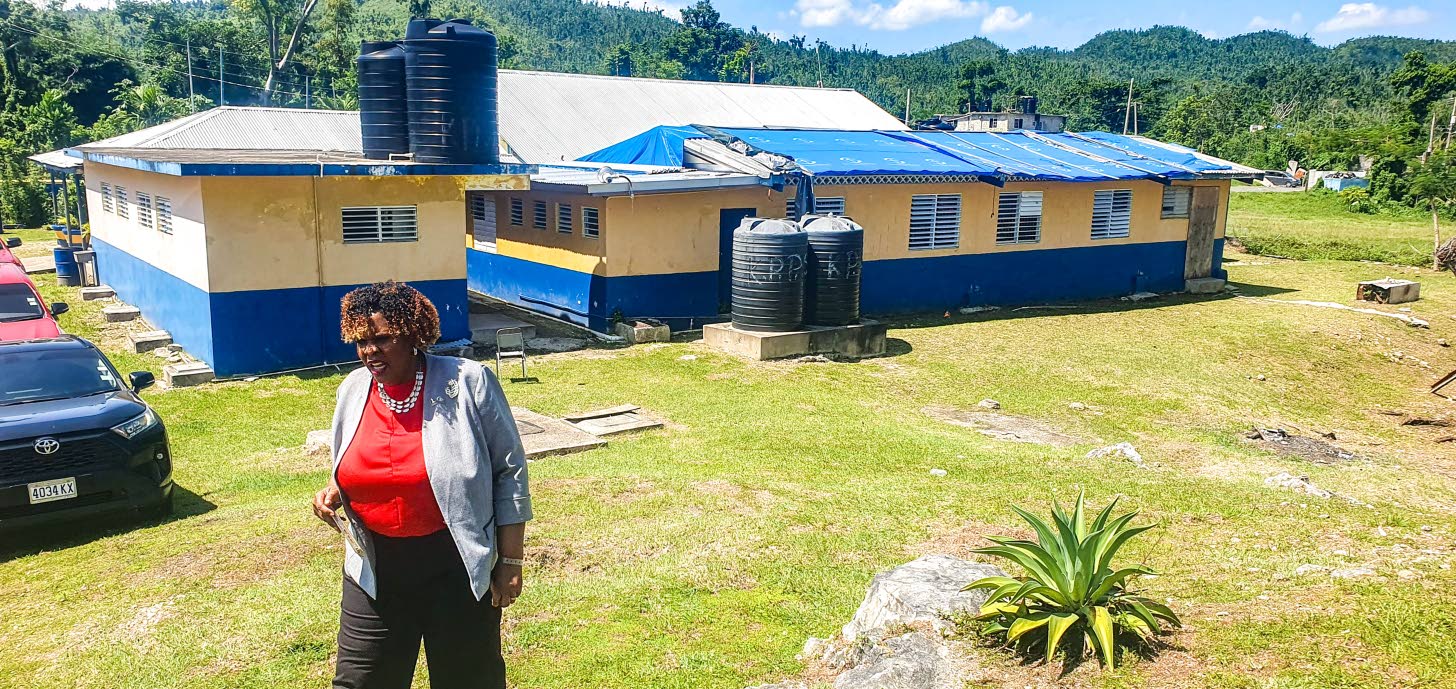
Jamaica Teachers’ Association President LaSonja Harrison walking away from the rear of the damaged Kew Park Primary School in Westmoreland on Monday.
Similar recovery hurdles were evident at other schools visited Monday. In Bethel Town, classes were held in board structures as repair work is yet to commence on the main two-storey building that lost its roof.
“The condition is not really ideal. They’re still working on the temporary housing situation, and we’re still not ready,” stated an infant department teacher who did not wish to be identified by name.
She also noted incomplete electrical work and suggested that the public’s help in providing fans would be useful for the hot temporary board structures.
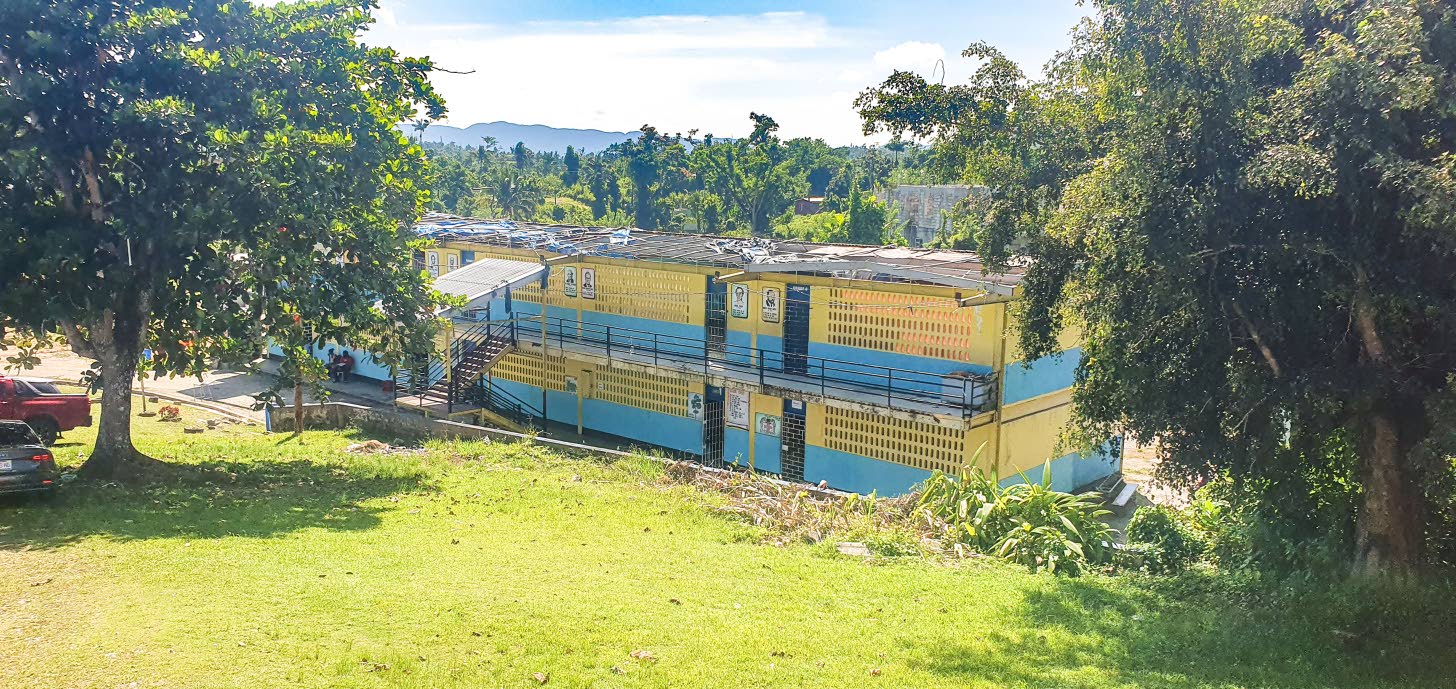
A roofless two-storey Bethel Town Primary School building in Westmoreland on Monday.
However, Davane Vassell, whose three-year-old attends the school, adopted a more pragmatic view. He told the
Observer that many homeowners, including him, have also had a challenge rebuilding their homes so it was not a surprise that the schools were not ready.
“[It] could have been better, but still understandable,” stated Vassell, who lost his board house and is now staying with the mother of his child in her solid concrete structure.
“It’s not like one school. [It is] a lot of schools, so everything a go take time. Everything nah go done one time. But everything a go done at least. And it open on the day when school always open. Education is still important and we still appreciate education,” added Vassell.
Further inspections by the JTA team on Monday revealed additional infrastructural shortcomings. At Cambridge Primary, despite a newly installed zinc roof, ceilings were not yet in place, leaving classrooms vulnerable to extreme heat. Meanwhile, at Seaford Town Primary and Cambridge Infant, young students faced severe overcrowding.
“I’m contemplating when it is that we say that we’re reopened for school… Is it that we’re talking about the return to a safe, ideal space to facilitate teaching and learning, or is it just to house bodies? Because if it is to house bodies, then we can say we’ve reopened schools. But when it is to carry on the business of teaching and learning, then there is some concern,” said the JTA president.


