



Rushkart looks to deliver affordability
A Jamaican delivery start-up is betting that lower fees and real-time order tracking can help it carve out a place in a market with established competitors.
Launched in 2025, Rushkart allows customers to track deliveries and contact drivers and merchants through its app, as founder Oshane Gardner seeks to expand the business beyond Kingston. The idea came from a problem Gardner encountered while visiting Jamaica from the United States for a church convention. Hungry and in his hotel room, he found himself without a recommendation for a delivery service.
“I didn’t know about other delivery services, if there were any,” Gardner told the
Jamaica Observer.
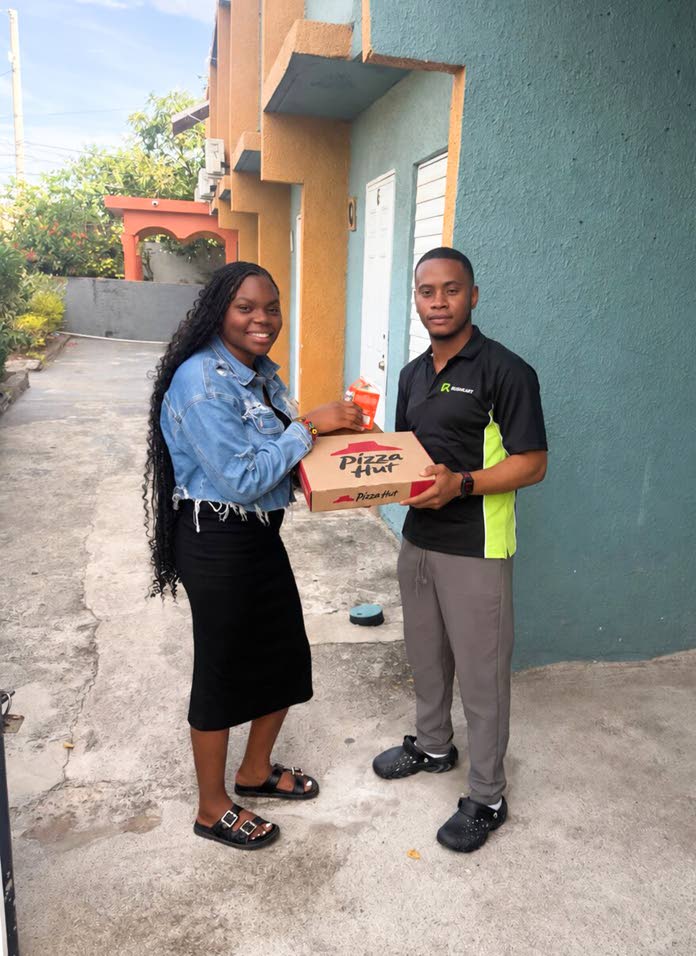
Oshane Gardner, founder of Rushkart Logistics, hands over a pizza order as he takes part in deliveries for the business.
The experience prompted him to consider starting a delivery business of his own. Research later revealed that other operators were already in the market, but Gardner believed there was room for a service with lower fees.
“I noticed that there were other delivery services, but the prices were ridiculously high,” he said. “The decision that I made was to keep Rushkart at the lowest cost possible.”
Gardner had some experience with delivery before launching Rushcart, having worked with DoorDash for a couple of weeks while living in the United States. He also made deliveries to friends stationed on a military base who needed items from outside the facility.
Retired from the military, Gardner returned to Jamaica in October to focus on developing the business. Rushcart currently operates in Kingston and Falmouth, Trelawny, with Gardner noting stronger demand for the service in the latter town.
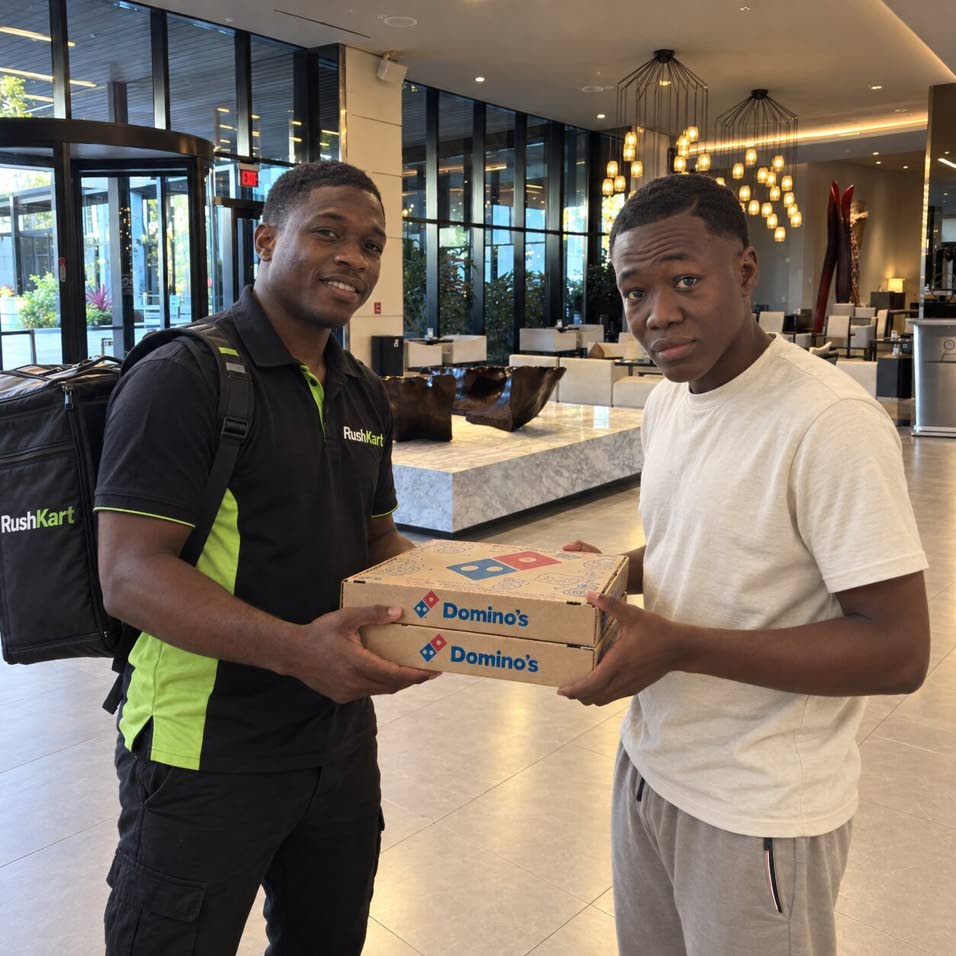
John Johnson, a delivery person with Rushcart, hands over a pizza order to a customer.
Entering a market with established competitors, however, has required a willingness to keep going.
“I didn’t get discouraged. I kept going because I was like, ‘You know what? I can do this, but do it at a lower cost, ‘ because I already invested so much into it at the time that I realised that there were other giants in the market,” he said.
Beyond affordability, Rushkart is seeking to differentiate itself through technology, allowing customers to track drivers in real time and contact both drivers and merchants through its app, similar to services such as Amazon, DoorDash and Uber Eats.

GARDNER…the decision that I made was to keep Rushcart at the lowest cost possible
Developing the platform, however, has required considerable investment. Gardner used income from his military career, personal savings and credit cards to finance the venture. While he declined to disclose the exact amount invested, he estimated that he had spent several million dollars on app development, staffing, marketing, registration and getting the platform listed on Apple’s App Store and Google Play Store.
The process has not been without its challenges. Gardner encountered delays securing company approvals and updating the app’s Google Maps integration, while finding reliable delivery personnel has also proved difficult.
“Finding people that are reliable, finding people that are committed to the task and that are not lazy and lackadaisical was a big challenge,” he told Sunday Finance.
Driver availability has also affected the company’s growth during its first year. Gardner has been working to increase awareness of Rushkart, improve its operations and build customer trust. For him, the business is about more than immediate financial returns.

“Capital, for me, was making sure that I met the needs of people, really. I can’t expect anything from a baby,” Gardner said, referring to the limited expectations he has for profits at this stage.
Rushkart’s plans extend beyond food delivery, with Gardner hoping to develop the business into a wider logistics service, handling packages, groceries and online purchases. The company is also exploring the possibility of offering door-to-door passport delivery through the Passport, Immigration and Citizenship Agency. The longer-term vision, however, is to expand throughout Jamaica and the Caribbean, reaching rural communities and creating employment opportunities for young people, including those who could use bicycles to make deliveries. Gardner’s vision includes using Rushkart to support social causes, including helping children return to school and serving communities that existing delivery options may overlook. He pointed to people living in mountainous areas who need supplies for their animals as an example of the customers he hopes the service can eventually reach.
“We’re looking into getting our business into a position where it can be trusted, it can be reliable, and it can be timely. Rushkart is about low delivery, low prices, and giving luxury services with top-notch technology. That’s what we’re trying to aim for and achieve,” he said.


