



Lessons from Sligoville
Why Jamaica must support its officers while strengthening tactical decision-making
The deadly confrontation in Sligoville, St Catherine, on October 16, 2026 has brought into sharp focus the extraordinary dangers facing Jamaica’s security forces. It has also renewed a difficult but necessary national conversation about tactical response, crisis negotiation, the protection of innocent civilians, and the standards by which we assess police operations.
Having considered reporting on the video recorded from inside the house during the stand-off, my perspective on this incident has become more focused. Rather than assuming that negotiation was overlooked, we should acknowledge the apparent efforts by members of the security forces to communicate with those inside and secure a surrender amid an exceptionally dangerous situation. Those efforts deserve recognition, even as the full sequence of events remains subject to investigation.
We mourn Corporal Trevoy Shaw and Constable Devoney Rose, two officers who lost their lives in the operation. We must also remember the 10-year-old girl who sustained gunshot injuries, reported to have been in serious condition, and all others affected by the confrontation. Their suffering should not be reduced to competing narratives or political talking points.
What the recording tells us and what it cannot
The Jamaica Observer reported on an 18-minute video recording made during the stand-off, while Radio Jamaica reported that the Police High Command was reviewing viral footage. Accounts of the recording describe exchanges in which people inside the house sought to communicate with security personnel and individuals urged armed occupants not to fire and to surrender.
From a professional security perspective, the reported exchanges suggest that communication was being attempted under extremely difficult conditions. I commend the restraint and professionalism reflected in efforts to obtain a peaceful surrender rather than treating force as the only available option.
However, an edited or interrupted recording cannot, by itself, establish the entire sequence of gunfire, the positions of personnel, the threats visible to commanders, or whether a particular tactical intervention would have been lawful or safe. We should, therefore, avoid declaring either that officers should have entered immediately or that negotiation would have prevented the deaths. Those questions require a complete evidence-based review.
The reality of operating
It is easy to offer tactical opinions from a position of safety. It is far more difficult to make split-second decisions while under sustained gunfire, with fellow officers injured and civilians potentially trapped inside a building. The pressure on responding personnel in such circumstances is immense.
Officers must be able to defend themselves and others against imminent threats through necessary and proportionate force. Yet the decision to enter a building, maintain containment, or continue communication cannot responsibly be reduced to a simple rule. It depends on the threat, available intelligence, civilian presence, time, resources, and the commander’s continuing assessment.
The Sligoville tragedy demonstrates why operational courage must be supported by strong planning, disciplined command, and realistic specialist training. Commending the officers’ efforts does not mean abandoning accountability; equally, demanding accountability should not mean dismissing the danger they faced.
Crisis negotiation is a capability, not a guarantee
My earlier call for greater crisis negotiation capacity remains relevant, but this incident gives it a more precise meaning. The question is not merely whether someone spoke to the armed men, it is whether our institutions have sufficiently developed accessible and integrated specialist negotiation capability for prolonged, high-risk incidents.
Crisis negotiation involves trained communication, behavioural assessment, coordination with tactical teams, and the ability to identify realistic opportunities for surrender or the safe release of vulnerable people. It is not a promise that armed suspects will cooperate, some may reject repeated appeals and others may exploit a purported surrender to create additional danger.
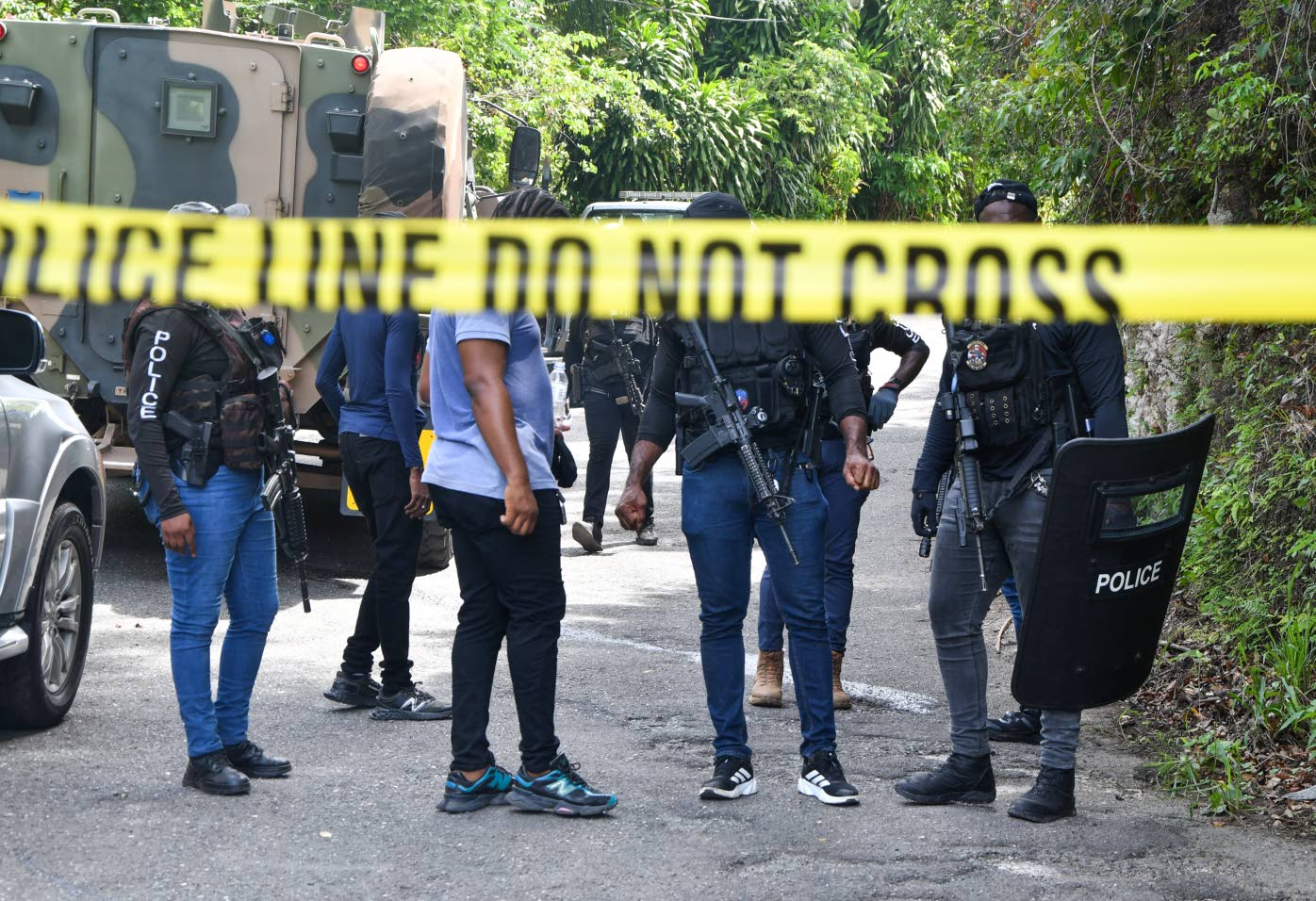
Police personnel at the scene in the Five Miles area of Sligoville, St Catherine, where two of their colleagues were fatally shot recently. (Photo: Naphtali Junior)
Negotiators should, therefore, operate within an incident-command structure, alongside tactical personnel and intelligence support. Their presence should expand the commander’s options without weakening officer safety or delaying necessary action against an immediate threat.
Dynamic risk assessment and civilian protection
Risk assessment cannot end when an operational briefing concludes. During a developing confrontation, commanders must continuously reassess the threat, the presence of children or other non-combatants, the reliability of information, available avenues of communication, and the consequences of any proposed action.
In densely populated Jamaican communities, the risks extend beyond the immediate location. Families in adjoining buildings, passers-by, and other residents may be exposed to gunfire. Civilian protection must, therefore, remain central to operational decisions, not an afterthought.
The Independent Commission of Investigations (Indecom) has reported a broader range of casualties from the Sligoville incident than some early media accounts, underscoring the need for caution as facts emerge. Its investigation should be allowed to establish the circumstances, including how the civilians and security personnel were injured.
A more informed national conversation
Public scrutiny of the use of force is legitimate and necessary in a democratic society. Families deserve answers, the public deserves transparency, and security institutions benefit from independent oversight. At the same time, criticism should be informed by verified evidence and an appreciation of the operational risks officers confront.
We should resist two equally unhelpful extremes — assuming every use of force is justified because officers were in danger or assuming every tragic outcome proves that officers acted improperly. Neither position substitutes for a careful examination of the facts.
Jamaica’s response should include evidence-led after-action reviews, specialist crisis negotiation training, joint tactical-negotiation exercises, clearer activation procedures, and continuing attention to the welfare of officers and civilians affected by violent incidents.
Support the officers, strengthen the system
Sligoville is a painful reminder that Jamaica is confronting armed criminal threats that demand both courage and strategic sophistication. The deaths of Corporal Shaw and Constable Rose call for national mourning, meaningful support for their families, and a serious commitment to learning from this tragedy.
Based on the reported recording, I believe the efforts to communicate with those inside the building deserve professional recognition. That recognition should coexist with an independent investigation and a willingness to improve the systems that support our officers.
Ultimately, the strength of law enforcement is not measured only by its ability to return fire, it is measured by the judgment to distinguish when force is necessary, when containment is possible, and when communication may preserve life. Jamaica must equip its security forces to do all three.
Garry Grant is a doctoral candidate and security and risk management professional. Send comments to the Jamaica Observer or grantgarry1990@gmail.com.


