



From deadly diagnosis to a decade of survival
Immunotherapy changes the fight against advanced melanoma
IMMUNOTHERAPY is changing the treatment landscape for advanced melanoma, offering new hope to patients whose cancer has spread to other organs. Unlike conventional chemotherapy, which has historically shown limited effectiveness against advanced melanoma, immunotherapy helps the body’s immune system recognise and attack cancer cells, improving long-term survival for some patients.
Dr Atif Hussein, a haematologist and oncologist at Memorial Cancer Institute, part of Memorial Healthcare System in South Florida, explains that melanoma is particularly dangerous because of its ability to spread rapidly to other parts of the body. “What is different about melanoma is that this cancer is much more aggressive and it tends to spread to other areas of the body rather quickly,” said Dr Hussein.
One example is 77-year-old South Florida resident Jeff Hill, who was diagnosed with melanoma approximately 10 years ago after decades of working outdoors. Despite undergoing regular skin examinations, Hill learned that the cancer had spread to his lungs and liver. At a time when his prognosis would have been poor, immunotherapy offered a new treatment option. After receiving regular infusions over the past decade, Hill now has no detectable cancer and continues to lead an active life.
“It’s a lifesaver for me for sure,” Hill said. “I was really very fortunate.” Long-term clinical studies have shown that certain immunotherapy combinations can achieve approximately 60 per cent survival at 10 years among patients with advanced melanoma, a significant improvement over historical outcome. Results vary depending on the treatment regimen and individual patient characteristics.
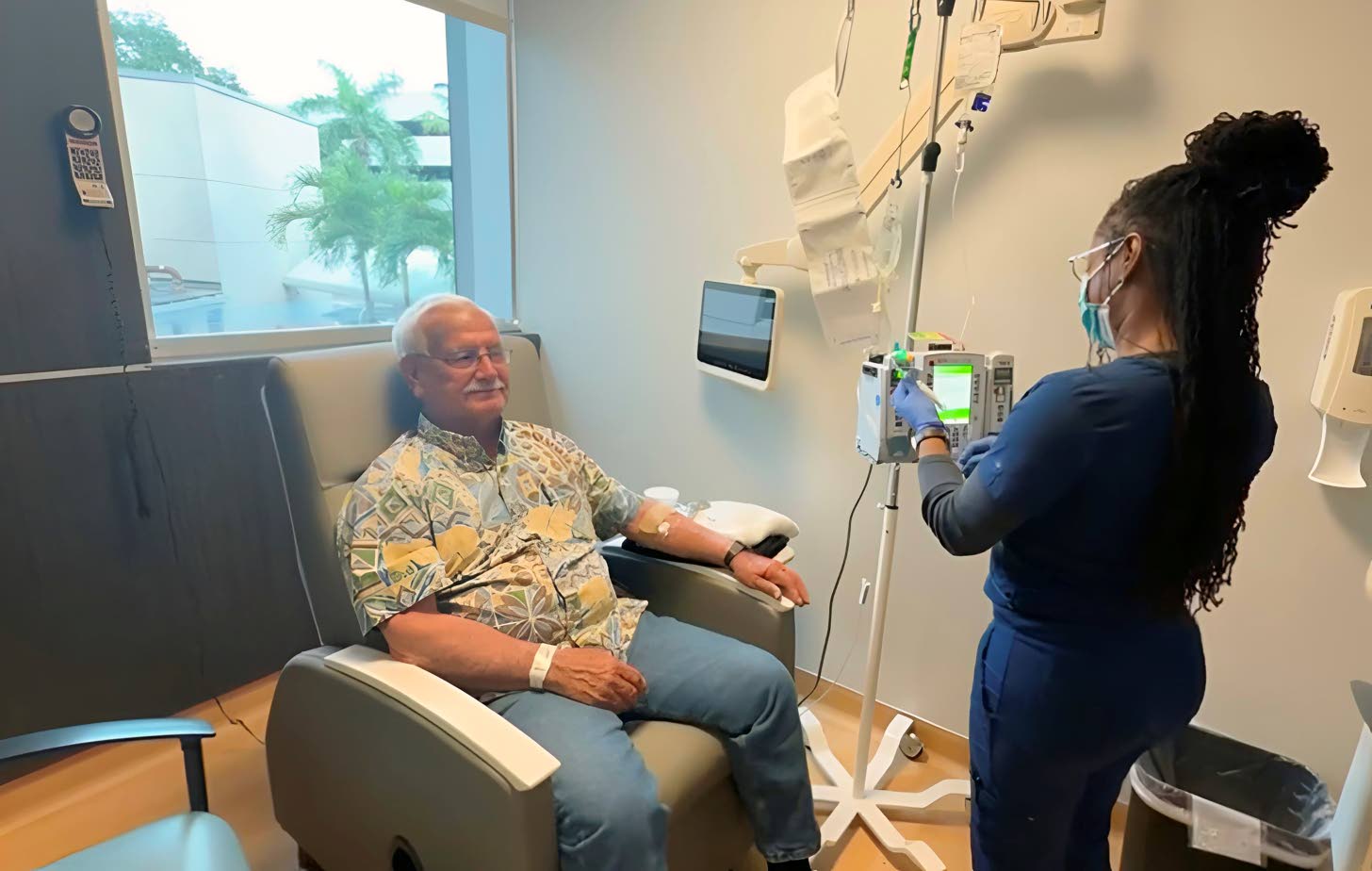
Jeff Hill doing inmunotherapy under a nurse’s guidance.
“It’s a privilege and honour to see someone like Jeff,” said Dr Hussein. “A few years ago, you wouldn’t have expected him to live a couple years. Now he is living, and not just living, he is thriving.
“Despite these advances, immunotherapy can cause side effects, including inflammation and arthritis, when the immune system attacks healthy tissues. Some cases resolve after treatment ends, while others require ongoing care.”
Experts emphasise that early detection, regular skin examinations, and protection from ultraviolet radiation remain essential to reducing melanoma risk and improving outcomes. As research continues, immunotherapy is offering new possibilities for longer survival and improved quality of life for patients with advanced melanoma.
Memorial Global Health provides personalised coordination of specialised and emergency medical services for adult and paediatric international patients. Memorial Healthcare System offers comprehensive clinical expertise across six hospitals, including Joe DiMaggio Children’s Hospital, exclusively dedicated to paediatric care.


