Please don’t get caught in the hype, take the vaccine
With heightened fears about the arrival of the deadly Delta variant in the country, Jamaican-born critical care nurse in the United States Sandra Lindsay says it is even more crucial to take the COVID-19 vaccine.
“It is extremely important to take it now because the variants can only happen when you have low vaccination rates. That is how the virus replicates,” she told the Jamaica Observer in an interview at the newspaper’s headquarters yesterday.
“The more people get vaccinated, the virus does not have a chance to replicate. There is nowhere for it to go. We are seeing the virus replicate and we are seeing the variants more and more in areas where vaccination rates are low. So it is really important that more people get vaccinated,” she said.
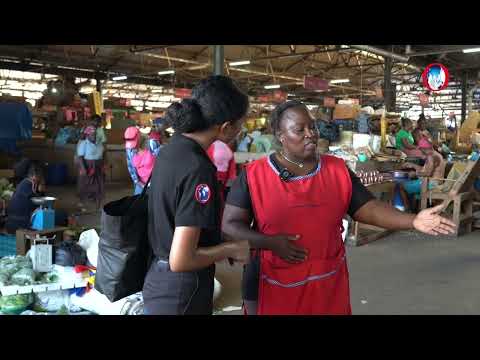
Lindsay, who is from Palmer’s Cross, Clarendon, was the first person in the United States to take the COVID-19 vaccine when the Government rolled out its inoculation programme last December. She is the director of nursing for critical care at Northwell Health’s Long Island Jewish Medical Center in Queens, New York.
She is now in the island on a 10-day visit, to enjoy the country and, at the same time, aid with the Government’s vaccination efforts.
“I have different events planned just so people could see me and hear from me,” she said.
Lindsay pointed out that she is pleased with the level of compliance with established COVID-19 protocols among businesses, which she will be confident in reporting when she returns to the US.
“I appeared on different platforms in the US when they found out that I would be visiting Jamaica. People want to know how are things here and what to expect if they travel. My response is that it is safe to travel,” she said.
“Every business that I have entered, whether it’s a well-established business or a corner shop, I have had to stretch out my hands for a big dollop of sanitiser and also to get my temperature checked, and that’s been consistent. So I will make sure to report that back to the stations that have interviewed me from the US,” added Lindsay.
She said the third wave of novel coronavirus infections in the island is a cause for concern, especially since major public hospitals are overcapacity with COVID-19 patients.
“It is very concerning, because if we fill our hospitals with COVID-19 patients, then patients who are having other emergencies can’t get care. It has been 18 months, our nurses and doctors and other front line workers — they are human beings too, they are exhausted, frustrated, and have been going on courageously to help us battle COVID-19. There should be some consideration for them,” she said.
Vowing to continue educating Jamaicans about the importance of taking the vaccine, Lindsay said: “My fellow Jamaicans, please don’t get caught in the hype, and I am not being used as a pawn, nobody paid me to do this. I am doing this for all of us. I am here on vacation but I think it is very important that I spend this time with you to let you know that I am here, and I am sharing my experience.
“I hope you take heed and work together; we can do this together. When the Government is appealing to you, it’s for our own interest. If we don’t have the infrastructure, manpower, personal protective equipment to save your lives, the only thing that can help us is to get vaccinated.”
Later, during the prime minister’s news conference at Jamaica House, where he announced new restrictions to help stop the spread of the virus, Lindsay, who was a special guest, repeated her appeal for Jamaicans to take the vaccine.
“When I had the opportunity to be vaccinated I did not hesitate. I showed up to the site one hour earlier, waiting for the vaccine to arrive because I was so eager to get the vaccine,” she said.
Lindsay explained that because of the number of COVID-19 patients at Long Island Jewish Medical Center she had to be working seven days per week, 16 hours each day, “so I empathise and I sympathise with my fellow front line workers here”.
So heavy was the workload that when she went home, not even remembering how she got home, she had to be thinking “where am I going to put people when they come in; we can’t turn them away, and then where am I going to find staff to take care of them”.
“Every day I would leave my house I would take a video or snap a picture and send to my family and friends. I’m going to what feels like war and I don’t know if I’m returning,” Lindsay shared.
She recalled going home one night and being afraid to sleep. “I was trembling, I was exhausted, I was afraid to close my eyes because I thought I had gotten infected and I said, ‘God, please don’t let me die in here alone.’ But I took out my white rum and I rub up myself and I got some tea, turmeric, ginger, garlic, honey, lemon and I took a shot of that and I said a prayer and I went to bed. I didn’t have COVID, it was exhaustion.”
“So when I got vaccinated it was like a burden, a big boulder rolled off my shoulder, and I immediately felt protected,” she said, adding that one of the reasons she took the vaccine was because she has a professional obligation to save lives.
Lindsay also said fear was another reason influencing her decision to get the jab.
“I was fearful of getting ill, ending up in one of my ICU beds or even dying,” she explained.
She also said that beyond wearing face masks, meticulous hand hygiene, and social distancing “we needed something more powerful, and a vaccine is our best defence against this virus”.
“We’ve been getting vaccinated for years, this is not new, so please, don’t let the propaganda on social media prevent us from getting back the health of our country,” she pleaded.