



Vybz Kartel vs Mavado: Still relevant a generation later
The morning of December 27, 2008 was a date that most individuals presumed to conclude the end of the greatest rivalry in contemporary dancehall history, which was Vybz Kartel versus Mavado. This feud was a rivalry that has punctuated contemporary dancehall culture — not only sonically, but within a wider political economy.
This was the daylight “clash segment” of Sting — then held annually each Boxing Day as the greatest one-night show in dancehall, with the lyrical combat between the two titans ending on a high note for Mavado, with a majority of the duel prior being led by Vybz Kartel.
Since this was the first dancehall beef within the Internet era, it allowed for a majority of people who were not physically present to weigh in on their views. Those present at the festival sided with Mavado due to recency bias, but those who were able to play and replay the clash in its entirety propagated that Vybz Kartel had crowd favour for a longer period than Mavado.
In true Vybz Kartel fashion, the clash was not settled on stage, but within 48 hours thereafter when he released Last Man Standing, a scathing response to Mavado’s performance on stage, and became embedded in dancehall history as one of the greatest “diss” songs in music history across all genres.
However, let’s bring it back, as to the mainstream, this singular showdown was most of what they knew, whilst those in a truly democratised Internet, for years, debated on who had the better songs on rhythms produced by Stephen McGregor mostly, TJ Records, and Black Chiney, during the longest lasting feud on record at that time.
Starting with the Supa Dups-produced Drumline with Mavado’s New Name Fi Informer, and a response by Vybz Kartel released so quickly entitled Mofraudo, that the vocals weren’t even finished being mixed, the golden era for millennials — much like 90s dancehall’ is for Generation X — began.
Every day into the wee hours of the night, those tapped into the culture would wait on a record to “leak”, whether on Jah Know, Rockwildaz, and many other online forums then, to ensure that they did not miss the ability to be the first to recite the multiple Vybz Kartel and Mavado songs per rhythm. On these compilations, both artistes would often release a “girls’ song” or party-themed track, a “badman tune”, or direct diss songs at each other, across, but not limited to the Powercut rhythm, After Dark rhythm, Brown Bottle rhythm, Day Rave, Showtime rhythm, Cold Justice rhythm.
Every ounce of Vybz Kartel and Mavado songs were scrutinised. I can recall the competitiveness of each fandom being meticulous to the point of “Why did Mavado’s
Amazing Grace on Tremor rhythm get additional layers on production on his album version,” or “Stephen McGregor’s production is making Vybz Kartel more melodious than he really was.” However, in hindsight, it conditioned a whole generation of then adolescent Jamaican music listeners to truly care about music composition like generations before.
The competition between Vybz Kartel and Mavado creatively pushed the former to be more melodious, and the latter to be punchier lyrically, which was not the norm for singjays. Were the songs violent? Yes, but so were all the mainstream video games and movies at the time. The most important measuring stick was the quality of music, which has stood the test of time.
Vybz Kartel and Mavado’s competitive era made everyone perform outstandingly on tracks, such as Aidonia, who at times was even stronger lyrically than Vybz Kartel, Busy Signal — who was genre- binding and ahead of his time with hybrid dancehall — Elephant Man’s dancing gems, Chino McGregor’s commercially crisp hits, and so many more.
If Mavado didn’t entrench overt melodies in dancehall post-Wayne Wonder and Alliance era Wayne Marshall, his then often collaborator Serani and producer within the wider DASECA camp would not have had his singjay sound already pressure-tested for
No Games to be a crossover hit, and the same goes for Kranium’s Nobody Nah Fi Know, and Gyptian’s Hold Yuh, which was a change from his conscious lyrics train. Other melody-driven acts to burgeon during and post this period include Laden, Bramma, and T’Nez, whilst those inspired by Vybz Kartel in delivery include Alkaline, Masicka, amongst others.
Mavado himself would go on to be signed to DJ Khaled’s We The Best Music, performed globally on the BET Awards Stage with So Special, and would be featured on the platform’s 106 & Park with the visuals from his dark storytelling anthem Last Night. Mavado would also be a lead in Drake’s video for Find Your Love, the lead single for his début album Thank Me Later, as a reflection of his magnetic global urban mystique at the time. Lest we forget, the exposure Mavado gained from the Justus Arison-produced
Give It All To Me, which featured Nicki Minaj on both the record and the music video, making him the first to do so within the genre visually. (She featured audio only, on the remix of Hold Yuh prior.)
While Vybz Kartel reigned either supreme or as a contender in dancehall as early as 2002 as “Black Kartel”, it is truly his era versus Mavado, followed by his “White Kartel” era when he transitioned from Di Genius productions such as Kartel Completely to Straight Jeans N Fitted with Rvssian, Trailer Load of Money by Chimney Records, that Vybz Kartel became the most predominant and, dare I say, consequential local Jamaican pop culture leader of all time. The latter of course, being cemented with Romping Shop featuring Spice.
In almost like folklore, embedded by his continued hit singles with Rvssian, Chimney Records, and Not Nice, and just as impactful with Teacha’s Pet, his own reality show, on every then-LIME phone, his prison sentence further immortalised his reign as the genre’s most prodigious. Now completely mastering his melodious capabilities, Vybz Kartel’s era with Dunwell productions along with TJ Records gives you Fever, his best performing single of all time, and a host of other records such as Bicycle Ride, Dancehall A Mi Everything, God A The Greatest, which he repackaged 10 years after his release in 2025 to be one of the most streamed songs of the year.
The pop culture impact of both was not without its blemishes as fans fought amongst each almost daily in high schools in Jamaica, and as far as Trinidad & Tobago, with then Prime Minister Bruce Golding having the two artistes formally agree to a truce, which was also done by Christopher “Dudus” Coke via his West Kingston Jamboree stage show. It’s important to also highlight the continued normalisation of skin bleaching that came from this era too, but what is pop culture without some level of polarisation?
What is the impact of this pop culture saga within the wider orange economy? As a result of work done during the time period of Vybz Kartel versus Mavado, Stephen “Di Genius” McGregor was entrusted with curating the overwhelming majority of Sean Paul’s
Imperial Blaze album, and artistes such as Jah Vinchi, Gaza Indu, Gaza Slim, and Popcaan, especially after Vybz Kartel began working with Not Nice, were introduced and became staples during this era.
From a creative industry standpoint in terms of festivals, the most populous contemporary staging of Sting was Vybz Kartel versus Mavado, and one of the most packed stagings of Reggae Sumfest was Vybz Kartel in summer 2010. The latter featured Not Nice on stage as his disc jockey, Corey Todd on stage as his manager, with Minister Daryl Vaz, and music producer Rvssian, with a legion of then-Uptown Gaza mixed with Kartel’s Portmore Empire. All Vybz Kartel had to do was hand movements without uttering a word — synonymous with the lyrics “Cool like mi wash mi face with the cake soap” — to cement its history.
So, whether it’s music producers, concert promoters, or party promoters whose main theme is that of 2000s and 2010s dancehall currently, our creative and political economies have been greatly influenced by a dancehall rivalry that has tested the time so much so that, almost 20 years later, the two are headlining as a duo, the largest locally held Jamaican music festival, Reggae Sumfest, and a Freedom Street staging as far as Malta, all in 2026.
Dominic Bell is a marketing communications professional and communications manager at J Wray & Nephew Limited. He is currently an MPhil candidate in cultural studies at The University of the West Indies.
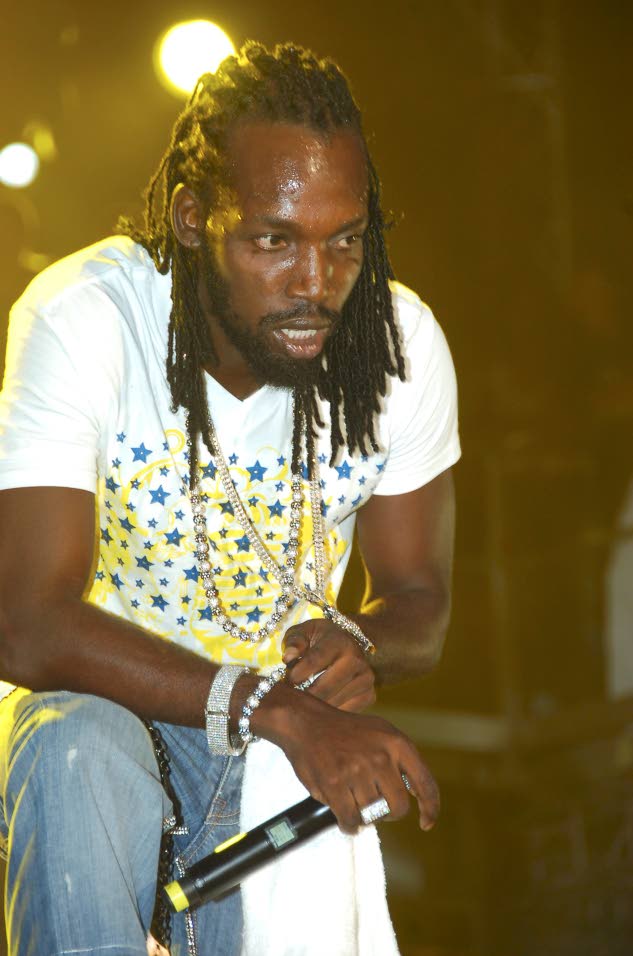
Mavado


